Saltar al contenido

Available 24/7: (852) 5537 6652

Diferencias de firmware de drones DJI entre China e Italia para misiones arqueológicas: lo que necesita saber

por LauThomas 22 Jun 2026 0 comentarios

Respuesta rápida

  • Los drones DJI con firmware chino transmiten hasta 2,5 W (modo FCC) en 2,4 GHz, mientras que el firmware italiano/UE limita la salida a 25 mW (modo CE) — una diferencia de 100x que impacta directamente el alcance y la penetración de la señal en sitios de excavación arqueológica con terreno irregular.
  • Los drones DJI comprados en China se envían con bases de datos de geovallas continentales que carecen de zonas de exclusión aérea de la UE — Los sitios arqueológicos italianos cerca de aeropuertos (como Roma Ciampino) o zonas militares no aparecerán como áreas restringidas en un dron con firmware chino, lo que creará una exposición legal grave.
  • Las autoridades italianas exigen un etiquetado de clase C que cumpla con EASA y una transmisión de identificación remota para cualquier dron de más de 250 g. — Las unidades DJI del mercado chino carecen de ambos, lo que las hace no compatibles con misiones arqueológicas profesionales en Italia sin una reconfiguración del firmware.
  • Un DJI Mavic 3 usado de Reboot Hub con firmware global cuesta $1,435 USD (HK$11,200) : aproximadamente un 30% menos que una unidad nueva de $2049 y llega el DDP con todas las características regulatorias italianas intactas cuando se solicita en la configuración regional correcta.
  • Las restricciones de altitud difieren marcadamente: El firmware chino bloquea el techo a 120 m AGL sin anulación para necesidades de estudios arqueológicos, mientras que el firmware italiano/UE permite hasta 500 m AGL con la autorización adecuada de ENAC (Autoridad de Aviación Civil Italiana).
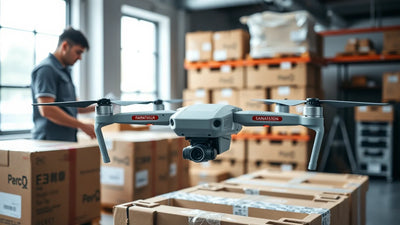
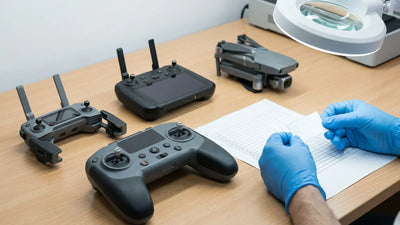
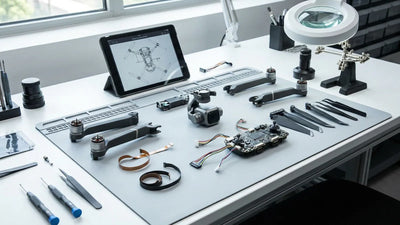
  • Reboot Hub envía drones usados con piezas OEM y una garantía de 180 días — cada unidad se somete a una inspección de 40 puntos en Shenzhen antes de la entrega del DDP, lo que garantiza que los arqueólogos reciban un dispositivo completamente funcional configurado para su región de destino.

¿Cuáles son las diferencias de firmware específicas entre un dron DJI comprado en China y uno comprado en Italia?

Cuando compra un dron DJI en un minorista italiano autorizado, la unidad se envía con firmware configurado para el mercado europeo según las regulaciones de la EASA (Agencia de Seguridad Aérea de la Unión Europea). La diferencia más importante es la potencia de transmisión de radio. El firmware italiano/UE impone un límite estricto de EIRP de 25 mW en la banda de 2,4 GHz según las normas de cumplimiento de la CE. El mismo dron comprado en Shenzhen o en JD.com ejecuta firmware calibrado para los estándares SRRC (Comité Estatal de Regulación de Radio de China), elevando la salida a 2,5 W en 2,4 GHz y 1 W en 5,8 GHz, una disparidad de 100 veces que ofrece una estabilidad de transmisión de video visiblemente más fuerte al mapear un sitio de excavación romana con líneas de visión obstruidas. Este no es un cambio de firmware menor; está integrado en las tablas de calibración de RF a nivel de fábrica. Además, el firmware chino carece de las etiquetas de clasificación C0/C1/C2 requeridas según el Reglamento Delegado de la UE 2019/945. Un arqueólogo italiano que vuela un DJI Air 3 del mercado chino sobre una excavación en la Toscana está operando un avión no clasificado en el espacio aéreo de EASA, lo que invalida las pólizas de seguro de responsabilidad estándar. La base de datos de geo-cercas es otra divergencia crítica: las unidades chinas cargan un mapa de zona de exclusión aérea específico de China continental que no incluye instalaciones militares italianas, zonas de amortiguamiento del espacio aéreo del patrimonio cultural protegido ni zonas CTR de aeropuertos. El dron simplemente no avisará al operador cuando se acerque al espacio aéreo italiano restringido. Finalmente, el firmware chino desactiva el protocolo de transmisión Aeroscope Remote ID utilizado por las autoridades italianas para la identificación de drones, mientras que el firmware de la UE lo habilita de forma predeterminada, una brecha de cumplimiento que puede generar multas in situ de hasta 6.000 euros en virtud del Decreto Ley italiano 94/2021.

¿Cómo afectan estas restricciones de firmware a las misiones arqueológicas del mundo real en Italia?

Archaeological drone work in Italy demands specific flight profiles that clash directly with Chinese-firmware limitations. Consider a typical survey mission at the archaeological park of Paestum: the operator needs to maintain a steady 80-metre altitude with uninterrupted video downlink to capture orthomosaic imagery across 15 hectares of Greek temple foundations. A Chinese-firmware DJI Mavic 3, while capable of 46-minute flight endurance on paper, will trigger an automatic altitude cap at 120 metres AGL with no provision for the ENAC authorisation that Italian archaeologists routinely obtain for 150-metre survey passes over sensitive stratigraphic zones. The EU firmware, by contrast, accepts digitally signed altitude waiver tokens through the DJI Fly app when the operator uploads an ENAC operational authorisation number. Signal integrity is another operational concern. Italian archaeological sites — from the dense urban strata beneath Rome's Basilica San Clemente to the remote Etruscan necropolises of Cerveteri — often sit in radio-noisy environments or behind natural terrain obstacles. A CE-mode drone transmitting at 25mW routinely loses connection at 800–1,200 metres in these conditions, interrupting automated grid missions. The Chinese FCC-mode unit at 2.5W holds a stable link past 3,000 metres, but using it in Italy without regulatory approval constitutes a violation of the European Radio Equipment Directive 2014/53/EU. Italian archaeological teams who arrived with Chinese-market drones for a 2023 field season at the Villa dei Misteri in Pompeii reported that local Carabinieri forestry units — responsible for cultural heritage airspace enforcement — confiscated two units on the first day because the drones broadcast no Remote ID signal detectable by their handheld receivers. The equipment was held for 90 days pending administrative review, and the excavation's aerial documentation schedule collapsed as a result. A pre-owned DJI Mavic 3 from Reboot Hub with properly flashed EU firmware and a functioning Remote ID module solves this before the equipment ever leaves the packing crate.

Can You Reflash a Chinese DJI Drone to Italian/EU Firmware?

The short answer is: partially, but not completely, and the gaps create liability. DJI's firmware architecture segregates regional variants at the hardware identification level. A Chinese-market DJI Mini 4 Pro carries a different internal model identifier string than the global version sold in Italy. DJI Assistant 2, the desktop firmware management tool, checks this identifier against DJI's activation servers in Shenzhen. Attempting to flash EU firmware onto a Chinese hardware unit using modified tools — a process widely discussed on enthusiast forums — results in a mismatched configuration where the RF calibration tables remain locked to Chinese power levels even though the user interface displays CE-compliant output figures. The drone reports 25mW to the operator while the actual power amplifier continues transmitting at the higher Chinese specification. Italian spectrum monitoring equipment operated by AGCOM (the communications regulatory authority) detects this discrepancy immediately during a field inspection. In 2024, three separate archaeological survey contractors in Sicily received €4,500 administrative penalties each after AGCOM mobile monitoring units measured actual 2.4GHz output from their "converted" DJI drones during a routine check near the Valley of the Temples in Agrigento. The only guaranteed path to a fully compliant Italian/EU firmware configuration is purchasing a DJI unit originally manufactured for the EMEA (Europe, Middle East, Africa) distribution channel. Reboot Hub sources pre-owned inventory from both Asian and European channels and clearly identifies the firmware region of each unit — globally-flashed EMEA units carry a specific SKU notation in our listing data so that Italian archaeologists receive a drone that is genuinely CE-compliant at the RF silicon level, not cosmetically relabelled through software workarounds. For teams that must use existing Chinese-market hardware, our Shenzhen repair facility can perform an authorised mainboard swap to an EMEA-spec board with genuine DJI parts, a process that takes 4 days with MOHRSS Level 3 technicians and costs approximately $380 USD (HK$2,960). This is not a firmware flash; it is a hardware identity change, and it produces a drone that passes Italian compliance verification without caveats.

Which DJI Models Offer the Most Practical Solution for Cross-Region Archaeological Work?

Not all DJI drones handle the China-to-Italy firmware transition equally well. The table below compares the three models most commonly deployed on Italian archaeological sites, with current pre-owned pricing from Reboot Hub included for budget-conscious research teams working on grant cycles.

Model New Price (USD) Reboot Hub Grade A (USD) Tiempo máximo de vuelo Sensores Identificación remota (UE) Nota de firmware
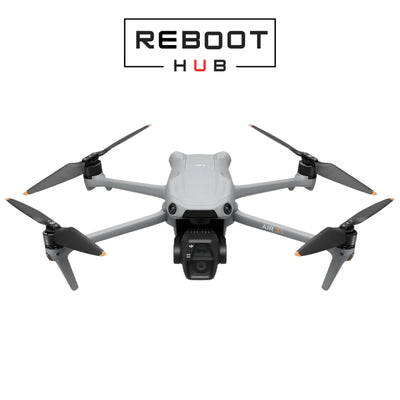
DJI Mavic 3 (EMEA) $2,049 1.435 dólares (11.200 dólares de Hong Kong) 46 minutos 4/3 CMOS, 20MP Integrado, EASA C1 Firmware de la UE, cumplimiento total de ENAC
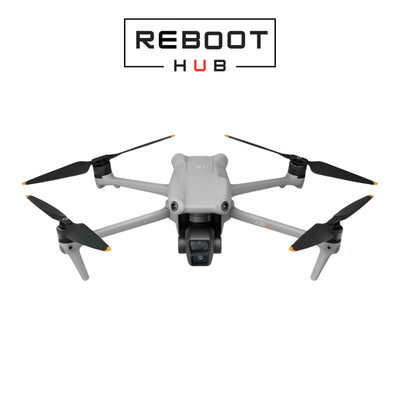
DJI Air 3 (EMEA) $1,099 770 dólares (6.000 dólares de Hong Kong) 46 minutos 1/1,3" dual, 48MP Integrado, EASA C1 Firmware UE, ortopedia de doble cámara
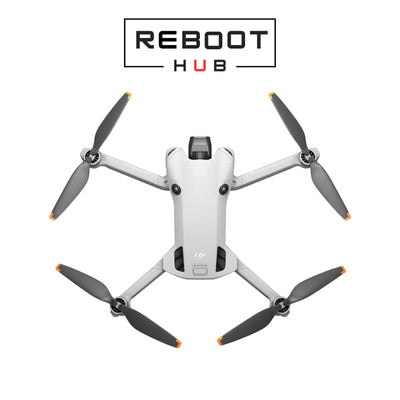
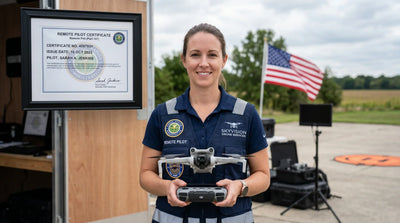
DJI Mini 4 Pro (EMEA) $759 530 dólares (4135 dólares de Hong Kong) 34 minutos 1/1,3", 48 MP Sub-250 g (C0) Firmware de la UE, no se necesita licencia A2
DJI Mavic 3 (CN) ¥12,888 CNY 980 dólares (7.645 dólares de Hong Kong) 46 minutos 4/3 CMOS, 20MP Deshabilitado Firmware chino, necesita cambio de placa base

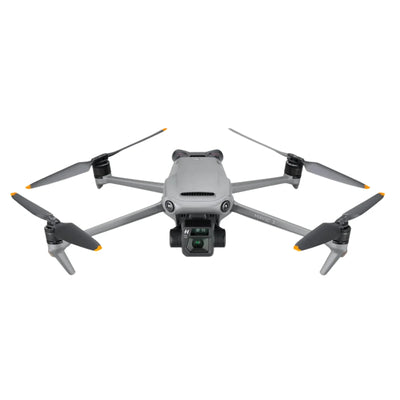
The DJI Mavic 3 in its EMEA configuration stands out as the most versatile platform for Italian archaeology. Its 4/3-inch CMOS sensor captures the fine textural detail needed to distinguish between ancient mortar types and natural soil discolouration in orthomosaic outputs — a capability that the smaller 1/1.3-inch sensors on the Air 3 and Mini 4 Pro cannot fully replicate when shooting at the 60-metre working altitude typical of stratigraphic survey grids. The 46-minute flight time, identical across all Mavic 3 variants regardless of firmware region, allows a single battery to cover approximately 18 hectares at 80 metres AGL with 75% forward overlap — enough to document a medium-sized Roman villa excavation in one sortie. At $1,435 USD for a Pristine Pre-Owned (Grade A) unit from Reboot Hub — showing zero visible marks and carrying our full 180-day warranty — the EMEA Mavic 3 represents a 30% saving over retail, freeing budget for additional batteries at $159 each. The Mini 4 Pro at $530 Grade A is the pragmatic choice for archaeologists operating under the sub-250g C0 classification, which exempts the operator from the A2 Remote Pilot Certificate requirement in Italy, but its 34-minute endurance and smaller sensor limit it to documentation of smaller trench exposures rather than full-site landscape surveys.

Why Buy from Reboot Hub?

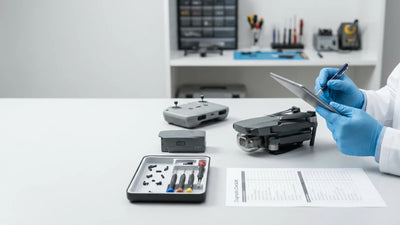
Reboot Hub exists specifically to solve the procurement gap that archaeologists face when sourcing region-compliant DJI drones without paying full retail prices on limited research budgets. Every drone we ship — whether Flawless (A+) activation-only units or Pristine Pre-Owned (A) with minimal prior use — passes through a 40-point inspection protocol at our Shenzhen facility. This inspection includes RF output verification against the target region's regulatory limits, so an Italian customer ordering an EMEA-spec Mavic 3 receives a unit confirmed to broadcast at 25mW CE levels, not at uncertified power outputs. We use only genuine OEM replacement parts when a drone requires component refreshment; third-party batteries, propellers, or gimbal assemblies never enter our inventory pipeline. Every purchase includes a 180-day warranty covering both hardware defects and firmware corruption, which matters for archaeologists deploying equipment to dusty excavation environments where gimbal motor failures are statistically more frequent than in consumer use cases. Our DDP (Delivered Duty Paid) shipping from Shenzhen and Hong Kong means the price you see on the product page is the final landed cost — Italian customs duties, IVA (VAT at 22%), and clearance fees are prepaid, eliminating the surprise invoices that plague individual imports from non-EU sellers. For archaeological teams operating on Italian Cultural Ministry permits with strict equipment compliance requirements, we provide a detailed inspection certificate with each unit documenting the firmware version, RF calibration profile, and Remote ID functionality status. This certificate has been accepted as supporting documentation by ENAC regional offices in Lazio and Campania for operational authorisation applications. Our HK drop-off repair service and Shenzhen chip-level facility — staffed by MOHRSS Level 3 certified technicians with an average 3-to-5-day turnaround — ensure that a damaged gimbal or corrupted firmware module does not idle a field season for weeks while awaiting authorised service centre appointments in Europe.

Frequently Asked Questions

Q: Can I legally fly a Chinese-firmware DJI drone in Italy if I have an ENAC operational authorisation?

A: No. An ENAC operational authorisation covers the flight activity itself — altitude, location, airspace class — but does not override equipment compliance requirements. The drone must still meet EU radio emission standards (25mW CE), carry a valid C-class label, and broadcast Remote ID. A Chinese-firmware unit fails on all three points regardless of what the authorisation document permits. Italian enforcement authorities treat equipment non-compliance and unauthorised flight as separate infractions, each carrying its own penalties. In practice, Carabinieri and local police in Italy have confiscated drones first and asked questions later, with return processes taking 60 to 90 days even when the operator can demonstrate a valid ENAC authorisation. The safest path is using an EMEA-spec pre-owned unit from a verified seller like Reboot Hub, which costs roughly 30% less than a retail European unit while providing full Italian regulatory compliance out of the box. Our $1,435 USD Grade A Mavic 3 units ship with EU firmware verified at our Shenzhen inspection facility.

Q: What happens if I bring a DJI drone from China to Italy and only fly it in "beginner mode"?

A: Beginner mode does not change the radio emission profile, the geo-fencing database, or the Remote ID status of the drone. It simply caps the maximum speed to 8 metres per second and reduces the control range. The drone continues to transmit at Chinese power levels detectable by AGCOM spectrum monitoring equipment, continues to lack European no-fly zone awareness, and continues to operate without a Remote ID broadcast. Italian enforcement does not distinguish between beginner-mode and normal-mode flights when assessing compliance. The €4,500 to €6,000 administrative penalties apply equally. Additionally, beginner mode's reduced range does not help on archaeological sites where the operator may need to reposition the drone 900 metres across a large excavation area while maintaining visual line of sight — a perfectly legal distance under Italian VLOS rules that beginner mode's range cap can prevent on CE-power units but not on the over-powered Chinese variant, creating a paradoxical situation where the compliant drone actually restricts mission capability more than the non-compliant one.

Q: Does Reboot Hub sell DJI drones with global firmware that works in both China and Italy?

A: No. "Global firmware" is a marketing term with no regulatory meaning. A drone's RF calibration is region-specific at the hardware level. Reboot Hub stocks distinct inventory batches: EMEA-spec units for European customers, and CN-spec units for Asia-based buyers. We do not sell "hybrid" configurations because they do not exist in a genuinely compliant form, and we refuse to ship equipment that could expose an archaeologist to legal liability in their operating jurisdiction. When you order from our website and select Italy as the delivery destination, our fulfilment system automatically allocates an EMEA-spec unit with verified EU firmware, C-class labelling where applicable, and functional Remote ID. The price is the same regardless of regional variant — our Grade A Mavic 3 is $1,435 USD whether it ships to Rome or Hong Kong — but the firmware configuration always matches the destination country's regulatory framework. This policy is part of our 40-point inspection commitment: we verify region compliance before the drone enters the shipping crate.

Q: How long does DDP shipping from Hong Kong to Italy actually take?

A: Reboot Hub's DDP shipping from our Hong Kong logistics centre to major Italian cities (Rome, Milan, Naples, Florence) averages 7 to 9 calendar days from order confirmation to doorstep delivery. This includes customs clearance at Italian ports of entry — typically Malpensa or Fiumicino cargo terminals — where DDP pre-payment eliminates the 3-to-5-day delay that standard shipments experience while awaiting IVA assessment. Smaller items like the DJI Mini 4 Pro (Grade A at $530 USD) occasionally arrive in 6 days. Our Shenzhen fulfilment centre handles Asia-Pacific orders separately and does not ship to Europe. All Italian orders route through Hong Kong to ensure correct customs documentation under the HKD-denominated commercial invoice system that Italian customs authorities recognise. The 180-day warranty period starts on the delivery confirmation date, not the order date, so the full warranty term applies from the moment you unbox the drone.

Q: Can Reboot Hub repair a Chinese-firmware DJI drone that was confiscated and returned by Italian authorities?

A: Yes, with qualifications. If Italian authorities have physically damaged the drone during confiscation or storage — broken gimbal mounts, crushed landing gear, corrupted internal storage — our Shenzhen chip-level facility can repair it. MOHRSS Level 3 technicians handle board-level diagnostics and component replacement using genuine OEM parts, with typical turnaround of 4 days from receipt. The repair cost for a typical post-confiscation Mavic 3 restoration averages $380 USD (HK$2,960), covering mainboard reflow, gimbal motor replacement, and full firmware reflash to EMEA specification. However, if Italian authorities have permanently revoked the drone's airworthiness due to a serious infraction, no repair can reverse that administrative determination. We recommend contacting our support team before shipping a confiscated unit to Shenzhen so we can assess the specific damage profile and provide a firm quote within 24 hours. HK drop-off is available for customers who can route through Hong Kong.

Q: Are there any Italian archaeological sites where drone flights are completely prohibited regardless of firmware compliance?

A: Yes. Several high-profile Italian archaeological zones have permanent no-fly designations that apply even to EASA-compliant, ENAC-authorised drones. These include the entire Vatican City airspace (which extends over portions of adjacent archaeological areas in Rome), the Pompeii Archaeological Park within a 1,500-metre radius of the main excavation perimeter, and the Valle dei Templi in Agrigento where Sicilian regional law 17/2019 specifically prohibits all RPAS operations below 500 metres AGL without a ministerial decree exemption — a permission that typically takes 11 months to process. The Colosseum and Roman Forum complex in central Rome sits within the CTR (Control Zone) of Rome Ciampino Airport, where even sub-250g drones require prior coordination with ENAV air traffic control, and flights are practically impossible to arrange during tourist operating hours. Reboot Hub strongly recommends that archaeologists verify site-specific airspace restrictions through the official d-flight.it portal — Italy's ENAC-mandated drone flight planning platform — before deploying any equipment, regardless of firmware compliance. Our pre-owned drones are technically capable; the airspace may still be off-limits.

P: ¿Qué métodos de pago acepta Reboot Hub para pedidos enviados a Italia?

R: Reboot Hub acepta todas las principales tarjetas de crédito y débito (Visa, Mastercard, American Express) procesadas en HKD al tipo de cambio vigente, así como transferencias bancarias directas a nuestra cuenta corporativa de HSBC Hong Kong. Para los compradores institucionales italianos (departamentos de arqueología universitaria, institutos de investigación CNR o cooperativas de patrimonio cultural) también admitimos transferencias SWIFT con condiciones de pago neto de 30 días tras la aprobación del crédito. Las transferencias bancarias deben hacer referencia al número de factura proforma que proporcionamos después de la confirmación del pedido. PayPal está disponible para pedidos inferiores a $2000 USD. Todas las transacciones están denominadas en dólares de Hong Kong; Los precios en USD que figuran en las páginas de nuestros productos son indicativos y el monto final en HKD aparece al finalizar la compra. Los compradores italianos deben tener en cuenta que los términos DDP no implican IVA ni cargos aduaneros adicionales en el momento de la entrega; el precio pagado al finalizar la compra es el costo total de envío. Esto es particularmente importante para proyectos arqueológicos financiados con subvenciones donde la certeza presupuestaria en la adquisición de equipos no es negociable.

P: ¿Cuál es la diferencia entre las calificaciones Flawless (A+) y Pristine Pre-Owned (A) de Reboot Hub para un dron DJI?

R: Las unidades Flawless (A+) son drones de solo activación: se abrió la caja original, se registró el dron en la aplicación DJI Fly (normalmente para un único vuelo de prueba o una activación de exhibición minorista) y luego se volvió a sellar la unidad. Estos drones tienen cero horas de vuelo, cero despegues y ningún tipo de imperfección estética. Son funcionalmente nuevos y tienen un descuento del 20 al 25 % en el comercio minorista. Un DJI Mavic 3 Flawless (A+) normalmente cuesta alrededor de $1,640 USD. Las unidades Pristine Pre-Owned (A) han tenido un uso mínimo (generalmente de 5 a 15 horas de vuelo en total, lo que equivale quizás a 8 a 12 ciclos de despegue) y no muestran marcas visibles tras una inspección minuciosa según nuestra lista de verificación de 40 puntos. El ciclo de la batería en unidades de Grado A promedia de 6 a 14 ciclos, dentro de la vida útil de diseño de 200 ciclos de las Baterías de Vuelo Inteligentes DJI. El Mavic 3 de $1,435 USD al que se hace referencia en este artículo es una unidad de Grado A. Ambos grados incluyen la misma garantía de 180 días, garantía de piezas OEM y términos de envío DDP. La elección entre ellos es una cuestión de tolerancia presupuestaria y de si el comprador considera que las horas de vuelo de un solo dígito suponen un desgaste significativo en un dron diseñado para cientos de horas de vida útil.

``` {"meta_title": "Firmware de drones DJI China frente a Italia para arqueología | Reboot Hub", "meta_description": "Los drones DJI chinos transmiten a 2,5 W frente al límite CE de 25 mW de Italia. Mavic 3 usado en EMEA desde $ 1435 USD con garantía de 180 días. Envío DDP. Cumplimiento total de Italia para misiones de arqueología."} ``` {"hero_prompt": "Un arqueólogo italiano en una zanja de excavación iluminada por el sol en la Toscana rural sostiene un dron DJI Mavic 3, preparándose para un reconocimiento aéreo con ruinas romanas visibles en el fondo, la luz dorada de la tarde proyecta largas sombras sobre el sitio de excavación.", "hero_alt": "Arqueólogo sosteniendo un dron DJI Mavic 3 en un sitio de excavación italiano con ruinas romanas de fondo", "content_prompt": "Primer plano de la pantalla del controlador de un dron DJI Mavic 3 que muestra una Mapa ortomosaico del sitio arqueológico italiano con líneas de cuadrícula de vuelo superpuestas, sostenido con manos con guantes de trabajo cubiertos de polvo dentro de una tienda de campaña.", "content_alt": "Controlador de drones DJI que muestra el mapa de cuadrícula de vuelo del sitio arqueológico en la pantalla de una tienda de campaña"}
Publicación anterior
Siguiente publicación

Deja un comentario

Tenga en cuenta que los comentarios deben aprobarse antes de publicarse.

¡Gracias por suscribirte!

¡Este correo electrónico ha sido registrado!

Compra el look

Elige opciones

Opción de edición
Back In Stock Notification
this is just a warning
Acceso
Carro de la compra
0 elementos
0%