VEX AIR Cleared, DJI Blocked: FCC Drone Exemptions Reshape the US Sky
The FCC just dropped its 11th Covered List exemption, clearing the VEX AIR educational drone for US classrooms while DJI remains locked out. This bifurcation is creating a seismic shift in commercial UAV procurement, Part 107 operations, and the second-hand drone market. Are your fleet plans ready for a post-DJI America?

Editorial notes
- This article combines named outside reporting with Reboot Hub's own analysis for drone buyers, fleet operators, repair customers, and pre-owned DJI market watchers.
- Source facts are separated from interpretation. When a report provides limited data, the article states that limitation and frames Reboot Hub's view as analysis.
- Reboot Hub has commercial links to drone products and repair services; those links are reader resources and do not determine the article's conclusion.
The Federal Communications Commission's Public Safety and Homeland Security Bureau has granted its eleventh exemption to the Covered List, officially clearing the VEX AIR Uncrewed Aircraft System (UAS) for use in the United States. The decision, formalized in Public Notice DA 26-548 on June 4, 2026, specifically exempts the educational drone manufactured by Innovation First International following a Conditional Approval issued by the Department of War through December 31, 2026. While this marks a significant win for STEM and robotics educators across the nation, the underlying reality remains starkly divided: the world's largest civilian drone manufacturer, DJI, remains fully blocked from FCC authorization, deepening the chasm in the American commercial drone ecosystem.

The same public notice also removed five models of Sagemcom USA routers from the Covered List, signaling a broader, case-by-case approach to national security risk mitigation that is now reshaping the hardware landscape for everything from Wi-Fi infrastructure to aerial data collection. For commercial drone operators, surveying professionals, and the growing secondary market for UAVs, this latest exemption is less about a single classroom robot and more about the accelerating decoupling of the US drone supply chain from Chinese manufacturing.
The VEX AIR Exemption: A Conditional Nod to American STEM
The VEX AIR is a purpose-built educational drone designed to teach coding, robotics fundamentals, and autonomous flight logic. Its exemption from the Covered List-a designation that bans the authorization of equipment deemed a national security risk-is not unconditional. The Department of War's Conditional Approval explicitly ties the exemption to Innovation First International's compliance with stringent operational and supply chain audits, expiring on December 31, 2026.
Operator checklist
Turn policy news into a safer fleet decision.
Before changing aircraft, compare repair paths, available DJI inventory, and trade-in timing against the rule change.
This sets a critical precedent. The FCC is signaling that non-Chinese manufacturers with transparent supply chains and verifiable hardware backdoors can obtain waivers. For the K-12 and higher education markets, this means a viable alternative to DJI's Tello and Ryze platforms for teaching foundational UAV skills. However, the VEX AIR is a lightweight, camera-less educational tool. It lacks the RTK (Real-Time Kinematic) modules, high-resolution mapping sensors, and BVLOS (Beyond Visual Line of Sight) reliability that commercial operators rely on for precision agriculture, infrastructure inspection, and survey-grade mapping.
Ready to Upgrade Your Fleet?
Browse our collection of inspected pre-owned DJI drones - inspected, flight-tested, and backed by a 6-month warranty. Save up to 40% versus retail.
The 11 Exemptions: A Pattern of Creeping Decoupling
The VEX AIR exemption joins a growing list of companies that have successfully navigated the FCC's strict security review process. This tally includes various equipment manufacturers across telecom and UAV sectors, but the absence of DJI is glaring. The FCC Covered List, established under the Secure Networks Act and leveraging the 2019 NDAA Section 889, was explicitly designed to prevent equipment from China's telecommunications and surveillance giants from infiltrating US critical infrastructure.
What does this mean for commercial drone operators?
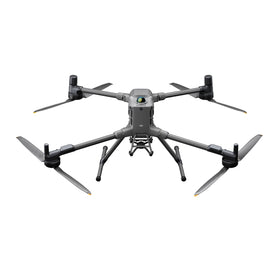
For the typical Part 107 pilot flying a DJI Phantom 4 RTK or a Matrice 300 for GSD (Ground Sample Distance) mapping missions, the environment is becoming legally bifurcated. On one hand, the FAA is actively working to integrate drones via BVLOS waiver pathways. On the other hand, the FCC is actively restricting the hardware that most pilots own. This creates a direct conflict: you cannot legally deploy FCC-authorised wireless equipment (the drone's radio) for federal or critical infrastructure work if your drone is on the Covered List.
The exemptions for companies like VEX and Sagemcom USA demonstrate a feasible path to compliance, but it is expensive and time-consuming. For a massive OEM like DJI, retroactively auditing the supply chain of every transistor and RF amplifier to satisfy the Department of War is an almost impossible task given current geopolitical tensions over Taiwanese semiconductor manufacturing and Chinese espionage laws. The result is a de facto ban that shows no sign of softening.
Collateral Damage: How the FCC Ban is Supercharging the Second-Hand Drone Market
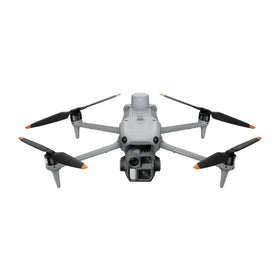
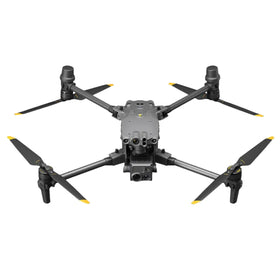
While the regulatory spotlight is on new equipment authorizations, the secondary market is absorbing the shockwaves. The ban on new DJI equipment for government use has paradoxically increased the asset value of existing, proven DJI hardware in the private commercial sector. Enterprise fleets that already own DJI Matrice 30T or Mavic 3 Enterprise units are holding onto them longer, driving up demand for maintenance, replacement parts, and inspected pre-owned units.
This is where the market is creating immense psychological urgency. For commercial operators who are not directly working on federal contracts, the used drone market offers the only cost-effective path to acquiring high-specification RTK surveying drones and LIDAR mapping platforms. The supply of new, fully FCC-compliant DJI equivalents from Western manufacturers like Skydio or Freefly is limited and often 2x to 3x the price of a used DJI system. Prices for high-end used DJI equipment are steadily climbing as supply constricts and demand from commercial real estate, agriculture, and local infrastructure projects remains strong.
Companies like Reboot Hub are at the epicenter of this recalibration. By providing rigorous inspections, flight testing, and genuine part replacements, we are ensuring that these mission-critical assets remain operational for the growing commercial sector that sits outside direct federal jurisdiction.
The Road Ahead: Part 107 Waivers, Fleet Modernization, and Compliance
For the typical enterprise operator, the question is no longer if they need to diversify their fleet, but how fast. The FCC's continued blocking of DJI means that any drone program relying on Part 107 waivers that involve transmitting data over FCC-licensed spectrum will face increased scrutiny. This is especially relevant for BVLOS corridor approvals, where the entire data transmission chain must be verified as secure.
For operators struggling to find hardware, the secondary market offers a bridge. Exploring the pre-owned DJI drones available at Reboot Hub allows fleets to maintain operational tempo while navigating the regulatory maze. Similarly, leveraging professional DJI repair services ensures existing assets remain airworthy and compliant with Part 107 requirements. We are witnessing a market where the scarcity of new, compliant hardware is directly fueling the value of the certified, inspected second-hand platform.
The FCC's logic is clear: secure the supply chain by any means necessary. For the drone industry, this means adapting to a world where the flagship tools of the trade are increasingly restricted from new sales, forcing operators into a careful cycle of maintenance, refurbishment, and strategic upgrades. The VEX AIR exemption is a beacon for STEM education, but for the commercial industry, it is a stark reminder that the era of unrestricted DJI dominance in the US is ending, replaced by a complex, fragmented market where compliance is king and asset quality on the secondary market is the new competitive advantage.
1. Is DJI completely banned in the United States?
Not completely, but significantly restricted. DJI is on the FCC's Covered List, which means new equipment cannot receive FCC equipment authorization for use in the US. This effectively bans its use in federal, state, and critical infrastructure projects. However, existing private operators and commercial enterprises not under federal contract can still operate previously imported DJI hardware, provided they comply with any applicable FAA regulations (like Part 107). The ban creates high demand on the secondary market for these existing, flight-ready units.
2. How does the VEX AIR exemption affect me as a surveying or mapping professional?
Directly? Very little. The VEX AIR is an educational, camera-less training tool, not a replacement for an RTK-equipped mapping drone or a heavy-lift LIDAR platform. However, the exemption signals a critical regulatory pathway for truly American-made or allied-made drone hardware. For professional surveyors, the key takeaway is the continued absence of DJI from the exemption list, which reinforces the long-term value and increasing scarcity of high-quality used surveying drones that are already in the ecosystem. Maintaining and refurbishing existing DJI fleet assets is becoming a smarter financial decision than attempting to source non-compliant new units.
3. Will the value of my used DJI drone go down because it's on the Covered List?
Counter-intuitively, the value of already-deployed, high-end DJI hardware (such as the Matrice 300/350 series, Mavic 3 Enterprise, or Phantom 4 RTK) is likely to stabilize or increase in the commercial secondary market. Because the FCC ban restricts the import and sale of new DJI equipment for most government-adjacent sectors, the supply of available units is decreasing. Commercial operators who need RTK accuracy and proven reliability but are priced out of the Skydio or Freefly ecosystems will turn to the inspected pre-owned market. This creates upward price pressure on inspected, warranty-backed, like-new units.
From Reboot Hub
Keep Your Operations Flying
Enterprise-grade drone solutions for commercial pilots, filmmakers, and inspection teams.
Pre-owned Fleet
Fully inspected DJI drones with 6-month warranty. Save up to 40%.
Browse Inventory ->