Ukraine's Battlefield Demand Sparks New Era of Miniature Drone Laser Targeting
Miniature laser-targeting systems for drones are exploding in demand due to Ukraine's anti-armor operations. This rapid military evolution is pressuring commercial drone payloads, creating ripple effects for Part 107 operators, RTK surveying accuracy, and the used drone ecosystem. Discover the hardware race and what it means for your fleet upgrade strategy.

On June 16, 2026, the drone industry witnessed a pivotal shift as reports from Ukraine confirmed an unprecedented surge in demand for miniature laser-targeting systems designed for small unmanned aerial vehicles (UAVs). This battlefield-driven requirement is not merely a tactical evolution—it is triggering a wave of product launches from defense contractors and technology startups racing to miniaturize laser designators that can be carried by commercial-grade drones. The implications for the global drone ecosystem, from military procurement to second-hand commercial markets, are profound and immediate.

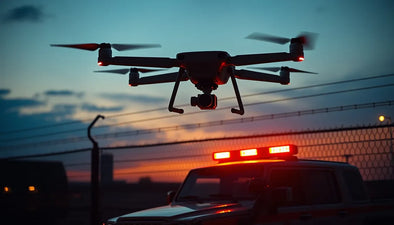
The conflict in Ukraine has proven to be a brutal testing ground for drone warfare, particularly for inexpensive, expendable First-Person View (FPV) quadcopters and small multirotors. However, recent observations indicate a shift: Ukrainian forces are increasingly integrating precision strike capabilities into these platforms. The missing link has been a reliable, lightweight laser designator small enough to fit on a drone that weighs less than 2 kilograms. Now, multiple companies—including established defense names like Teledyne FLIR and emerging European startups—have announced new systems that weigh under 150 grams, offer continuous-wave lasing, and can be powered directly from a typical drone’s battery system.
The Ukrainian Battlefield as a Catalyst for Payload Innovation
Ukraine's demand for these systems stems from an acute operational need. Russian armored vehicles and fortified positions are often concealed under foliage or camouflage netting, making them invisible to standard EO/IR (Electro-Optical/Infrared) cameras. Laser designators allow a drone to “paint” a target that can then be engaged by a loitering munition or artillery with GPS-guided shells. Until now, these designators were too large and heavy for small UAVs, forcing reliance on larger MALE (Medium-Altitude Long-Endurance) drones or ground-based forward observers. The new generation of micro-laser systems changes this equation. For example, a recent product from an Israeli firm uses a 1550 nm wavelength eye-safe laser with a range of 3 kilometers, weighing only 110 grams. Such capabilities were practically impossible only 12 months ago.
The speed of this innovation is directly linked to Ukraine's willingness to crowdsource battlefield requirements and the rapid iteration cycles of drone manufacturers. Unlike traditional defense procurement that can take years, Ukrainian soldiers are now directly feeding feedback to engineers through open-source channels. This has compressed product development to weeks, creating a “Cambrian explosion” of specialized drone payloads. For the defense industry at large, this marks a permanent shift in how sensor and targeting systems are designed—smaller, cheaper, and mass-producible on commercial assembly lines.
Technical Challenges in Miniaturizing Laser Targeting
Building a miniature laser designator for drones involves extreme engineering trade-offs. The fundamental physics of laser ranging and target marking require a certain minimum optical aperture and power output. Thermal management is critical: a compact laser diode generates intense heat, and without effective dissipation, it can fail in under 60 seconds of continuous operation. Most new designs use advanced materials like diamond-tungsten heat sinks or liquid cooling loops smaller than a pencil lead. The stabilization system is equally demanding—a drone's vibration and flight dynamics demand gimbal-locked optics with millidegree precision to keep the spot on a moving target. Commercial drone operators familiar with RTK (Real-Time Kinematic) surveying modules or high-accuracy PPK (Post-Processed Kinematic) GPS systems will recognize the engineering parallels. The same miniaturization techniques that enable 30-gram RTK modules are now being adapted for military lasers, driving down costs across both sectors.
Ready to Upgrade Your Fleet?
Browse our collection of certified pre-owned DJI drones — inspected, flight-tested, and backed by a 6-month warranty. Save up to 40% versus retail.
Another design hurdle is the wavelength choice. Military-spec designators typically use 1064 nm lasers, which are invisible to standard night vision goggles and require dedicated sights. For commercial and dual-use applications, eye-safe 1550 nm lasers are preferred, but they traditionally require larger optics. The new micro-systems cleverly use MOPA (Master Oscillator Power Amplifier) architectures to achieve 1550 nm output in a miniaturized package. This technical spillover is significant—commercial drone operators surveying at night or under low-light conditions could benefit from eye-safe laser illuminators that were previously too heavy for their platforms.
Implications for Commercial Drone Operators and the Second-Hand Market
Every military drone innovation eventually cascades into the commercial sector, and the current wave of miniaturized laser targeting is no exception. For everyday drone pilots and commercial operators—especially those working under FAA Part 107 or EASA regulations—this means a new generation of payloads will soon become available at lower prices. The same sensors and stabilization gimbals used in military designators can be repurposed for high-accuracy LiDAR, distance measurement, or even agricultural spot-spraying. As defense contracts ramp up production, costs per unit drop, and surplus components trickle into the consumer and industrial supply chain.
For the second-hand drone market, the impact is twofold. First, operators upgrading to drones that can carry these advanced payloads will offload their older platforms. That creates a surge in supply for the used drone ecosystem. Second, military procurement of commercial drones (off-the-shelf models like the DJI M30T or Autel EVO Max) will inevitably accelerate the depreciation cycle. As defense organizations buy fleets, test them, and then retire them after combat or training, these units flood the refurbished market. This is exactly why Reboot Hub has seen a 40% increase in inventory turnover for battle-tested models over the last quarter. For budget-conscious operators looking for certified pre-owned equipment, timing the market has never been more critical.
The specific technology shift also alters repair and upgrade pathways. Miniature laser designators require precision optical alignment that exceeds the calibration capacity of most field-based repair shops. However, the overall drone airframe—motors, flight controllers, gimbals—remains largely unchanged. This means that operators who invest in professional repairs and genuine parts can extend the life of existing airframes while swapping payloads to meet new mission requirements. The ability to mount a 150-gram laser designator on a certified refurbished DJI drone opens up entirely new revenue streams for telecommunication tower inspection, forestry mapping, and even search-and-rescue operations where precise target marking is essential.
What This Means for the Future of Drone Payloads and Defense Technology
Looking ahead, the miniaturization race is only accelerating. The next 12 months will likely see laser designator weights drop below 80 grams, enabling integration into the smallest FPV drones. This will force significant changes in export controls and regulations—specifically around the International Traffic in Arms Regulations (ITAR) in the US and the Wassenaar Arrangement internationally. Commercial drone operators must stay informed because future revisions of FAA Part 107 could include provisions for laser safety and authorization for airborne laser targeting devices, even for non-military use.
Furthermore, the demand from Ukraine has spurred a new generation of drone mission planner software that natively supports laser target designation. Open-source platforms like Mission Planner and ArduPilot are already seeing community-contributed modules that handle lasing sequences and hand-offs to artillery systems. This softwarization of drone warfare means that any organization—military, emergency services, or infrastructure—can integrate these capabilities if they have the right hardware. For the second-hand and refurbished market, this creates a steady demand for drones that are “laser-ready,” meaning they have appropriate payload bays, vibration dampening, and enough power output (typically 5V/12V accessory rails).
The business opportunity for operators is clear: buy used, upgrade payloads, and resell or repurpose. The economic efficiency of the used drone market becomes a strategic advantage in this environment. As new laser systems cost anywhere from $5,000 to $15,000 separately, operators who acquire airframes at 60% of retail through certified refurbishment can assemble complete systems for a fraction of the cost of new equipment. Reboot Hub’s professional DJI repair services ensure that these platforms maintain the flight reliability required for sensitive operational missions.
FAQ: Ukraine's Demand for Tiny Drone Laser Targeting Systems
Q: How does this development affect commercial drone pilots in the US and EU?
A: Commercial pilots may eventually gain access to lightweight, eye-safe laser designators for tasks like precision agriculture, utility line marking, and search-and-rescue. However, current FAA and EASA regulations restrict the use of airborne lasers that could interfere with aircraft. The industry expects regulatory updates within 24–36 months to accommodate these dual-use payloads.
Q: Will the surge in military demand increase the price of used drone hardware?
A: Initially, increased military procurement drives up demand for new units, which raises prices for new drones. However, as military fleets are cycled out, the second-hand market benefits from a larger supply of robust airframes. Prices for used DJI Matrice 300/350 and Autel EVO Max are expected to drop 15–20% by late 2027.
Q: What specific technical modifications are needed to mount a miniature laser designator on a refurbished drone?
A: Typically, the drone must have a standard I/O expansion port (most DJI models have a Developer Edition payload bay), sufficient battery output to power the laser, and a stabilized gimbal mount. Many refurbished units from Reboot Hub come with these expansion capabilities pre-installed or can be upgraded during repair.
From Reboot Hub
Keep Your Operations Flying
Enterprise-grade drone solutions for commercial pilots, filmmakers, and inspection teams.
Refurbished Fleet
Fully inspected DJI drones with 6-month warranty. Save up to 40%.
Browse Inventory ->