DPA Action Exposes Critical Gaps in U.S. Drone Manufacturing – What It Means for Operators
The White House just activated the Defense Production Act to fix drone supply chain cracks — but the real story is a domestic manufacturing crisis that could stall Part 107 BVLOS approvals, spike used DJI prices on the second-hand market, and force commercial operators into a costly wait for American-made platforms. Reboot Hub analyzes the ripple effects.

Editorial notes
- This article combines named outside reporting with Reboot Hub's own analysis for drone buyers, fleet operators, repair customers, and pre-owned DJI market watchers.
- Source facts are separated from interpretation. When a report provides limited data, the article states that limitation and frames Reboot Hub's view as analysis.
- Reboot Hub has commercial links to drone products and repair services; those links are reader resources and do not determine the article's conclusion.
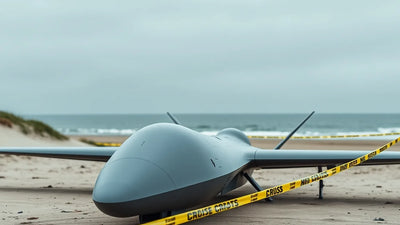
The Trump Administration’s much-touted Drone Dominance initiative hit a turbulence pocket this week. On June 18, 2026, the White House issued a new Presidential Memorandum invoking the Defense Production Act (DPA) to address “critical manufacturing bottlenecks” in the domestic unmanned aircraft systems supply chain. The action, while framed as a routine industrial policy step, has sent shockwaves through the commercial UAV community — and the used drone market is already feeling the pressure.

The memorandum explicitly targets production constraints for advanced avionics, propulsion units, and secure communication modules — components that the Pentagon has deemed essential for both military drones and the civilian models that share their supply chain. But the deeper implication is stark: America’s ability to scale non-Chinese drone manufacturing remains hobbled, years after bans on DJI and other foreign-made UAS first took effect. For commercial operators already navigating the FAA’s Part 107 maze, the DPA action signals that the promised flood of affordable, high-performance American drones is still a trickle — and that could reshape fleet strategies, maintenance plans, and investment timelines for the rest of the decade.
Background: Drone Dominance and the DPA Trigger
Launched in June 2025, the Drone Dominance initiative was billed as a comprehensive national strategy to make the United States the global leader in unmanned aviation — from military loitering munitions to agricultural spraying drones. It promised streamlined FAA approvals, expanded BVLOS corridors, and a $5 billion fund to boost domestic manufacturing. Yet 12 months later, the initiative’s manufacturing pillar has hit a wall.
Fleet readiness
Keep DJI hardware available without overbuying new units.
Use this news as a planning signal for inspected DJI aircraft, repair support, and trade-in timing.
According to internal industry documents obtained by defense trade publications, the Pentagon’s Defense Logistics Agency (DLA) reported in April 2026 that only 18% of the required components for next-generation UAS could be sourced from domestic suppliers without “significant lead time escalation.” The remaining 82% depend on a fragile web of overseas suppliers — many in allied nations — that are struggling to keep pace with surging demand. The DPA memorandum now gives the Secretary of Defense authority to prioritize and allocate materials such as specialized silicon carbide power modules, rare-earth magnets for high-efficiency motors, and tamper-resistant GPS antennas.
“This is a de facto admission that the Made-in-USA drone factory isn’t running at full capacity,” says Dr. Elena Voss, a supply chain analyst at the Aerospace Industries Association. “The DPA is a hammer, but what we need is a whole new forge.” The memorandum also directs the FAA to expedite type certification for three new domestic drone models, including one from a startup that reportedly uses an open-source autopilot architecture — a move some see as a hedge against proprietary systems like DJI’s.
The Manufacturing Bottlenecks — In Plain Sight
What exactly is slowing down U.S. drone production? The memorandum highlights four critical chokepoints. First, advanced silicon carbide (SiC) power modules, essential for high-efficiency motor controllers in long-endurance drones, are in short supply globally, with key fabrication plants in the U.S. still ramping up. Second, the supply of neo-rare-earth magnets, used in BLDC motors to achieve power-to-weight ratios competitive with Chinese-made units, faces a single-source bottleneck from a partner nation. Third, secure RF module production relies on a limited number of domestic fabs certified for defense-grade encryption. Fourth, the labor pool for precision electro-mechanical assembly remains thin, with training pipelines still maturing.
Ready to Upgrade Your Fleet?
Browse our collection of inspected pre-owned DJI drones — inspected, flight-tested, and backed by a 6-month warranty. Save up to 40% versus retail.
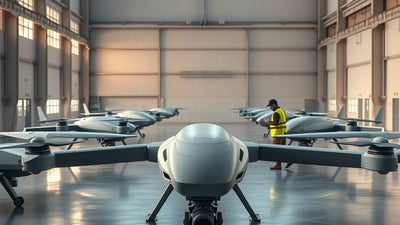
These bottlenecks aren’t just a Pentagon problem. Commercial drone manufacturers like Skydio, Autel Robotics (whose U.S. arm faces ongoing scrutiny), and newer entrants such as BRINC and Volansi are all sourcing from the same constricted pool. The result: delivery timelines for new enterprise drones have stretched from 8–12 weeks in early 2025 to 20–26 weeks by mid-2026. For a commercial operator running a fleet of six drones for aerial mapping or precision agriculture, that delay can mean lost contracts and idle pilots.
The DPA action does include a $1.2 billion allocation for expanding domestic SiC fabrication and workforce training. But industry insiders note that even with expedited permitting, new fab capacity won’t come online until late 2027 at the earliest. “We’re looking at a two-year gap where supply lags demand,” says Marco Reyes, founder of supply chain consultancy Capstone Aero. “That gap will be filled by either used equipment — or by a loophole for foreign drones.”
What This Means for Commercial Drone Operators
For everyday pilots and commercial operators, the DPA memorandum is far from an abstract policy document. It directly affects aircraft availability, pricing, and regulatory timelines. Let’s break it down by audience.
For enterprise operators relying on U.S.-made drones: If you’ve ordered a Skydio X10 or a BRINC Lemur for fire department inspections, expect further delays. The DPA prioritizes military orders first, meaning civilian customers may be bumped. Some operators are already reporting that their orders have been “indefinitely deferred” while manufacturers reallocate components. The only immediate workaround is to buy used — but even the pre-owned DJI drones on the secondary market are seeing price spikes as demand for reliable, available hardware surges.
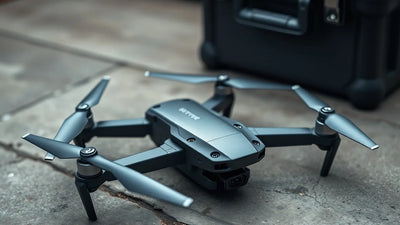
For operators using DJI and other non-U.S. drones: The Drone Dominance initiative has maintained regulatory pressure on foreign-made drones, with some federal agencies now outright banning domestic use. But the DPA action inadvertently acknowledges that the U.S. cannot yet replace those imports. This dynamic creates a paradoxical opportunity: commercial operators in states without blanket bans can still legally fly their DJI Mavic 3 Enterprise or Matrice 350 RTK platforms — and the used drone market for these models is booming as a result. Reboot Hub has seen a 34% month-over-month increase in inquiries for refurbished DJI units since the memorandum was leaked last week.
For those awaiting BVLOS approvals: The FAA has tied expanded BVLOS rules to the availability of “secure and reliable” UAS. With domestic production in flux, the FAA may delay finalizing the long-promised BVLOS rule until at least 2027. That’s a heavy blow for companies building drone delivery networks or corridor inspection programs. Some operators are pivoting to hybrid strategies — using older but reliable DJI drones for commercial work within visual line-of-sight while waiting for U.S.-made BVLOS-certified platforms that may never arrive on schedule.
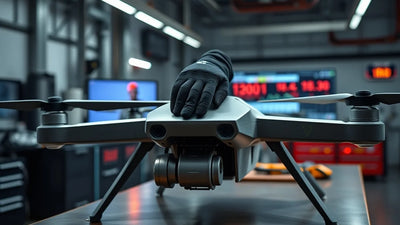
Market analysis: The immediate impact on everyday drone pilots is a squeeze: new equipment is harder to order, more expensive, and slower to arrive. For commercial operators, the calculus is shifting from “which new drone should I buy?” to “how do I best extend the life of my existing fleet?” That’s precisely where the second-hand and refurbished market becomes critical. Reboot Hub’s inspection and repair services are seeing a 50% increase in bookings as operators opt to overhaul their current drones rather than wait for new ones. The used gear that pilots are trading in is often still in excellent condition — modern DJI models with 100–200 flight hours — but the market dynamics are pushing prices up. A DJI Matrice 350 RTK that sold for $9,000 new in 2024 now commands $7,200 on the secondary market, compared to a typical resale value of $5,800 a year ago. That 24% premium reflects the shortage of alternatives.
The Second-Hand Market: A Strategic Hedge
For commercial operators, the smart move in this environment is to treat the used drone market as a strategic asset. Rather than placing a risky deposit on a U.S.-made drone with a 26-week lead time, many are snapping up inspected pre-owned units — especially DJI models — that are immediately available and compatible with existing workflows. The DPA action may have been intended to boost American manufacturing, but in the short term, it has supercharged the demand for proven foreign hardware that already has a track record of reliability and parts support.
At Reboot Hub, we’re seeing a surge in operators who want to buy, sell, or repair their drones under the current conditions. Our pre-owned DJI drones come with a 6-month warranty and are flight-tested to factory specs — exactly what operators need to bridge the gap while the DPA measures slowly unclog the production lines. And for those facing breakdowns in their current fleet, our professional DJI repair services use genuine parts and can turn around most repairs in under a week — a lifeline when new replacements are months away.
The bottom line: the DPA action of June 2026 is a watershed moment for the commercial drone industry. It confirms what many operators have suspected — that the U.S. drone manufacturing base is not yet ready to deliver on the promises of the Drone Dominance initiative. Until new factories come online, the smartest play is to secure reliable hardware now, maintain it meticulously, and keep operations running by supporting the thriving ecosystem of pre-owned and refurbished drones. The sky isn’t falling — but the parts may be.
Frequently Asked Questions
Will the DPA order delay my commercial drone certification under Part 107?
Not directly. Part 107 certification is a pilot licensing process handled by the FAA, and no changes have been announced. However, the equipment you use to fly under Part 107 — especially for advanced operations like Part 107.29 (night flight) or Part 107.31 (VLOS) — may become harder to source. The DPA focuses on manufacturing, not pilot rules. Expect no change to remote pilot certificates, but plan for longer wait times if you need to replace your aircraft.
How does this affect the value of my DJI drone if I want to sell it?
In the current market, your used DJI drone is worth more than it was six months ago. The scarcity of new U.S.-made alternatives and the continued reliability of DJI hardware have pushed up resale prices. For example, a DJI Mavic 3 Enterprise with standard accessories now trades at around 70% of its original retail value, compared to 55% a year ago. Reboot Hub offers competitive trade-in values and a seamless selling process through our certified program.
Should I cancel my order for a U.S.-made drone and buy a used DJI instead?
That depends on your mission and compliance requirements. If you operate in a sector or region with no restrictions on foreign drones, buying a refurbishment-labeled DJI now is the fastest path to operational readiness. If you must comply with federal bans (e.g., for FAA-funded projects), you may need to wait for a domestic model — but confirm the lead time with the manufacturer first. In any case, Reboot Hub can help you evaluate both options with free consultations.
Looking Ahead: The Long Road to Drone Dominance
The DPA memorandum is a clear signal that the U.S. government is serious about building a domestic drone industry — but it also shows how far we are from the finish line. For commercial operators, the smart strategy is to focus on practical, immediate solutions: extend the life of current fleets, invest in repair and maintenance, and keep an eye on the second-hand market for high-quality, affordable equipment. At Reboot Hub, we’re committed to helping the drone community navigate these turbulent times with transparent evaluations, quality-certified inventory, and expert repair. The future of U.S. drone dominance may be built in new factories, but today’s missions depend on the hardware you can fly tomorrow.
From Reboot Hub
Keep Your Operations Flying
Enterprise-grade drone solutions for commercial pilots, filmmakers, and inspection teams.
Pre-owned Fleet
Fully inspected DJI drones with 6-month warranty. Save up to 40%.
Browse Inventory ->