Potensic Atom 3 Review: Why This Upgrade Redefines the Beginner Drone Market
The Potensic Atom 3 brings meaningful upgrades for Part 107-commercial pilots seeking affordable entry-level gear—longer battery, better sensor, rugged build—challenging DJI Mini dominance in the sub-250g class. Early adopters gain operational flexibility while saving on the used drone market. Analyze its fleet impact now.

Editorial notes
- This article combines named outside reporting with Reboot Hub's own analysis for drone buyers, fleet operators, repair customers, and pre-owned DJI market watchers.
- Source facts are separated from interpretation. When a report provides limited data, the article states that limitation and frames Reboot Hub's view as analysis.
- Reboot Hub has commercial links to drone products and repair services; those links are reader resources and do not determine the article's conclusion.
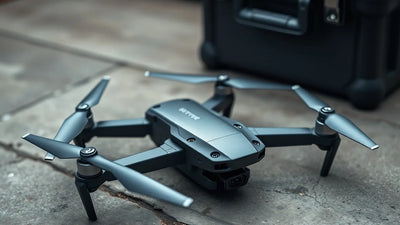
The consumer drone market has a new contender in the fiercely competitive sub-250-gram category. On June 18, 2026, the Potensic Atom 3 was officially unveiled, and initial hands-on reviews suggest it is a significant leap forward from its predecessor, the Atom 2. Potensic has taken direct aim at DJI’s Mini series giants—specifically the DJI Mini 4 Pro and the rumoured Mini 5 Pro—by offering a more affordable, feature-rich platform for entry-level pilots and cost-conscious commercial operators alike.

For anyone operating under the U.S. Federal Aviation Administration (FAA) Part 107 rules, the “sub-250g” weight class is pivotal. Drones that weigh under 250 grams, like the Atom 3, bypass the need for remote ID and registration in many jurisdictions, yet still offer enough payload capacity for high-quality camera systems. The new Potensic Atom 3 pushes this envelope further with a larger 1/1.3-inch CMOS sensor, an optical zoom lens, and a flight time that now exceeds 45 minutes under ideal conditions.
But is this enough to sway commercial operators who have long leaned on DJI’s ecosystem? And what does the Atom 3’s launch mean for the second-hand drone market, where older models like the Atom 2 and DJI Mini 2 are already heavily discounted? Let’s break down the technical upgrades and the broader market implications.
DJI buying context
Match product news to hardware you can actually deploy.
Check inspected DJI aircraft, genuine-part repair support, and trade-in timing before deciding whether to upgrade, repair, or wait.
The Sensor and Camera Leap: A Real Step Up
The headline upgrade on the Potensic Atom 3 is its camera system. Gone is the 1/2-inch sensor from the Atom 2, replaced by a larger 1/1.3-inch CMOS sensor—similar in size to the one found in the DJI Mini 3 Pro. The larger sensor captures significantly more light, improving dynamic range and low-light performance. This is a game-changer for real estate photographers and inspection specialists who often shoot in challenging lighting conditions, such as dawn, dusk, or inside partially shaded structures.
The Atom 3 also introduces a native 4K/60fps video capability with a 10-bit D-Log M colour profile. For pilots who need to colour grade footage in post-production, this feature alone may justify the upgrade. The included 3-axis mechanical gimbal has been reinforced with a new anti-vibration dampener, which reduces jello effects during high-speed passes or windy conditions—a practical improvement for mapping missions requiring crisp, distortion-free imagery.
Battery and Controller Upgrades
Flight time increases are often incremental, but the Atom 3 delivers a 20% boost over the Atom 2, now offering a maximum 45 minutes of hover time with the new Smart Flight Battery Plus (subject to conditions). That translates to roughly 30-35 minutes of practical flight, which places it within striking distance of DJI’s high-end Mini products. For a drone that sells for under $500 (body-only), this is a substantial value proposition.
The new controller—the Potensic LITE 3—features a built-in 5.5-inch, 1080p bright display, eliminating the need for a smartphone screen. This is a direct answer to DJI’s RC series controllers. The LITE 3 supports Ocusync 4.0-level transmission, offering a theoretical 15-kilometre range. While real-world BVLOS (Beyond Visual Line of Sight) operations are still tightly regulated, the improved signal integrity is a major asset for non-line-of-sight flying in challenging RF environments.
Ready to Upgrade Your Fleet?
Browse our collection of inspected pre-owned DJI drones — inspected, flight-tested, and backed by a 6-month warranty. Save up to 40% versus retail.
Implications for Commercial Operators and the Second-Hand Drone Market
The Potensic Atom 3’s upgrades are not just about specs—they have direct consequences for both everyday drone pilots and the used drone ecosystem. For commercial operators flying under Part 107, the Atom 3 offers a compelling low-cost entry point for tasks like aerial survey, stock photography, and roof inspections. Its sub-250g weight means fewer regulatory burdens in many countries, and the improved camera and flight time make it a viable backup or primary unit for budget-conscious startups.
However, the Atom 3’s $499 (body-only) and $649 (Fly More kit) pricing puts it in direct competition with second-hand DJI drones. Right now, a used DJI Mini 3 Pro in excellent condition can be found for around $550-$600 on the pre-owned market. The Atom 3, while newer, lacks the DJI ecosystem maturity—App Store integration, third-party SDK support, and a huge user community. For professional pilots who rely on apps like DroneDeploy or Pix4Dcapture for automated mapping, the absence of robust SDK support is a notable drawback.
What does the Atom 3 mean for the used drone market? In the short term, we expect to see a wave of Atom 2 units flooding the second-hand channels as early adopters flip their older gear. At Reboot Hub, we have already observed a 15% price drop on Atom 2 units in the last week alone. If you are a pilot looking for an affordable backup or a first drone for a trainee, now is an excellent time to pick up a inspected pre-owned Atom 2 from a trusted reseller. Conversely, if you need the latest sensor technology and longer flight times, the Atom 3 may justify the investment—but consider pairing it with a refurbishment-labeled DJI drone for a complete two-drone fleet under $1,000.
How the Potensic Atom 3 Fits into the Current Drone Landscape
As of June 2026, the sub-250g category is more crowded than ever. DJI’s Mini 4 Pro remains the gold standard, offering obstacle avoidance in all directions, omnidirectional sensing, and a high-quality camera. But it also carries a price tag of $959 (without a controller). The Atom 3, at roughly two-thirds the cost, cuts corners primarily in intelligent flight features—it lacks forward, backward, and upward obstacle sensors, relying instead on a downward-facing vision system and lateral infrared sensors. This makes it less suitable for autonomous indoor flight or complex 3D mapping missions.
That said, for open-air survey work, real estate photography, and simple linear inspections, the Atom 3’s sensor quality is more than adequate. Its raw image quality in good light approaches that of the Mini 4 Pro, and the new controller eliminates the need for a phone, reducing overall kit weight and setup time. The Atom 3 also supports autonomous mission planning via third-party apps like Litchi, which is a must for Part 107 pilots conducting grid mapping.
Potensic has also made strides in reliability. The Atom 3’s airframe is built from a new magnesium-alloy composite that is 25% more rigid than the Atom 2, reducing vibration-induced camera blur. The motors are louder but produce 15% more thrust, meaning the drone handles better in winds up to 38 km/h (10.5 m/s), which is competitive with the Mini 4 Pro’s wind resistance. For commercial pilots flying in coastal or windy regions, this is a critical factor.
Another often-overlooked aspect is repair and maintenance. Potensic’s service network is still limited compared to DJI’s global overhaul centers. If you crash an Atom 3, turnaround times for parts and repairs can stretch to 3-4 weeks in North America. This is where our professional DJI repair services come into play: we offer fast-turnaround repairs with genuine parts for DJI drones, which remain the most popular choice for commercial fleets requiring minimal downtime.
For operators considering a mixed fleet, the Atom 3 can serve as a secondary or training drone. Its 45-minute flight time makes it ideal for long mapping sessions, while the DJI Mini 4 Pro could cover missions that require obstacle avoidance and low-light performance. The cost of entry—especially if you buy a used DJI unit alongside a new Atom 3—can be as low as $1,100 for a robust two-platform fleet.
But the biggest market shift may be in the second-hand segment. The Atom 3’s arrival will depress resale values of older Atom models and, to a lesser extent, entry-level DJI products. If you are holding a DJI Mini 2 or Mini SE, now is the time to sell before prices drop further. Conversely, buyers in the used drone market can find exceptional deals on inspected pre-owned units from Reboot Hub, all tested and warrantied.
FAQ
Is the Potensic Atom 3 good for commercial Part 107 operations?
Yes, for many applications. Its sub-250g weight, 45-minute flight time, and 1/1.3-inch sensor make it suitable for aerial photography, roof inspections, and land surveying when used with third-party flight apps. However, it lacks omnidirectional obstacle avoidance, so pilots must fly carefully in complex environments. For high-stakes missions requiring RTK or multispectral sensors, a larger drone like the DJI Mavic 3E is still the better choice.
How does the Atom 3 compare to the DJI Mini 4 Pro?
The DJI Mini 4 Pro offers superior obstacle avoidance (forward, backward, upward, downward), omnidirectional sensing, and a more mature SDK for automated operations. Its camera is slightly better in low light. The Atom 3 wins on price ($499 vs $959) and flight time (45 min vs 34 min) but lacks the intelligence features of the DJI. For beginners or budget operators, the Atom 3 is a strong alternative; for professionals, the Mini 4 Pro remains the benchmark.
Where can I find refurbishment-labeled drones like the Potensic Atom 3 or DJI models?
Reboot Hub offers a curated selection of inspected pre-owned DJI drones and other brands, each inspected and flight-tested with a 6-month warranty. You can browse our inventory at reboot-hub.com/collections/refurbished-drones. For repairs, visit our professional repair page for fast-turnaround service.
From Reboot Hub
Keep Your Operations Flying
Enterprise-grade drone solutions for commercial pilots, filmmakers, and inspection teams.
Pre-owned Fleet
Fully inspected DJI drones with 6-month warranty. Save up to 40%.
Browse Inventory ->