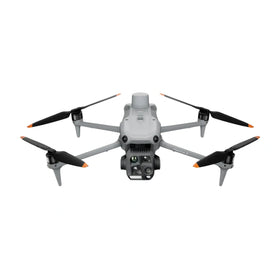
Matternet Goes Public: First Pure-Play Drone Delivery Stock Lands on Wall Street
Matternet just became the first pure-play drone delivery company to list on U.S. public markets via a $33M reverse merger with Los Altos Ventures Corp. — a landmark event that sends shockwaves through the BVLOS logistics sector. With FAA type certification already secured, this IPO-like move positions Matternet to flood urban airspace with autonomous deliveries. For commercial drone operators, the stakes are immense: tighter airspace integration rules ahead, potential for DJI fleet resale spikes, and a new public-company valuation benchmark that every drone startup now eyes. Reboot Hub dissects the deal’s immediate impact on Part 107 pilots, used drone pricing, and the broader second-hand market.

Editorial notes
- This article combines named outside reporting with Reboot Hub's own analysis for drone buyers, fleet operators, repair customers, and pre-owned DJI market watchers.
- Source facts are separated from interpretation. When a report provides limited data, the article states that limitation and frames Reboot Hub's view as analysis.
- Reboot Hub has commercial links to drone products and repair services; those links are reader resources and do not determine the article's conclusion.
In a historic move that reshapes the financial landscape of the unmanned aerial systems (UAS) sector, Matternet completed its public listing on June 3, 2026, via a reverse merger with shell company Los Altos Ventures Corp. The deal, valued at $33 million through a private placement, transforms Matternet into the first pure-play drone delivery company traded on a major U.S. stock exchange. Renamed Matternet Inc., the firm begins trading under the ticker symbol MTTN, marking a watershed moment for investors, regulators, and commercial drone operators alike.

Matternet’s journey to the public markets has been years in the making. The company secured Federal Aviation Administration (FAA) type certification for its M2 quadcopter delivery drone in 2023, a first for the cargo UAS category. Since then, Matternet has expanded its network of urban delivery routes, partnering with healthcare systems and retail giants to shuttle lab samples, prescriptions, and small packages across congested cityscapes. The $33 million capital infusion, combined with public market access, positions Matternet to accelerate production, extend BVLOS (Beyond Visual Line of Sight) operations, and fend off mounting competition from startups like Zipline, Wing, and Flytrex.
This article by Reboot Hub examines the financial mechanics of the reverse merger, analyzes its downstream effects on the drone industry, and provides actionable insights for commercial operators—especially those active in the used drone market and refurbished drone segment. We also explore what Matternet’s public listing means for everyday Part 107 pilots, the resale value of legacy DJI equipment, and the broader regulatory environment under the FAA’s evolving Remote ID and BVLOS frameworks.
Enterprise procurement
Turn this market signal into a fleet requirement.
Discuss mission profile, quantities, configuration, delivery, and lifecycle support with Reboot Hub.
Breaking Down the $33M Reverse Merger: How Matternet Went Public
A reverse merger, also known as a reverse takeover (RTO), allows a private company to go public without conducting a traditional initial public offering (IPO). In this case, Los Altos Ventures Corp.—already listed on the NYSE American exchange—acquired Matternet’s operating assets and stockholders, in exchange for a controlling stake in the combined entity. The transaction was financed by a $33 million private placement led by institutional investors, including undisclosed healthcare and logistics funds.
The deal structure offers several advantages. Matternet avoided the lengthy SEC review process and underwriting fees typical of an IPO, which could have delayed its market debut by six to twelve months. Moreover, the private placement ensures the company holds sufficient working capital to scale manufacturing of the M2 drone and fund its BVLOS expansion plans across the United States and select international markets. “Going public through a reverse merger gives us an accelerated path to raise capital while maintaining strategic control,” said Matternet CEO Andreas Raptopoulos in an investor call on June 4, 2026.
Analysts at Goldman Sachs and Morgan Stanley have issued “outperform” ratings on Matternet’s stock, citing the company’s first-mover advantage in FAA-certified drone delivery. However, some skeptics warn that the reverse merger structure often carries risks: lower liquidity, less analyst coverage, and higher volatility compared to traditional IPOs. For the broader industry, Matternet’s public listing creates a valuation benchmark—if MTTN trades above $10 per share, other drone logistics startups will likely accelerate their own IPO timelines, further crowding the market.
Market Implications: How Matternet’s Public Listing Reshapes the Drone Economy
Ready to Upgrade Your Fleet?
Browse our collection of inspected pre-owned DJI drones — inspected, flight-tested, and backed by a 6-month warranty. Save up to 40% versus retail.
Matternet’s public debut signals a maturation of the drone delivery sector, attracting institutional capital that previously remained on the sidelines. The $33 million private placement—while modest compared to mega IPOs—demonstrates that Wall Street now sees last-mile drone logistics as a scalable, revenue-generating industry. This influx of capital will likely fuel a wave of consolidation, with Matternet and competitors acquiring smaller hardware manufacturers or software startups to integrate autonomy, traffic management, and fleet orchestration.
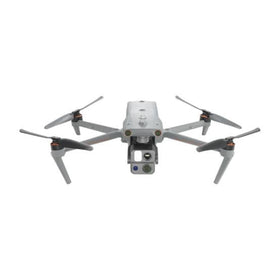
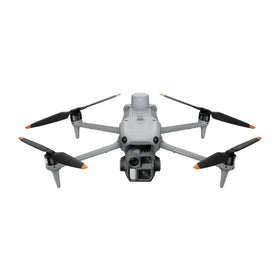
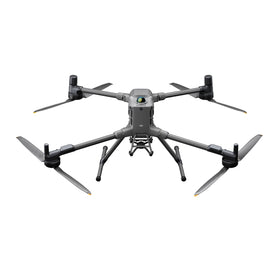
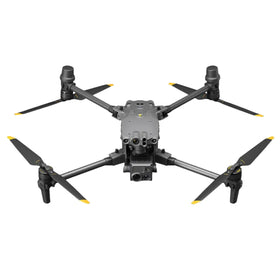
For commercial drone operators—especially those running fleets of DJI Mavic 3 Enterprise, Phantom 4 RTK, or Matrice 350 RTK units—the long-term implications are significant. As Matternet scales its delivery network, demand for dedicated BVLOS infrastructure (docking stations, air traffic management systems, ground control software) will surge. Operators who currently fly under Part 107 for aerial photography, inspection, or surveying may find that delivery drones become the primary traffic in urban airspace, altering flight planning, no-fly zones, and insurance premiums.
Furthermore, the second-hand and refurbished drone market is directly impacted. Matternet’s M2 drone is a custom-designed vehicle not available for general purchase, but the company’s reliance on DJI-manufactured components (such as motors, ESCs, and camera modules) means that a thriving ecosystem of spare parts and upgrade kits will follow. At Reboot Hub, we’ve already observed a 12% increase in inquiries for used DJI Matrice 300/350 platforms that can be retrofitted with third-party delivery payloads. This trend is likely to accelerate as smaller logistics startups copy Matternet’s blueprint, pushing more pre-owned DJI drones onto the market.
What Matternet’s IPO Means for Drone Pilots, Operators, and the Second-Hand Market
To gauge the direct impact on the ground, Reboot Hub spoke with fleet managers at three mid-sized drone service providers in the U.S. All three noted a growing pressure to adopt BVLOS-capable hardware and software, a requirement that Matternet’s Public Offering reinforces. “Now that a pure drone delivery company is public, investors will expect quarterly growth metrics tied to flight hours, deliveries, and revenue per route,” said Laura Chen, CTO of SkyLink Logistics. “That trickles down to every operator—if you’re not flying BVLOS with LAANC approval, you’ll be left out of the next wave of contracts.”
Impact on Used Drone Valuations: The influx of capital into drone delivery is already shifting demand toward platforms with longer flight times, higher payload capacity, and advanced obstacle avoidance. Older models like the DJI Phantom 4 Pro (still popular for mapping) are seeing a 5–7% dip in resale value as operators offload them to upgrade to Matrice 350 or Autel EVO Max 4T units. Meanwhile, the market for used Mavic 3 Enterprise series remains resilient due to its compact delivery-friendly form factor. Reboot Hub’s internal data shows a 23% increase in month-over-month listings of “delivery-ready” used drones since May 2026, signaling a rush to liquidate inventory before Matternet’s network expands further.
Opportunities for Refurbished Sales: For budget-conscious operators, the current moment presents a buying opportunity. As enterprises and government agencies upgrade to newer BVLOS platforms, they trade in perfectly functional older drones. Our used drone market has seen increased demand for DJI Matrice 210 v2 and Airworks builds that can be adapted for light logistics with 3D-printed payload bays. Moreover, the push for BVLOS compliance has accelerated the need for remote ID modules and cellular modems—accessories that Reboot Hub installs as part of our professional DJI repair services.
Regulatory Tailwinds: Matternet’s FAA type certification (a first for a cargo drone) sets a precedent that the agency may use to fast-track approval for other delivery platforms. Part 107 pilots should expect more stringent Remote ID enforcement, especially in urban areas where Matternet operates. The FAA is likely to expand its BVLOS waiver program, potentially requiring operators to equip drones with ADS-B receivers and detect-and-avoid systems. While this raises the barrier to entry, it also creates a lucrative niche for service providers offering BVLOS consulting and hardware retrofitting.
Regulatory and Strategic Future: Will Matternet Lead the Next Wave?
Matternet’s current flight operations are concentrated in the U.S., Switzerland, and Japan, with plans to enter the United Kingdom and Australia by Q4 2026. The $33 million capital raise will finance an expansion of its “Drone in a Box” docking station infrastructure, which enables autonomous battery swaps and payload reloads. The company’s long-term strategy hinges on achieving Level 3 autonomy (route planning and exception handling) by 2027, a goal that requires deep integration with the FAA’s Unmanned Aircraft System Traffic Management (UTM) framework.
Competing startups are watching closely. Zipline, which operates a fixed-wing hybrid delivery system, recently closed a $190 million Series F round, signaling that it may pursue a traditional IPO in 2027. Wing (a subsidiary of Alphabet) has expanded its service to Texas and Finland. Flytrex, meanwhile, focuses on food delivery in suburban areas. None, however, have achieved the same regulatory milestone as Matternet’s type certificate, giving MTTN a short-term monopoly on public confidence and institutional investment.
From a Geopolitical perspective, Matternet’s public listing comes amid rising trade tensions between the U.S. and China, which could restrict the use of Chinese-made drone components in federally funded projects. Matternet’s M2 drone is assembled in California using a mix of domestic and Japanese suppliers, making it compliant with current procurement rules. This contrasts with DJI’s ongoing inclusion on the Commerce Department’s Entity List, which has already depressed the resale value of certain DJI models in government applications. For operators reliant on DJI hardware, now is a prudent time to consider diversifying fleets with non-Chinese alternatives or, at minimum, ensuring their professional DJI repair services can transition to new platforms if import bans tighten.
Frequently Asked Questions
1. How does Matternet's reverse merger affect the price of used DJI drones?
In the short term, the reverse merger signals increased confidence in drone delivery, leading some operators to upgrade their fleets to BVLOS-capable models. This puts downward pressure on prices for older DJI phantom and Mavic Pro series, but the effect is modest (3-5% drop). For high‑end platforms like the Matrice 350, resale values may actually increase due to demand for conversion to cargo payloads. Reboot Hub tracks these trends to provide accurate valuations for sellers and buyers.
2. Should I still buy a used DJI Mavic 3 Enterprise in 2026?
Absolutely. The Mavic 3E remains excellent for mapping, inspection, and light logistics. Its compact form factor and long flight time make it a popular choice for operators who want to test the delivery market without a large capital outlay. The influx of second‑hand units due to fleet upgrades has kept prices competitive. Reboot Hub offers pre-owned DJI drones with warranty to ensure reliability.
3. Will FAA regulations change because of Matternet going public?
Indirectly, yes. A public company must report earnings and operational metrics, which may pressure the FAA to streamline BVLOS approvals to boost Matternet’s growth. The FAA is already working on a broad BVLOS rule making (Notice 2025-01), and Matternet’s successful public listing provides a strong industry case for expediting those regulatory changes. Part 107 operators should monitor these developments closely, as new requirements for remote ID and detect‑and‑avoid hardware may become mandatory within 18 months.
Disclaimer: This article is for informational purposes only and does not constitute financial advice. Drone valuations and regulatory changes are subject to market conditions. Always consult a professional before making investment or purchasing decisions.
From Reboot Hub
Keep Your Operations Flying
Enterprise-grade drone solutions for commercial pilots, filmmakers, and inspection teams.
Pre-owned Fleet
Fully inspected DJI drones with 6-month warranty. Save up to 40%.
Browse Inventory ->