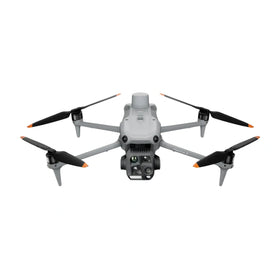
Kratos Stock Soars 11% on Defense Drone Momentum: Market Analysis
Kratos (KTOS) stock surged 11.2% post-earnings, signaling explosive demand for affordable, jet-powered tactical drones. With the Pentagon pivoting to mass-producible Unmanned Combat Aerial Vehicles (UCAVs) and the US Air Force’s Collaborative Combat Aircraft (CCA) program gaining steam, the financial windfall is creating a seismic shift in global defense budgets. But what does a booming military drone industry mean for commercial operators flying Part 107 BVLOS routes or managing RTK survey fleets? This analysis decodes the stock rally, dissects Kratos' strategic advantage over defense prime contractors, and reveals how this wave of institutional investment is flooding the second-hand market with high-end industrial hardware—creating urgent opportunities for enterprise buyers at Reboot Hub.

Editorial notes
- This article combines named outside reporting with Reboot Hub's own analysis for drone buyers, fleet operators, repair customers, and pre-owned DJI market watchers.
- Source facts are separated from interpretation. When a report provides limited data, the article states that limitation and frames Reboot Hub's view as analysis.
- Reboot Hub has commercial links to drone products and repair services; those links are reader resources and do not determine the article's conclusion.
The defense drone sector just sent a clear signal to global markets. Kratos Defense & Security Solutions (KTOS) saw its stock price jump 11.2% in the 30 days following its latest earnings report, a surge that has caught the attention of institutional investors, Pentagon procurement officers, and commercial UAV operators alike. For the commercial drone industry-especially those of us tracking the used drone market for high-end enterprise platforms-this news is more than just a Wall Street headline. It is a direct indicator of where global capital is flowing, and how those capital flows will reshape supply chains, technology transfers, and the very definition of "drone" over the next decade.

As of June 6, 2026, the data is clear. Kratos, a relatively lean player compared to behemoths like Lockheed Martin or Northrop Grumman, is experiencing a valuation correction based on hard delivery numbers and future program wins. The company specializes in low-cost, high-performance jet-powered drones like the XQ-58A Valkyrie and the BQM-177A aerial target. These systems are not commercial DJI Phantoms; they are tactical, reusable, and designed for contested environments. The 11.2% post-earnings rally reflects a market that is finally pricing in a reality that defense insiders have known for two years: the era of the expensive, exquisite, few-in-number military drone is over. The era of the affordable, attritable, mass-produced unmanned system is here.
The Kratos Thesis: Affordable Attrition Wins
Kratos' earnings call, held roughly 30 days ago, revealed two critical data points that the market seized upon. First, Kratos booked a record backlog in its Unmanned Systems Division, driven primarily by the US Air Force's Collaborative Combat Aircraft (CCA) program. Second, the company confirmed on-schedule delivery of multiple Valkyrie prototypes, demonstrating a production velocity that primes have struggled to match. For defense analysts, this validates a thesis that cheaper, swarming drones capable of absorbing losses are more strategically valuable than a single, billion-dollar stealth fighter. This concept, known as "attritable" systems, is the central driver of the stock rally.
Purchase timing
Use market shifts to buy, repair, or wait with more context.
Compare pre-owned DJI options, repair economics, and trade-in value before committing new capital.
Ready to Upgrade Your Fleet?
Browse our collection of inspected pre-owned DJI drones - inspected, flight-tested, and backed by a 6-month warranty. Save up to 40% versus retail.
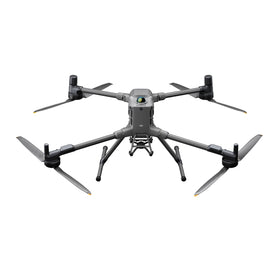
The commercial UAV operator reading this may wonder: "How does a military jet drone company affect my DJI M300 RTK survey operation?" The answer lies in supply chain economics. When defense budgets surge toward a specific technology-in this case, jet-powered, AI-enabled drones-the entire electronics and sensor ecosystem shifts. The same inertial measurement units (IMUs), thermal optics, and secure datalinks used in Kratos platforms trickle down into industrial drones. Furthermore, the talent pool deepens. Software engineers who cut their teeth on Kratos' autonomy stacks are increasingly hired by leading industrial drone manufacturers, accelerating the pace of innovation for commercial platforms that survey pipelines, inspect power lines, and manage precision agriculture with RTK correction.
What the Kratos Rally Means for Commercial Drone Operators
To decode the impact on the everyday commercial operator, we must answer a specific question: What does a rising defense drone tide do to the cost and availability of enterprise UAV hardware?
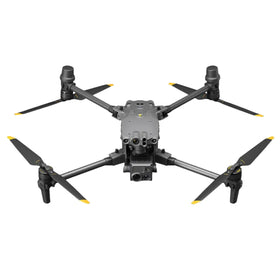
In the short term, the primary effect is inflationary pressure on high-end components. The global semiconductor market, already constrained by geopolitical tensions, now faces additional demand from the CCA program. This means suppliers of flight controllers, millimeter-wave radar, and high-resolution EO/IR sensors are prioritizing defense contracts over commercial orders. For a company flying a fleet of DJI Matrice 350 RTKs for construction site monitoring, this could mean longer lead times for replacement parts and a flattening of the typical depreciation curve. In other words, the residual value of a well-maintained, used industrial drone is rising.
This is precisely where the pre-owned DJI drones market becomes a strategic hedge. When new hardware supply chains are squeezed by defense priorities, the second-hand market offers immediate availability at a fixed cost. Operators who rely on professional DJI repair services and maintenance programs can extend fleet lifecycles, reducing the need to compete for scarce new units. Kratos' success, paradoxically, reinforces the value of the circular drone economy.
The Financial Mechanics: Decoding the Earnings Beat
Looking under the hood of the Kratos earnings report, the headline 11.2% move is supported by strong fundamentals. Revenues in the Unmanned Systems segment grew 18% year-over-year, exceeding analyst consensus of 14%. More importantly, gross margins expanded by 220 basis points, indicating that Kratos is benefiting from economies of scale as it ramps production of the BQM-177A for the US Navy. The company also guided that free cash flow would turn positive in the second half of fiscal 2026, a milestone that typically triggers further institutional buying.
From a technical analysis perspective, KTOS broke above its 200-day moving average on May 15, 2026, and has since held that level as support. The relative strength index (RSI) currently sits at 62, indicating there is still room for upside before the stock becomes overbought. Several analysts have upgraded their price targets to the $35-$40 range, citing the CCA program's Phase 2 contract award expected in Q4 2026. For hedge funds managing drone-sector ETFs, Kratos is now considered a core holding rather than a speculative bet.
This financial momentum is not occurring in a vacuum. The broader defense drone ecosystem-including companies like AeroVironment, Shield AI, and Anduril-is experiencing a parallel valuation uplift. The market is essentially pricing in a multi-decade shift in military doctrine toward unmanned systems. For commercial stakeholders, this signals that the technology stack (autonomy, swarming algorithms, secure datalinks) being developed for defense will, within 3 to 5 years, become standard in enterprise drones. The commercial operator who invests today in understanding autonomous BVLOS operations and AI-driven payload processing will be positioned ahead of the curve.
Regulatory and Industrial Chain Reaction
The Kratos rally also has implications for global regulatory frameworks, particularly FAA Part 107 and the emerging BVLOS rules. As the Pentagon invests billions into drone research, it simultaneously lobbies for relaxed airspace integration rules. The logic is straightforward: the same airspace that hosts Kratos' CCA prototypes must eventually accommodate delivery drones and air taxis. When the US Department of Defense pushes for faster FAA approval of BVLOS waivers for military testing, it creates precedent-and pressure-for commercial approvals.
For a drone service provider in Texas conducting long-range linear infrastructure inspections, this means the regulatory window for BVLOS operations is narrowing faster than many industry insiders anticipated. The Kratos financial story is, in part, a leading indicator of regulatory acceleration. Operators should begin planning capital expenditures for BVLOS-compliant hardware even before the rules are officially codified, ensuring their fleet is ready when the waiver floodgates open.
Moreover, the geographic concentration of defense drone R&D in the US-particularly in Southern California, Florida, and Oklahoma-is creating regional clusters of drone expertise. Operators located near these hubs will benefit from a skilled labor pool, easier access to repair services, and faster adoption of emerging technologies. Reboot Hub's network of certified technicians and refurbishment centers is designed to serve exactly this fast-moving, high-demand environment, providing enterprise clients with turnaround times that match the accelerated pace of the industry.
The Second-Hand Market: A Counter-Cyclical Opportunity
As defense spending drives up demand for new drone components, the second-hand market for enterprise drones is emerging as a counter-cyclical opportunity. While prime contractors like Kratos race to fulfill multi-billion dollar military contracts, commercial operators face the challenge of maintaining and upgrading their fleets without waiting 12-16 weeks for new parts. This is where the inspected pre-owned model proves its value.
Investors tracking the Kratos story should understand that a rising tide in defense spending does not directly lift all commercial boats. Smaller operators, schools, and surveying firms are often the first to feel the pinch of supply constraints. The wise procurement strategy in this environment is to lock in fleet value through refurbished hardware that has been professionally inspected and flight-tested. The gap between the escalating cost of new drones and the stable pricing of used inventory is widening, creating a margin opportunity for savvy operators.
FAQ: How the Kratos Stock Rally Affects Your Drone Business
Q: Should I delay my drone fleet upgrade because of changes in the defense market?
A: No. The supply chain pressure caused by defense contracts like the CCA program means new drone lead times may increase. It is advisable to secure inventory now. Consider a refurbishment-labeled unit from Reboot Hub as an immediately available alternative that offers the same performance at a lower cost.
Q: Will the technology from Kratos military drones trickle down to my commercial platform?
A: Yes, but on a 3-5 year lag. The autonomy algorithms, secure datalinks, and swarming capabilities being developed for Kratos' Valkyrie will eventually appear in high-end industrial drones. Investing in modular platforms that can accept firmware upgrades is a prudent hedge.
Q: How can I protect my drone business from the inflationary pressure on components?
A: Extend your fleet lifecycle by utilizing professional DJI repair services and purchasing pre-inspected used units. This strategy buffers your operation from new hardware supply constraints and preserves your capital for other growth investments.
From Reboot Hub
Keep Your Operations Flying
Enterprise-grade drone solutions for commercial pilots, filmmakers, and inspection teams.
Pre-owned Fleet
Fully inspected DJI drones with 6-month warranty. Save up to 40%.
Browse Inventory ->