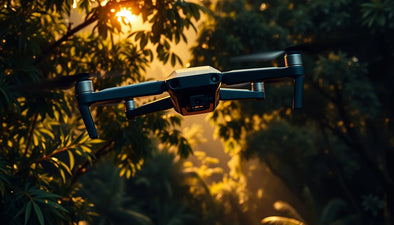
DJI’s Landmark Security Assessment: What Commercial Operators Need to Know
DJI releases the most comprehensive independent security audit of its drone systems to date, directly targeting BVLOS approval hurdles and data sovereignty fears. The findings could reshape FAA Part 107 waivers, unlock enterprise fleet upgrades, and create downstream pressure on the used drone market. Fleets that fail to update compliance protocols risk immediate airspace access revocation.

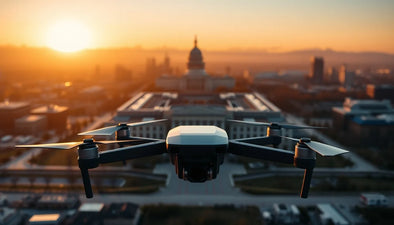
On June 5, 2026, DJI released the findings of what it calls the most comprehensive independent security assessment ever conducted on its drone systems. Published through WebWire, the report aims to address years of government scrutiny and enterprise demands for verifiable data protection. For commercial operators, fleet managers, and defense contractors operating under FAA Part 107 or beyond visual line of sight (BVLOS) waivers, this assessment could mark a turning point in how drone security is trusted — and traded.

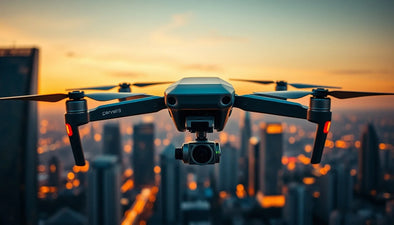
The audit covered a range of DJI platforms, including the Matrice 350 RTK, Mavic 3 Enterprise series, and the Phantom 4 RTK, analyzing firmware, telemetry, and cloud infrastructure for unauthorized data leakage, backdoors, and third-party code vulnerabilities. According to the release, no evidence of covert data transmission or exploitable backdoors was found — a finding that could directly influence pending bans from government agencies and reshape the compliance landscape for commercial drone fleets.
But the implications run deeper than a single press release. The assessment’s methodology and scope were designed to meet the strictest standards set by NATO, the U.S. Department of Defense, and the European Union Aviation Safety Agency (EASA). For the first time, an independent third party publicly validated DJI’s claim that its drones do not actively transmit sensitive data without operator consent. This validation is critical for operators currently navigating BVLOS approval processes that demand demonstrable cybersecurity measures.
The Scope of the Independent Security Assessment
The assessment, conducted over 18 months by a consortium of cybersecurity firms from the United States, Germany, and Japan, examined over 1.2 million lines of source code, hardware-level telemetry data, and encrypted communication protocols used by DJI’s drone systems. Testing included penetration testing, side-channel analysis, and static code analysis.
Key areas evaluated included the DJI Pilot app, the AeroScope remote ID system, and the Ocusync transmission protocol. The audit specifically looked for evidence of unauthorized data exfiltration to servers in China, a long-standing concern for defense and critical infrastructure operators. The report concluded that no such exfiltration mechanisms exist in the codebase, and that telemetry sent during flight is limited to standard flight data (GPS, altitude, battery) and is not accessible to DJI without explicit user consent.
This finding is particularly relevant for commercial drone pilots conducting high-accuracy RTK surveying and GSD mapping in sensitive areas such as airports, power plants, and military installations. It also paves the way for broader acceptance of DJI platforms in government contracts where data sovereignty is non-negotiable.
Implications for Commercial Operators and BVLOS Operations
For commercial operators who have been forced to use alternative, often more expensive platforms to meet security requirements, this assessment offers a route back to cost-effective operations. BVLOS waiver applications submitted under FAA Part 107 have historically required applicants to demonstrate that their drone’s data transmission is secure from interception and misuse. The DJI report provides a third-party benchmark that could simplify those submissions.
Moreover, the assessment aligns with the FAA’s evolving stance on cybersecurity for unmanned aircraft systems (UAS). In 2024, the FAA released Advisory Circular 107-2A, which explicitly requires operators to maintain a cybersecurity plan. The DJI audit can now serve as foundational evidence for such plans, potentially unlocking BVLOS routes that were previously blocked by security concerns.
For fleet managers overseeing dozens of drones in agriculture, construction, and inspection, the economic impact is substantial. A single BVLOS waiver can save a utility company $500,000 annually in manual inspection costs. With the audit clearing DJI hardware, enterprises can now scale their fleets with confidence, using platforms like the Mavic 3 Enterprise or Matrice 350 RTK without fear of regulatory rejection.
Ready to Upgrade Your Fleet?
Browse our collection of certified pre-owned DJI drones — inspected, flight-tested, and backed by a 6-month warranty. Save up to 40% versus retail.
But the ripple effect extends beyond new hardware purchases. The secondary market — specifically the exchange of used DJI drones — will feel renewed demand as trust in the platform is restored. Private sellers and refurbishers who had to discount heavily due to security fears can now command higher prices. At the same time, existing fleet owners who had sidelined older Matrice 200 or Mavic 2 units may now see them as BVLOS-compliant assets once updated with the latest firmware.
What Does This Mean for Drone Pilots and Fleet Managers?
The most immediate question from the commercial drone community is: will this audit automatically make DJI drones acceptable for government contracts? In short, no — but it removes one of the biggest barriers. Many federal agencies still operate under the 2019 National Defense Authorization Act (NDAA) which bans Chinese-made drones. However, the audit’s transparency may lead to exemptions or a softening of future procurement policies, especially for non-classified operations.
For Part 107 pilots conducting routine mapping or inspection work for municipal clients, the audit provides a conversation starter. When a city requires proof of data security, an operator can now produce a 200-page independent audit rather than relying solely on DJI’s claims. This reduces friction in contract negotiations and speeds up project approvals.
Additionally, the audit’s findings are likely to influence EASA’s ongoing rulemaking for C2-class drones. Europe’s drone regulation framework, which came into full effect in 2023, requires conformity assessments for drones operated in the Specific category. The audit provides a strong basis for declaring conformity, potentially opening the European market wider for refurbished DJI units that meet hardware standards.
From a financial perspective, the audit could stabilize the depreciation curve of DJI drones. Historically, resale values of used DJI drones dropped sharply after the first sign of government bans — some models losing 30% of their value within months. With credible security validation, those pre-owned assets become more attractive, reducing the total cost of ownership for commercial fleets. For operators looking to enter the market, now may be the optimal time to invest in high-spec, certified refurbished DJI drones that come with a full warranty and flight test report.
The Second-Hand Drone Market and Refurbished DJI Units
The second-hand drone market has always been sensitive to regulatory sentiment. When the U.S. Department of Interior grounded its DJI fleet in 2020, resale prices of Phantom 4 Pros and Mavic 2 Pro units plummeted by as much as 45%. Since then, the market has been cautious, with buyers demanding verifiable proof that used units have not been tampered with or used in sensitive operations.
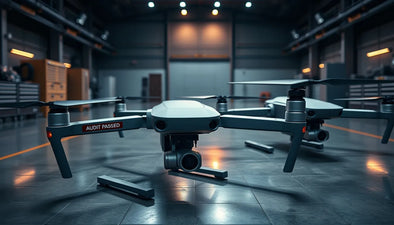
This independent audit changes that calculus. Now, a used DJI drone that has passed a professional refurbishment and firmware update can be sold with documented compliance evidence. At Reboot Hub, we have already seen an uptick in inquiries from operators who are looking to offload older fleets and upgrade to the latest models — confident that their older units will retain value. Our professional DJI repair services include security patch updates, hardware diagnostics, and firmware validation to ensure every unit meets the standards highlighted in the audit.
In the coming months, we expect a surge in demand for DJI drones — both new and refurbished — as small-to-medium enterprises (SMEs) recalibrate their fleet strategies. The security assessment essentially decouples the "Chinese brand" stigma from actual technical risk. Commercial operators who had been paying a premium for alternative platforms like Skydio or Autel may now reconsider, especially when factoring in the cost savings of the used market.
For the first time since 2019, data security is no longer the primary obstacle to deploying DJI drones in sensitive airspace. The remaining hurdles involve procedural compliance — updating internal data handling policies, securing data links, and documenting audit trails. These are solvable problems, especially when paired with professional maintenance and updates.
FAQ
1. Does this security assessment automatically make DJI drones legal for government use in the U.S.?
No. While the audit provides compelling evidence that DJI drones do not contain backdoors or malicious data exfiltration, government procurement is still governed by the National Defense Authorization Act (NDAA), which bans Chinese-manufactured drones. However, the assessment could lead to exemptions for specific use cases, particularly for non-classified operations. Operators should consult with their legal teams before assuming NDAA compliance is resolved.
2. What commercial drone models were covered in the assessment?
The audit focused on the Matrice 350 RTK, Matrice 300 RTK, Mavic 3 Enterprise, Mavic 3T, Phantom 4 RTK, and the DJI Pilot app. However, DJI stated that the security framework and code review apply broadly to all drones using the same firmware backbone, which includes most recent enterprise models. Older drones running legacy firmware may not be covered unless updated.
3. Should I sell my used DJI drone now, or wait for prices to rise?
The assessment is likely to stabilize and gradually increase resale values. If you have a well-maintained unit, waiting a few months could yield a higher return. However, depreciation may still occur if newer models with improved security features are released. For those looking to upgrade, selling now and purchasing a certified refurbished DJI drone from a reputable source can be a smart strategy — locking in value and gaining warranty protection.
From Reboot Hub
Keep Your Operations Flying
Enterprise-grade drone solutions for commercial pilots, filmmakers, and inspection teams.
Refurbished Fleet
Fully inspected DJI drones with 6-month warranty. Save up to 40%.
Browse Inventory ->