Unsettled Skies: DJI Audit, Clam Drops, and FAA's Battle for eVTOL Airspace.
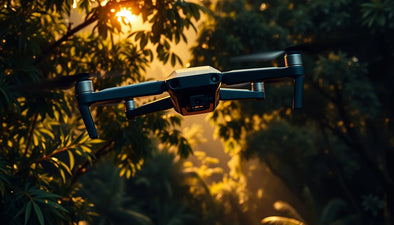
A sweeping DJI supply chain audit threatens to freeze inventory flow across North America just as the FAA opens a volatile new rulemaking for eVTOL airspace. Meanwhile, a clam-dropping drone program forces Part 107 operators to rethink BVLOS compliance. For commercial fleets heavy on RTK mapping and high-GSD inspection, this trifecta of regulatory and supply-chain shocks could determine whether your next drone is pre-owned or grounded.

June 5, 2026 — Reboot Hub Editorial — The drone industry woke up this morning to a volatile cocktail of regulatory thunder, corporate due diligence, and an unusual shellfish story. The three-pronged news cycle — centered on a deep-probe DJI audit, a pioneering "drone clam drop" program, and the FAA's aggressive push to codify electrified aircraft regulations — has sent shockwaves through commercial and second-hand drone markets alike. For fleet operators reliant on the DJI ecosystem, the implications are immediate, costly, and potentially transformative.

The Aero-News Network report, summarizing the Airborne-NextGen 06.03.26 broadcast, crystallizes a moment where supply chain integrity, environmental applications, and airspace governance collide. For the commercial drone pilot flying under Part 107, the question is no longer if their equipment will be scrutinized, but how deeply. And for those eyeing the used drone market, this is a pivotal inflection point.
Below, Reboot Hub breaks down each headline, dissects the commercial fallout, and offers actionable intelligence for operators, fleet managers, and investors navigating these unsettled skies.
The DJI Audit: A Deep Dive into Compliance and Its Ripple Effects on the Used Market
The most consequential story of the day is the comprehensive audit reportedly targeting DJI's supply chain and firmware integrity. While specific details of the Airborne-NextGen report were scarce, the implication is clear: regulatory bodies or key institutional clients are demanding unprecedented transparency into DJI's hardware provenance and data-handling protocols. This is not a superficial review; it is a forensic examination of components, from the GPS modules to the encrypted flight logs, aimed at ensuring that no part of the drone's operational stack poses a geopolitical or data-security risk.
For the commercial drone operator, this audit creates a chilling effect. Any delay in DJI's ability to certify its fleet — particularly the popular Matrice 350 RTK, Mavic 3 Enterprise, and Phantom 4 RTK — could stall procurement for government contracts, utility inspections, and surveying firms working on federally funded infrastructure projects. The immediate consequence is a tightening of supply. New-in-box units may command a premium, while surplus inventory held by distributors may be subject to hold orders until the audit's findings are published.
This is where the used drone market becomes a sanctuary for operators who cannot afford to wait. A certified pre-owned DJI Matrice 300 RTK, already battle-tested and fully compliant in terms of firmware, becomes an extremely attractive asset. The audit effectively validates the value of well-maintained, documented, and traceable second-hand equipment. In a climate of regulatory uncertainty, the pre-owned route offers a hedge against both supply chain disruption and sudden compliance costs.
The audit also signals a broader trend toward vendor risk management in the drone sector. Companies that historically bought the latest DJI flagship without scrutiny are now performing internal due diligence. This dovetails with the growing demand for drones that run on open-source flight controllers or that offer "data diode" hardware isolation for sensitive missions. For Reboot Hub, which specializes in the certified refurbished market, this is a clear signal to emphasize traceability, inspection logs, and firmware version history in every listing.
Furthermore, a delay in new product launches or even a temporary import block could inflate the residual value of existing fleet assets. A drone that was set for trade-in depreciation could instead see its price floor rise. The arbitrage opportunity is real: buy used now, fly through the audit uncertainty, and sell at a premium once new stock is cleared. This is not speculation — it is a logical market response to an artificial supply contraction.
Ready to Upgrade Your Fleet?
Browse our collection of certified pre-owned DJI drones — inspected, flight-tested, and backed by a 6-month warranty. Save up to 40% versus retail.
Drone Clam Drops: Environmental Innovation Meets Operational Liability
In a story that blends agricultural ingenuity with regulatory nuance, a new program has deployed drones to drop clams — specifically, seeding juvenile clams into coastal beds from the air. For those unfamiliar with the concept, it is a high-precision, low-impact alternative to traditional manual seeding methods. A DJI Agras T-series or a custom heavy-lift drone can disperse hundreds of thousands of tiny clam spat across a marshland or estuary in a fraction of the time, with minimal habitat disturbance.
But this is not just a heartwarming environmental tale. It is a BVLOS test case. Seeding operations often require the drone to fly beyond visual line of sight, over water, at night, or in foggy marine conditions. The FAA is watching closely. If the clam-dropping program proves successful and safe — without triggering a single near-miss or data privacy complaint — it could directly impact the agency's stance on routine BVLOS waivers for agricultural and environmental projects.
For the everyday commercial drone pilot, the clam drop story serves as a powerful example of how to build a compelling Part 107 waiver application. The key elements are here: a clear, documented safety case; a repeatable flight plan over unpopulated marshland; and a payload that poses negligible risk in the event of a crash. This is the gold standard for proving beyond reasonable doubt that your drone operation is safer than the alternative.
From a second-hand market perspective, this development boosts demand for agricultural spray drones and heavy-lift platforms like the DJI Agras T40 or the T50. These are specialized aircraft that often see heavy use, meaning finding a well-maintained used unit with a full flight log is critical. A clam-dropping operator, for instance, may trade in their T40 for a newer model after one season, and that drone — once it has passed a rigorous inspection — becomes an ideal entry-level platform for another farmer or environmental group. The used market is the natural habitat for such high-capital, low-total-hours equipment.
FAA v. eAircraft Reg: The Battle for the Skies Intensifies
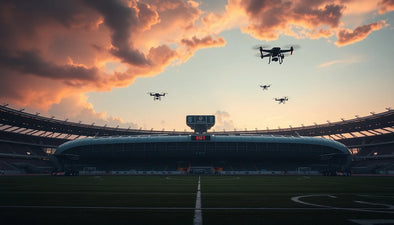
The third pillar of today's news is the FAA's latest salvo in the regulation of electric vertical takeoff and landing (eVTOL) aircraft. The agency is reportedly moving to create a specialized, more rigorous set of rules for piloted electric air taxis that are distinct from the current Part 107 framework governing unmanned drones. This is a logical but disruptive step. The FAA is essentially carving out a third lane in the airspace — between general aviation and small UAS — which will have profound implications for drone operators who share low-altitude airspace.
What does this mean for the Part 107 operator? It introduces complexity. Air taxis will require wide, unobstructed corridors near vertiports, which may overlap with your existing drone inspection route. Remote ID requirements for eVTOLs will be far more stringent, and the FAA may mandate geofencing zones around landing pads. For the surveyor mapping a city center with a Mavic 3 Enterprise RTK, this means airspace allocation becomes a dynamic, real-time negotiation. You may need software that can automatically re-route your mission to avoid an eVTOL's approach path.
The news also impacts the used drone market by reinforcing the value of fleet management systems and advanced remote ID modules. Operators who have older DJI drones without modular, upgradeable remote ID will face a ticking compliance clock. Upgrading to a drone that supports the latest ADS-B out or a firmware-patchable remote ID module becomes a necessity, not a luxury. This creates a natural upgrade cycle that benefits the used market: older, non-upgradable drones depreciate faster, while recent models with robust software support retain value.
What This Means for Commercial Operators and the Resale Market
Stepping back from the three headlines, a coherent picture emerges. The drone industry is rapidly bifurcating. On one side, you have approved, audit-clear supply chains and high-traceability used equipment. On the other, you have FAA-mandated airspace partitions and mission-specific environmental applications. The common thread is the premium placed on trust, compliance, and operational integrity.
For the drone pilot who relies on their aircraft for a living, the immediate takeaway is to audit your own fleet. Do you have full flight logs? Do you know the firmware revision history of every drone you own? Are your batteries still within service life? When you consider adding a second unit, the most intelligent acquisition path is through a verified reseller. Look for a platform that provides detailed inspection reports, battery cycle counts, and a warranty that covers component failure. This is not just about saving money — it is about buying insurance against audit risk.
Reboot Hub has long argued that the used drone market is the most resilient segment of the drone industry. Today's news proves it. While new inventory faces potential holds, audit delays, and premium price tags, the certified refurbished channel offers immediate availability, proven flight performance, and a transparent value proposition. If you are a utility inspector needing a backup drone immediately, or a surveying firm expanding your fleet, you cannot afford to wait for the audit dust to settle.
Moreover, for operators seeking to future-proof their gear, Reboot Hub offers professional DJI repair services that ensure your fleet stays at peak readiness. Whether it's a camera gimbal recalibration or an ESC replacement, the continuity of your operations depends on rapid, authentic maintenance. In a market where a grounded drone represents lost revenue and a blown deadline, professional repair is not a cost — it is an investment in operational continuity.
Industry Outlook: Q3 2026 and Beyond
Looking ahead, the next 90 days will be decisive. The DJI audit is expected to produce a preliminary report by late July, which could either clear the supply chain or impose conditional restrictions. The FAA's eVTOL NPRM (Notice of Proposed Rulemaking) will open a lengthy comment period, during which drone industry stakeholders must organize to ensure their airspace access is protected. And the clam-dropping project will likely apply for a commercial BVLOS waiver, setting a legal precedent for many other agricultural and environmental operations.
For the savvy operator, the strategy is clear: diversify your fleet, upgrade your compliance infrastructure, and treat the second-hand market as a strategic resource, not a budget compromise. The drones that pass the audit, the drones that can operate safely alongside air taxis, and the drones that can execute a precision clam drop will be the assets that define the next generation of unmanned aviation.
FAQ: Decoding the June 2026 Market Shifts
1. How does the DJI audit directly affect my existing fleet's resale value?
The audit creates a temporary supply-side shock for new DJI products, which typically causes used prices to stabilize or even rise, especially for popular models like the Matrice 300/350 series and the Mavic 3 Enterprise. If you own a well-maintained, firmware-updated drone with a full log, its resale value is currently stronger than it was a week ago. However, once the audit concludes and new inventory flows, prices may normalize. The window to sell or trade-in is now.
2. Can I use a standard DJI Agras drone for the "clam drop" program described?
Potentially, yes, but only if the drone is equipped for precise, low-altitude dispersal of solid material. The Agras T40 or T50, with its integrated spreading hopper, would be ideal. However, any such operation would require a specific FAA waiver for BVLOS flight over water, along with proof that the payload (clam spat) is non-hazardous. It is a perfect use case for a modified, commercially-owned drone — and a good reason to consider buying a used spray drone from a specialized reseller.
3. Is it worth upgrading my current drone to meet the new eVTOL airspace requirements?
Not immediately, but you should plan for it. The FAA's eVTOL rules are in an early comment phase, but the trend is toward more sophisticated airspace awareness. If you are flying in urban or suburban areas, consider upgrading to a drone that supports modular, software-upgradeable remote ID and ADS-B In receivers. Used DJI Matrice 300/350 RTK units are excellent candidates for such upgrades, while older Phantom 4 RTKs may hit their compliance ceiling within 18 months. Planning a transition now via the pre-owned market will spread out the capital cost.
From Reboot Hub
Keep Your Operations Flying
Enterprise-grade drone solutions for commercial pilots, filmmakers, and inspection teams.
Refurbished Fleet
Fully inspected DJI drones with 6-month warranty. Save up to 40%.
Browse Inventory ->