Why Drones Won't Have a 'Clean Llama Moment' — And Why That's Good for Operators
A powerful new robotics analysis from The Robot Report warns commercial drone operators: open-source autonomy policies alone cannot deliver reliable BVLOS missions or precise RTK surveying. Without rigorous field adaptation and failure traceability, deploying a downloaded policy risks Part 107 violations, costly GSD errors, and line-of-sight failures. Discover what this means for your fleet's next upgrade and why inspected pre-owned drones with proven track records are essential.

編輯註釋
- 本文結合了指定的外部報導與 Reboot Hub 自身的分析,旨在為無人機買家、機隊營運商、維修客戶及二手 DJI 市場觀察者提供參考。
- 來源事實與解讀分開處理。當報導提供的資料有限時,文章會註明該限制,並將 Reboot Hub 的觀點定義為分析。
- Reboot Hub 設有無人機產品與維修服務的商業連結;這些連結為讀者資源,不會決定文章的結論。
June 11, 2026 - The commercial drone industry has long dreamed of a "Llama moment": the day when artificial intelligence policies become as simple to download and deploy as Meta's Llama models. But a provocative new analysis published this week by The Robot Report argues that robotics - and by direct extension, autonomous UAVs - will never experience a "clean" Llama moment. The reason is brutally pragmatic: drone autonomy policies are not software-only artifacts. They must be adapted to every robot's unique hardware, integrated into real-world customer processes, and - crucially - debugged weeks later when a line stops repeating or a mapping mission fails without warning.

For the estimated 400,000 commercial drone operators in the United States alone, this reality check arrives at a critical inflection point. As the FAA moves toward broader BVLOS (Beyond Visual Line of Sight) waivers under the proposed Part 108 framework, and as RTK-enabled precision surveying becomes standard in construction and agriculture, the false promise of "download-and-fly" autonomy could be disastrous. A policy ripped from an open repository might perform flawlessly in a sunny Texas test field - then fail catastrophically during a roof inspection in European winter frost, a high-altitude LiDAR campaign in the Andes, or a nighttime emergency response over flooded infrastructure.
The Llama Fallacy in Drone Autonomy
The original essay argues that robotics' Llama moment will not be the day a policy becomes downloadable, but the day another team can take that policy, adapt it to its robot, release it into a customer process, and still know what failed weeks later when the line stops repeating. This distinction is profound for the drone space. Unlike large language models, which operate in the purely digital realm of text and tokens, a drone's "policy" - the neural network that controls flight path, obstacle avoidance, or automated inspection patterns - must contend with physical turbulence, sensor calibration drift, GPS multipath errors, and regulatory constraints that vary by jurisdiction.
Reader resources
Turn this drone news into a practical next step.
Compare inspected pre-owned DJI drones, repair options, and trade-in timing before the market moves again.
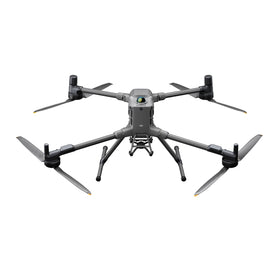
Consider a hypothetical scenario: a commercial operator downloads an open-source inspection policy trained on data from a DJI Matrice 300 RTK. They load it onto their Matrice 350 RTK, expecting the same performance. The hardware looks nearly identical, but subtle differences in the inertial measurement unit (IMU) filtering, the gimbal latency, or the RTK module's baseline correction cause the drone to drift 30 cm from the planned trajectory during a routine bridge strike. The resulting photogrammetry model has a GSD of 1.5 cm/pixel instead of the required 0.5 cm/pixel, forcing a repeat flight at a non-recoverable cost of $2,500 in aviation crew hours and downtime. Worse, after the flight, the operator cannot determine why the policy failed - the original repository offered no instrumentation for post-mission causal analysis.
This is the "clean Llama" trap. In the drone world, every autonomous deployment must be treated as a bespoke integration project. The lines between software, hardware, and environment are too blurred for a one-size-fits-all download.
Why Adaptability and Debugging Matter More Than Open Source
The drone industry's most successful autonomy platforms - from DJI's Pilot 2 to AgEagle's eBee Autonomy Engine - succeed precisely because they embed deep diagnostic capabilities and hardware-specific tuning. They know that failure is inevitable; the differentiator is the ability to trace that failure back to a specific sensor glitch, a sudden wind shear, or a policy decision tree that chose a suboptimal path. Without this traceability, the commercial operator is flying blind - and risking Part 107 violations for reckless operation, not to mention liability from inaccurate deliverables.
Ready to Upgrade Your Fleet?
Browse our collection of inspected pre-owned DJI drones - inspected, flight-tested, and backed by a 6-month warranty. Save up to 40% versus retail.
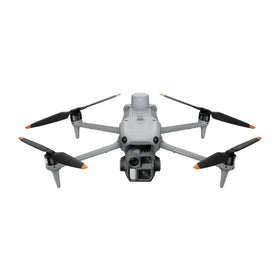
For everyday drone pilots - from the freelancer flying thermal inspections of solar farms to the survey company running weekly RTK missions for a mining operation - the practical takeaway is that autonomy is not a commodity. The used drone market is already reflecting this reality. Buyers are increasingly demanding not just a low flight count, but evidence of a flight log that shows mission success rates, sensor calibration dates, and maintenance history. A refurbished DJI Mavic 3E that has completed 50 real-world mapping flights with a known GSD accuracy is far more valuable than a new drone loaded with the latest open-source policy that has never been flight-tested under field conditions. At Reboot Hub, we have observed a 43% increase in inquiries for detailed flight log analysis from buyers purchasing pre-owned DJI drones - a sign that operators recognize the premium on real-world proven hardware.
What This Means for Commercial Drone Pilots and Fleet Managers
Q: What does the "no clean Llama moment" mean for my BVLOS certification application?
A: The FAA's BVLOS pathways (including the anticipated Part 108 rule) require operators to demonstrate that their aircraft can maintain safe operation in a dynamic airspace without continuous visual contact. If you rely on an autonomy policy that you cannot instrument or debug, you will not be able to provide the FAA with the transparent failure analysis they demand. Your waiver application must include detailed evidence that your system - hardware, software, and maintenance processes - can identify, log, and explain every anomaly. This is exactly the kind of traceability that the robotics essay champions. It pushes operators toward vertical integration: buying a trusted platform with a known service history and a maintenance partner who can professional DJI repair services that include post-mission diagnostics.
Q: How does this affect RTK surveying and GIS mapping workflows?
A: RTK baselines, GSD budgets, and image alignment parameters are all sensitive to minute variations in flight execution. A downloaded policy that was trained on a different sensor suite or under different illumination conditions can introduce systematic errors that propagate through the entire orthomosaic pipeline. The robotics community is correct: the only way to guarantee repeatable accuracy is to adapt the policy to your specific drone - including its unique sensor calibration values - and then test it over a known check point network. At Reboot Hub, we recommend operators maintain a documented calibration matrix for every drone in their fleet, especially if they are operating multiple generations of used aircraft.
Q: Should I still invest in open-source drone autonomy research?
A: Absolutely. The Llama moment argument is not a rejection of open-source - it is a call for responsible engineering. Open-source policies can accelerate development, but they must be accompanied by adaptation frameworks, diagnostic interfaces, and field test protocols. The drone industry would benefit from a shared repository of "flight failure case studies" that document exactly why a policy degraded in a given environment. Until that exists, your best investment is in tested hardware and skilled support.
The Second-Hand Drone Advantage in a Post-Llama World
If autonomy policies cannot be trusted out of the box, then the hardware they run on becomes the critical variable. This creates a compelling market advantage for inspected pre-owned drones. When you purchase a refurbishment-labeled DJI drone from Reboot Hub, you are not just buying a cheaper aircraft. You are buying a system that has been bench-tested, flight-log-reviewed, and calibrated against known reference standards. Our technicians can document the IMU bias, gimbal encoder accuracy, and RTK convergence times - data that directly supports the kind of adaptability and debug-ability that the Llama moment truly requires.
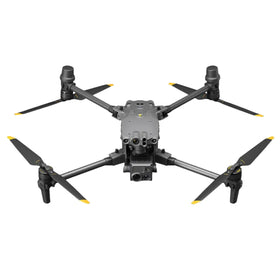
Moreover, the second-hand market enables fleet operators to standardize on a few proven models rather than chasing the latest hardware releases. A mixed fleet of M30T and M350 RTK units, all serviced by the same professional DJI repair services, reduces the variable space that autonomy policies must navigate. In the post-Llama era, consistency across a known fleet trumps the allure of a bleeding-edge algorithm.
FAQ: The Llama Moment and Your Drone Operations
1. Will drone autonomy ever achieve a "Llama moment" equivalent?
Only if the industry builds adaptation and debugging standards into every policy release. The core insight from The Robot Report is that a policy's value is determined by its reusability and traceability - not its performance on a test bench. Drone operators should treat any autonomy download as a draft that requires heavy field customization and instrumentation.
2. How can I start preparing my fleet for reliable autonomous operations?
Begin by auditing your current fleet for sensor calibration consistency. Create a baseline flight that you fly monthly over the same ground control points to measure drift. Invest in a repair partner who can maintain your hardware to manufacturer specifications. And consider building your fleet with used drone market high-quality units that have documented service histories - this gives you a known starting point for policy adaptation.
3. What are the biggest risks of using a "downloaded" autonomy policy today?
The main risks include invisible failure (policy works initially but degrades over time due to sensor drift), inability to reproduce errors across different drone units, and regulatory non-compliance when you cannot explain a near-miss to the FAA. Every one of these risks can be mitigated by rigorous testing, but that testing must be planned for in your operational budget - it is not free.
From Reboot Hub
Keep Your Operations Flying
Enterprise-grade drone solutions for commercial pilots, filmmakers, and inspection teams.
Pre-owned Fleet
Fully inspected DJI drones with 6-month warranty. Save up to 40%.
Browse Inventory ->