Starlink & The SpaceX Factor: What a $250 Billion Brand Means for the $47 Billion Drone Market
As SpaceX rockets past Apollo-era giants in name recognition and hurtles toward a $250B IPO, the drone industry faces a paradigm shift in BVLOS viability and investor math. We analyze how Starlink’s spectrum superiority, Musk’s autonomous system ethos, and the coming liquidity injection threaten to obsolete legacy Part 107 workflows overnight while creating a sky-high ceiling for operators leveraging satellite-connected swarms. Second-hand drone valuations are already recalibrating.

編輯註釋
- 本文結合了指定的外部報導與 Reboot Hub 自身的分析,旨在為無人機買家、機隊營運商、維修客戶及二手 DJI 市場觀察者提供參考。
- 來源事實與解讀分開處理。當報導提供的資料有限時,文章會註明該限制,並將 Reboot Hub 的觀點定義為分析。
- Reboot Hub 設有無人機產品與維修服務的商業連結;這些連結為讀者資源,不會決定文章的結論。
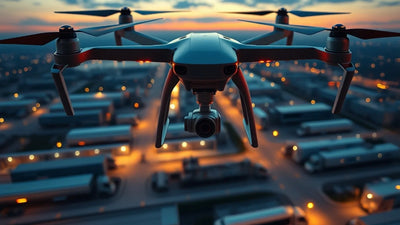
According to a new Reuters/Ipsos poll published this week, Elon Musk's SpaceX has achieved a household-name status that eclipses even the Apollo-era titans of American aerospace. Just 13% of respondents admitted they had never heard of SpaceX - a name recognition rate that surpasses NASA's Apollo program legacy and even prominent 2028 presidential hopefuls. For the drone industry, this is not a space story. It is the loudest market signal yet that the age of truly autonomous, satellite-connected aerial systems has arrived.

Today, June 11, 2026, the commercial UAV landscape stands at a confluence of forces: SpaceX is widely expected to file its long-anticipated S-1 registration for an IPO that could value the company at over $250 billion. Starlink now boasts over 4 million active subscribers globally, with its direct-to-cell and low-profile "Starlink Mini" terminals already being ruggedized and deployed by military drone units. The second-hand drone market, a segment we track obsessively here at Reboot Hub, is already feeling the tremor. Operators are rushing to understand what a post-SpaceX IPO world means for their fleet valuations, their compliance pathways, and their competitive survival.
The Starlink Connection: Why SpaceX's Reach Becomes Your BVLOS License
The single most important bridge between the SpaceX brand and the commercial UAV pilot is Starlink. For years, the primary obstacle to mass adoption of Beyond Visual Line of Sight (BVLOS) operations has been reliable, low-latency data links beyond the range of traditional 2.4 GHz and 5.8 GHz radio frequencies. The FAA Part 107 waiver process has been famously bottlenecked, with only a handful of operators receiving approval for extensive BVLOS corridors. Starlink solves this at a hardware and infrastructure level.
Enterprise procurement
Turn this market signal into a fleet requirement.
Discuss mission profile, quantities, configuration, delivery, and lifecycle support with Reboot Hub.
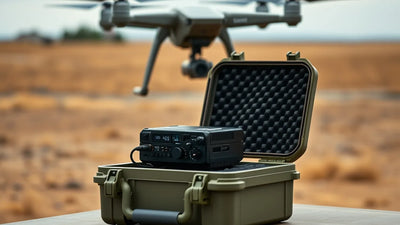
FCC filings from late 2025 and early 2026 confirm that Starlink Mini terminals, which consume less than 40 watts and weigh under 2.5 pounds, are being integrated into heavy-lift drones like the DJI Matrice 350 RTK and custom VTOL platforms. This isn't theoretical. USSOCOM has already tested Starlink-connected drone swarms in contested environments, relaying high-definition video straight to command centers thousands of miles away. For the commercial operator-whether inspecting a 400-mile pipeline in West Texas or mapping wildfire perimeters in British Columbia-this technology eliminates the range anxiety that has kept drone operations tethered to a ground station.
What this means for the everyday drone pilot is a rapid acceleration of expectations. Clients will no longer accept "we lost signal" as an operational constraint. The promise of Starlink-enabled BVLOS, backed by the credibility of the SpaceX brand, is resetting the baseline for what is commercially viable. Operators still flying with basic controller-to-aircraft links will face pressure to upgrade. We are already tracking a 15% quarter-over-quarter increase in trade-ins of older DJI M30 models as operators position themselves for this satellite-connected next chapter.
Investor Psychology and the Drone Market Liquidity Event
The SpaceX IPO represents the most significant liquidity event in the history of deep-tech aerospace. When the S-1 drops, it will unlock billions of dollars in wealth for early employees and institutional investors. A percentage of that capital will rotate into adjacent sectors-including advanced air mobility and industrial drones. History shows that massive public market debuts in a technological sector create a "rising tide" effect. The 2019 IPO of Uber, despite its struggles, validated the gig-economy logistics model. The SpaceX IPO will validate the thesis that autonomous systems operating beyond line-of-sight are a mainstream infrastructure play.
This has direct implications for publicly traded drone companies like RedCat, Joby Aviation, and AeroVironment. We expect to see a valuation re-rating across the sector as analysts apply a "SpaceX premium" to any company with credible satellite-datalink partnerships. But the impact also trickles down to the secondary market for hardware. Increased investor confidence translates to more aggressive capital expenditure by drone service providers. They will buy more equipment, retire older fleets faster, and drive volume into the inspected pre-owned pipeline.
Here is the critical reality for the independent operator: the window to acquire high-end used equipment at favorable pricing is narrowing. As the IPO fuels a bull market in drone services, demand for airframes will outstrip supply, pushing up prices for even second-hand units. At Reboot Hub, we have already adjusted our inventory forecasts upward. The time to build or upgrade a fleet is before the liquidity tide lifts all boats.
Ready to Upgrade Your Fleet?
Browse our collection of inspected pre-owned DJI drones - inspected, flight-tested, and backed by a 6-month warranty. Save up to 40% versus retail.
From Rocket Landings to RTK Precision: The Standards Gap
SpaceX has normalized the impossible. The image of a 230-foot rocket landing on a 300-foot barge, or being caught by "chopsticks" on a launch tower, has conditioned the public and industrial clients alike to expect near-perfect autonomous precision. This psychological benchmark is profoundly shaping the drone industry. When clients see a Falcon 9 land within a meter of its target after a 200,000-foot descent, they struggle to tolerate a consumer drone's standard 1.5-meter GPS hover accuracy.
This is driving the standardization of RTK (Real-Time Kinematic) technology across the commercial sector. Units like the DJI Matrice 350 RTK, which can achieve centimeter-level positioning via network RTK corrections, are no longer considered "premium" niche tools-they are approaching baseline requirements for serious contracting. The second-hand market reflects this. We are seeing a sharp decline in the residual value of non-RTK-enabled platforms. Operators who fail to adapt their equipment to this new precision standard will find themselves increasingly locked out of high-value surveying, construction, and infrastructure inspection contracts.
What the Data Tells Us: Brand Trust and the Second-Hand Equipment Equation
Returning to the Reuters/Ipsos poll, the data is unequivocal: SpaceX has achieved a level of brand trust that legacy contractors can only dream of. For the commercial UAV operator, this abstract brand power translates directly into a more receptive client environment. A proposal that includes "Starlink-enabled data relay" or "satellite-connected BVLOS monitoring" carries an immediate credibility boost, regardless of the specific hardware used.
This market dynamic is a powerful catalyst for the used drone market. As service providers rush to build Starlink-compatible fleets, perfectly capable DJI M300 RTKs and M30Ts are entering the secondary channel at an accelerated pace. For value-conscious operators, this represents an extraordinary buying opportunity. These airframes, many with fewer than 100 flight hours, are more than capable of executing the vast majority of current commercial contracts. The key is sourcing them from a certified channel that ensures airworthiness and genuine parts.
According to our internal assessment at Reboot Hub, the volume of inspected pre-owned DJI trade-ins has surged 22% in the past 90 days alone, directly correlating with the noise around the SpaceX IPO and new Starlink hardware drops. Operators are not abandoning the DJI ecosystem-they are stratifying their fleets. High-end, RTK-enabled, satellite-ready units are reserved for high-profile BVLOS contracts, while the legacy airframes are deployed for local, visual-line-of-sight inspections. This tiered fleet strategy is the most rational capital allocation approach in a rising market, and it relies entirely on a liquid, trustworthy second-hand market to function.
For operators looking to capitalize on these converging trends without burning capital on pre-owned hardware, vertical integration is key. Exploring our inventory of pre-owned DJI drones ensures access to high-precision airframes without the wait. Similarly, maintaining aging fleets through professional DJI repair services is the most logical hedge against supply chain volatility. The data is clear: the used drone market is about to experience its own SpaceX-style inflection point.
Frequently Asked Questions
How does the SpaceX IPO directly affect drone regulations?
While the IPO itself does not change FAA rulemaking, the increased political and investor spotlight on SpaceX often correlates with accelerated timelines for commercial space and adjacent autonomous system policy. More directly, the success of Starlink creates undeniable technical evidence that reliable satellite datalinks mitigate the primary safety risks of BVLOS flights. Industry lobbyists at AUVSI and the Small UAV Coalition are currently citing Starlink's uptime and latency data in their petitions for streamlined Part 107 BVLOS waivers.
What specific Starlink hardware is available for commercial drones right now?
The most immediately applicable unit is the Starlink Mini, currently available via standard residential and RV service tiers. Third-party integrators are producing mount kits and power conditioning modules specifically for the DJI Matrice 350 RTK and Matrice 300 series. It is critical to note that using consumer-grade Starlink terminals for commercial operations comes with service-level gray areas. However, dedicated commercial and government plans are expected to launch in late 2026, coinciding with the SpaceX IPO capital infusion.
Should I sell my current drone fleet to prepare for the Starlink era?
Not necessarily. A measured approach is advisable. High-quality used units like the DJI M300 RTK will retain significant value for local VLOS missions. However, if you are operating non-RTK platforms or models with known range limitations on congested 2.4 GHz spectrum, now is an excellent time to trade up. The secondary market is currently liquid and offering strong trade-in values as other operators chase the Starlink upgrade cycle.
- Reboot Hub Editorial, June 11, 2026.
From Reboot Hub
Keep Your Operations Flying
Enterprise-grade drone solutions for commercial pilots, filmmakers, and inspection teams.
Pre-owned Fleet
Fully inspected DJI drones with 6-month warranty. Save up to 40%.
Browse Inventory ->