Potensic Atom 3 Takes Flight: The Best Budget DJI Alternative Just Got Better — But Here's the Catch
Potensic has just dropped the Atom 3 — a feature-packed sub-$500 drone that directly challenges DJI's Mini 4 Pro on specs, but a single regulatory bombshell threatens to kill its US commercial viability overnight. For enterprise operators, mapping surveyors, and Part 107 holders relying on budget airframes for BVLOS waivers, this changes the calculus. We break down the hardware, the NDAA trap, and what it means for the second-hand market — including how Reboot Hub's certified refurbished DJI fleet offers a compliant, cost-effective escape route.
The drone industry woke up this morning to a surprising launch that seemed, at first glance, like a gift to budget-conscious commercial operators. Chinese manufacturer Potensic officially unveiled the Atom 3, a feature-packed sub-$500 quadcopter that directly challenges DJI's Mini 4 Pro on camera specs, flight time, and autonomous functionality. But within hours of the announcement, a darker narrative emerged: the Potensic Atom 3 faces the exact same US market restrictions that have hamstrung DJI's ability to sell new drones to American enterprise and government clients. For commercial operators, mapping firms, and Part 107 holders who saw the Atom 3 as a workaround, the reality is sobering.
The timing could not be more critical. As of June 11, 2026, the regulatory landscape for Chinese-manufactured drones in the United States has reached a point of no return. With the National Defense Authorization Act (NDAA) Section 294 and the pending Countering CCP Drones Act casting long shadows, any drone with critical components sourced from Chinese state-linked entities — including Potensic — is effectively barred from federal use and increasingly risky for state and commercial operations. The Potensic Atom 3, for all its technical prowess, inherits the same compliance vulnerabilities that have turned the DJI second-hand market into the only reliable channel for high-performance Chinese drone hardware in America.
Potensic Atom 3: What Makes It a Serious Contender
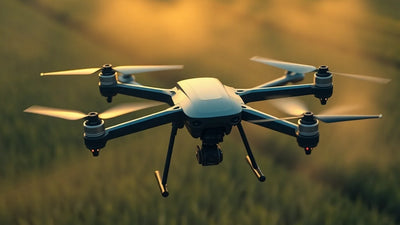
Let's start with the hardware, because the Atom 3 is genuinely impressive. Potensic has packed a 1/1.3-inch CMOS sensor capable of 48-megapixel stills and 4K/60fps HDR video into a frame that weighs under 249 grams — keeping it clear of FAA Part 107 registration requirements for recreational use, though commercial operators still need their Remote Pilot Certificate and operational waivers. The three-axis mechanical gimbal offers stabilization that rivals DJI's latest generation, and the claimed 45-minute flight time (with a hot-swappable battery system) pushes past the Mini 4 Pro's 34-minute runtime.
The Atom 3 also includes obstacle sensing in five directions, GPS + GLONASS + BeiDou satellite positioning, and a new controller with a built-in 5.5-inch 1080p screen — eliminating the need to tether a smartphone. For surveyors and mappers, the onboard RTK module (optional, but available) brings centimeter-level positioning accuracy at a price point that undercuts DJI's RTK-equipped models by roughly 60%. On paper, this is the drone that could have democratized precision aerial data collection for small and medium-sized enterprises.
But paper specs don't fly. Real-world deployment depends on regulatory compliance, supply chain integrity, and long-term support commitments. And on those fronts, the Atom 3 enters a minefield.
The US Market Restriction Problem: Same Trap, Different Drone
The core issue is the National Defense Authorization Act (NDAA) Section 294, which prohibits the US federal government from procuring drones manufactured by companies with ties to the Chinese Communist Party or those that use critical components from covered foreign entities. While DJI has been the primary target — facing an effective federal ban and inclusion on the FCC's Covered List — Potensic is not exempt. The company sources its image sensors, processors, and radio frequency modules from the same Chinese supply chain ecosystem that DJI uses, making the Atom 3 technically non-compliant for any US federal agency, department, or federally funded program.
Worse, several key US states — including Florida, Texas, and Oklahoma — have now passed their own versions of the drone ban, applying restrictions to state and local government use of any drone with Chinese-made components. Private commercial operators are not yet directly targeted, but the legal risk is mounting. If a Part 107 commercial operator uses an Atom 3 to fly a data collection mission for a client that receives federal funding — say, a university research project or a municipal infrastructure contract — that operator could face contract violations, fines, or debarment. The FAA has not yet issued specific guidance on Potensic, but the precedent set by DJI enforcement actions suggests that ignorance of supply chain origin is not a legal defense.
Ready to Upgrade Your Fleet?
Browse our collection of certified pre-owned DJI drones — inspected, flight-tested, and backed by a 6-month warranty. Save up to 40% versus retail.
What Does This Mean for Commercial Operators and the Second-Hand Market?
For everyday drone pilots and commercial operators, the Potensic Atom 3 launch introduces a difficult strategic question: do you buy into a new platform that offers exceptional value but carries uncertain regulatory risk, or do you stay with established hardware that has a clear compliance path? The answer depends heavily on your client base and mission profile.
If you are a solo real estate photographer or a small aerial mapping firm that works exclusively with private clients who have no federal funding ties, the atom 3 may still be a viable option — for now. But if you take on any work for municipal governments, state agencies, federally funded research institutions, or infrastructure contractors, the regulatory exposure is simply not worth the $479 price tag. One audit, one contract review, and your entire fleet could be grounded or your business debarred from future public-sector work.
This is precisely where the second-hand and refurbished drone market has become the strategic safe harbor. As new Chinese-manufactured drones face increasing barriers to market entry in the United States, demand for pre-owned, already-in-service DJI units has surged. Operators who already own DJI drones can continue flying them under existing rules — the bans apply primarily to new procurement, not continued use. And for those looking to expand their fleet without running into compliance nightmares, the certified refurbished DJI drones available through platforms like Reboot Hub offer a clear path forward: same industry-leading performance, full inspection and flight-test certification, and a 6-month warranty — all at 30 to 40 percent below retail, with zero NDAA procurement risk.
The used drone market is no longer just a budget option — it's become the only compliant channel for accessing top-tier Chinese drone technology in an increasingly restrictive regulatory environment. For commercial operators who need RTK-level accuracy, 4K HDR imaging, and 45-minute flight times without exposing their business to federal scrutiny, refurbished hardware is the logical, and often the only, choice.
The Broader Market Implications: A Divided Skies
The Potensic Atom 3 launch crystallizes a trend that has been building since the first NDAA drone provisions took effect in 2020: the US commercial drone market is becoming a two-tier system. On one side, you have new Chinese drone hardware — powerful, affordable, but legally radioactive for any operator touching government or federally adjacent work. On the other side, you have American and allied-manufactured drones from companies like Skydio, Autel Robotics (which has its own regulatory battles), and Teal Drones — compliant, but often costing two to three times more for equivalent specifications.
For small and medium-sized enterprises (SMEs) that make up the backbone of the commercial drone service industry — the solo Part 107 pilots, the 3-person mapping shops, the inspection firms with 5 drones and a truck — the price gap is existential. A new Skydio X10 costs upwards of $2,500 for the base kit. A refurbished DJI Mavic 3 Enterprise with RTK can be had for under $1,800 from Reboot Hub with a warranty. The math is not complicated.
But the regulatory clock is ticking. Multiple bipartisan bills in the current congressional session — including the American Security Drone Act and the Preventing Emerging Threats Act — seek to extend the federal drone ban to cover any drone with any Chinese-made component, not just those from entities on the Covered List. If such legislation passes, it would effectively end the sale of new Chinese drones in the United States and retroactively complicate the legal status of existing fleets. The only question is when, not if.
For now, the Potensic Atom 3 will likely find a market among hobbyists, recreational flyers, and commercial operators who are willing to accept the legal risk for the performance gain. But for professionals who need to sleep at night knowing their fleet is compliant, insurable, and supportable for the long haul, the rational choice is to acquire hardware that has already passed through the US supply chain — hardware that is already in-country, already imported, and already cleared for continued operation under existing rules.
And when that hardware needs maintenance, repair, or refurbishment, operators need a service partner that understands the compliance landscape. Our professional DJI repair services use only genuine OEM parts, ensuring that your refurbished drone remains fully airworthy and compliant with all applicable regulations. We test every repair flight before it leaves our shop, and we document the service history for your compliance records.
Frequently Asked Questions
Is the Potensic Atom 3 legal to fly in the United States under Part 107?
Yes, the Potensic Atom 3 is currently legal to fly for commercial operations under FAA Part 107, provided the operator holds a valid Remote Pilot Certificate and the drone is registered (if applicable based on weight). However, the legal landscape is volatile. The drone uses components from Chinese supply chains that are subject to ongoing federal review. If the drone is used in any capacity that involves federal funding, federal contracts, or federally regulated airspace (e.g., BVLOS waivers, controlled airspace authorizations), the operator assumes significant NDAA compliance risk. Commercial operators should consult with aviation legal counsel before deploying the Atom 3 in any government-adjacent work.
How does the Potensic Atom 3 compare to a refurbished DJI Mini 4 Pro?
On paper, the Atom 3 matches or exceeds the Mini 4 Pro in flight time (45 min vs. 34 min) and offers comparable camera quality with its 1/1.3-inch sensor and 48MP stills. However, the Mini 4 Pro has a more mature ecosystem of accessories, a longer track record of reliability, and — crucially — a clearer regulatory status for continued use, especially when purchased as a certified refurbished unit already in the US market. A refurbished Mini 4 Pro from Reboot Hub includes full inspection, flight testing, and a 6-month warranty, making it a lower-risk investment for commercial operators who need guaranteed compliance and support.
Will Reboot Hub carry the Potensic Atom 3?
At this time, Reboot Hub is focused exclusively on the certification, repair, and resale of DJI drones — the hardware platform that powers the majority of commercial drone operations worldwide. We do not currently plan to stock the Potensic Atom 3, as our business model is built on providing full lifecycle support for DJI drones, including inspection, flight testing, warranty coverage, and genuine-parts repair. For operators seeking a compliant, cost-effective DJI alternative, we recommend exploring our collection of certified pre-owned DJI drones, which offer proven performance at prices comparable to new budget models like the Atom 3.
This article was published on June 11, 2026, by the Reboot Hub Editorial team. All specifications and regulatory interpretations are based on information available as of the publication date. Commercial operators are advised to verify current compliance requirements with the FAA and their legal counsel before acquiring new drone hardware.
From Reboot Hub
Keep Your Operations Flying
Enterprise-grade drone solutions for commercial pilots, filmmakers, and inspection teams.
Refurbished Fleet
Fully inspected DJI drones with 6-month warranty. Save up to 40%.
Browse Inventory ->