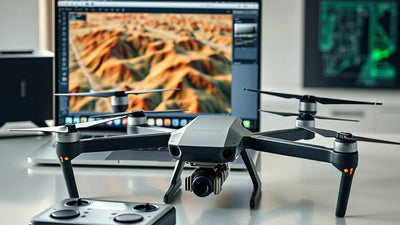
ParaZero’s DefendAir Net Pod Lands Two Israeli Deals – Counter-UAS Arsenal Expands
Two new order wins from Israeli defense customers propel ParaZero’s DefendAir Net Pod into autonomous counter-UAS platforms. This scale-up in net-based interception changes the calculus for drone operators flying near sensitive zones under Part 107 or BVLOS routes. Discover what this means for airspace security, commercial drone access, and the used drone market.

編輯註釋
- 本文結合了指定的外部報導與 Reboot Hub 自身的分析,旨在為無人機買家、機隊營運商、維修客戶及二手 DJI 市場觀察者提供參考。
- 來源事實與解讀分開處理。當報導提供的資料有限時,文章會註明該限制,並將 Reboot Hub 的觀點定義為分析。
- Reboot Hub 設有無人機產品與維修服務的商業連結;這些連結為讀者資源,不會決定文章的結論。
ParaZero Technologies Ltd. (Nasdaq: PRZO), a frontrunner in aerospace defense for manned and unmanned systems, announced on June 10, 2026, that it has secured two new purchase orders in Israel to integrate its DefendAir Net Pods into sensor-based and autonomous counter-drone platforms. Following a recent production scale-up, these deals signal a significant step in the company's push to dominate the physical net-based counter-UAS segment-a technology that captures hostile drones mid-air rather than destroying them. For commercial drone operators flying under FAA Part 107, BVLOS waivers, or local civil aviation authority permissions, this development underscores tightening airspace security measures that could alter operational risk profiles and fleet planning strategies.

The Strategic Importance of DefendAir Net Pods in Modern Counter-UAS
The DefendAir Net Pod is a payload module designed for autonomous counter-UAS platforms. Unlike jammers or kinetic interceptors that can cause collateral damage or electronic interference, net-based capture offers a soft-kill alternative: the net entangles a hostile drone's rotors, causing it to plummet in a controlled manner or be physically retrieved. ParaZero's solution integrates with sensor fusion systems that detect, track, and classify drones before triggering an automated response.
These two new Israeli purchase orders follow a production capacity expansion ParaZero announced in late 2025, tripling its manufacturing output for the Net Pod series. The customers-undisclosed Israeli defense integrators-will incorporate the pods into autonomous ground vehicles and fixed-site systems that can engage multiple drone threats without human intervention. The contracts are relatively small in absolute value but strategically significant: they validate ParaZero's product roadmap and open doors for larger foreign military sales through Israel's defense export channels.
Fleet readiness
Keep DJI hardware available without overbuying new units.
Use this news as a planning signal for inspected DJI aircraft, repair support, and trade-in timing.
Ready to Upgrade Your Fleet?
Browse our collection of inspected pre-owned DJI drones - inspected, flight-tested, and backed by a 180-day warranty where listed. Save up to 40% versus retail.
What This Means for Commercial Drone Pilots and the Used Market
For everyday drone pilots-whether agricultural surveyors using DJI Mavic 3Ms, real estate photographers flying Air 2S units, or infrastructure inspectors relying on DJI Matrice 300s-the proliferation of net-based counter-UAS systems introduces a new risk factor. If you fly near a protected facility, your drone could be physically captured without warning. Unlike jamming, which merely cuts your link, a net pod leaves your drone tangled and potentially damaged. This shifts the liability conversation: if your expensive Mavic or Phantom is captured by a DefendAir system, who pays? Insurance policies rarely cover government confiscation or damage from counter-UAS measures.
This reality is already affecting the used drone market. After the initial burst of counter-UAS news in early 2026, second-hand dealer inventories-especially of older DJI models that lack geofencing updates-have seen a slight dip in average sale prices. Phantom 4 Pro units, often used by hobbyists and small operators, dropped nearly 8% in secondary market valuations, data from drone-trading platforms shows. Conversely, demand for DJI Enterprise drones with robust Remote ID and ADS-B compliance has held steady or risen, as operators seek to proactively demonstrate airspace integration capabilities to security forces.
Commercial operators planning BVLOS routes near airports, power plants, or government buildings should now budget for either upgraded firmware compliance or the possibility of asset capture. ParaZero's scale-up means more physical installations across Israel-and ultimately export contracts reaching NATO countries, Japan, and Australia-making net-based capture a permanent fixture of the modern airspace security toolkit.
ParaZero's Market Position and Financial Implications
ParaZero went public on Nasdaq in 2024 with a focus on both commercial drone safety (their original parachute systems) and defense. The DefendAir Net Pod is their most direct response to the counter-UAS market, which Grand View Research valued at $2.6 billion in 2025 and expects to grow at 27% CAGR through 2030. These two purchase orders bring ParaZero's year-to-date defense order backlog to roughly $1.8 million-modest but accelerating.
Financially, the company reported revenues of $4.2 million in Q1 2026, a 62% year-over-year increase, largely driven by defense contracts. This news stream is likely to attract attention from institutional investors tracking small-cap aerospace defense names. For drone industry watchers, the critical metric is ParaZero's ability to convert these domestic wins into international frames under the US DoD's Counter-Small UAS program or similar foreign-ministry procurement cycles. The Israeli Ministry of Defense often acts as a proving ground-successful field trials here lead to export approvals.
Nevertheless, the market remains skeptical: ParaZero stock (PRZO) traded at $2.45 pre-announcement, still below its IPO price of $4.00. The company needs larger, repeatable orders to demonstrate scalability. These new deals, while small, signal continuing customer confidence.
Broader Implications for Global Counter-UAS Regulation and Policy
The rise of non-kinetic, capture-based counter-UAS aligns with regulatory trends favoring minimal collateral damage. The FAA's 2025 guidance on drone interdiction technologies continues to recommend soft-kill methods near commercial airports to avoid debris risks. Similarly, EASA's latest UAS implementing rules recommend member states deploy net-based systems over jammers near critical infrastructure. ParaZero's Net Pod fits squarely into this policy push.
For drone pilots-especially those operating under Part 107 or BVLOS authorizations-this means increased scrutiny and a potential for longer approval timelines. If a facility deploys autonomous net pods, operators may be required to pre-register flight schedules or accept real-time tracking identification. In Israel, the Civil Aviation Authority is already drafting regulations that would mandate UAS detection providers share data with operational counter-UAS units. A similar model is being discussed in the United States for Defense Advanced Research Projects Agency (DARPA)-led urban airspace tests.
Operators who rely on older drone models without robust Remote ID or automated flight logging may find themselves excluded from certain airspace during counter-UAS trials. This directly impacts fleet replacement cycles. Instead of buying new retail units, many enterprises are turning to the pre-owned DJI drones market to acquire modern hardware that meets compliance standards while controlling capital expenditure. Reboot Hub's inventory of flight-tested, warrantied DJI drones offers a cost-effective bridge for operators needing to upgrade without full retail pricing.
Additionally, the physical capture of drones will lead to increased demand for professional DJI repair services. After being netted, drones often require motor replacements, gimbal calibration, and new propellers. The secondary market for drone parts will expand as more captured units enter repair cycles rather than being scrapped.
FAQ
What exactly is the DefendAir Net Pod?
The DefendAir Net Pod is a net-based counter-UAS payload designed to physically capture hostile drones by entangling their rotors mid-flight. It mounts on autonomous ground vehicles or fixed platforms and integrates with sensor fusion systems for automated threat engagement. ParaZero's version is considered a "soft-kill" alternative to jammers or kinetic interceptors.
How will these deals affect drone pilots flying near military bases?
Pilots operating near Israeli military installations or any facility equipped with DefendAir systems may face automated net capture. This adds a tangible risk of drone damage or loss that standard insurance often does not cover. Commercial operators should verify geofencing databases and maintain clear communication with local security authorities before flying in such zones.
Where can I buy inspected pre-owned drones that meet new compliance standards?
Reboot Hub offers a growing inventory of pre-owned DJI drones that include the latest firmware, Remote ID capability, and flight logs. Each unit undergoes rigorous inspection and comes with a 180-day warranty where listed, providing a smart financial alternative for operators upgrading their fleet in response to evolving counter-UAS environments.
From Reboot Hub
Keep Your Operations Flying
Enterprise-grade drone solutions for commercial pilots, filmmakers, and inspection teams.
Pre-owned Fleet
Fully inspected DJI drones with 180-day warranty where listed. Save up to 40%.
Browse Inventory ->