Mystery Drones Land on Norwich Rooftops as World Cup Airspace Tightens
Large unidentified drones are landing on Norwich, Connecticut rooftops after dark. Police confirm an officer witnessed one in flight as the investigation begins. With World Cup airspace security tightening nationally, this incident could trigger immediate FAA Part 107 counter-UAS responses, BVLOS route restrictions, and severe enforcement actions that directly impact commercial drone operators and the used drone market from New England to the Gulf.

編輯註釋
- 本文結合了指定的外部報導與 Reboot Hub 自身的分析,旨在為無人機買家、機隊營運商、維修客戶及二手 DJI 市場觀察者提供參考。
- 來源事實與解讀分開處理。當報導提供的資料有限時,文章會註明該限制,並將 Reboot Hub 的觀點定義為分析。
- Reboot Hub 設有無人機產品與維修服務的商業連結;這些連結為讀者資源,不會決定文章的結論。
The quiet residential streets of Norwich, Connecticut-a city of roughly 40,000 residents along the Thames River-became the epicenter of an unnerving aerial mystery this week. Multiple eyewitnesses have reported large, unidentified drones hovering just above their homes after dark, with at least one account describing a craft that descended to land directly on a rooftop. The Norwich Police Department has launched an official investigation after an officer on the scene personally observed a drone passing overhead while taking a resident's statement.

The timing of these incidents could not be more sensitive. With the FIFA World Cup drawing near, federal airspace security measures are being dramatically tightened across the United States. The confluence of unexplained drone activity over a civilian population center and the impending high-security sporting event has elevated this local Connecticut story into a matter of national concern for law enforcement, federal regulators, and commercial drone operators alike.
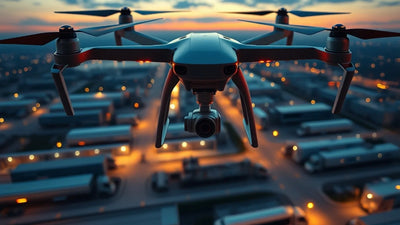
This is not a case of a hobbyist flying a small recreational quadcopter. Witnesses and preliminary police intelligence describe drones of substantial size-machines with the payload capacity to carry high-intensity spotlights and, importantly, the ability to land on a rooftop with precision. That level of control suggests either autonomous programming using GPS waypoints or a highly skilled remote pilot operating under advanced control protocols. As investigators work to trace the origin of these flights, the incident has raised urgent questions about airspace enforcement, counter-UAS technology, and the thin legal line between legitimate observation and unlawful surveillance.
Fleet readiness
Keep DJI hardware available without overbuying new units.
Use this news as a planning signal for inspected DJI aircraft, repair support, and trade-in timing.
The Norwich Incident: A Timeline of Unexplained Activity
According to statements released by the Norwich Police Department on June 9, 2026, the initial calls began arriving from residents in the Laurel Hill and Greenville neighborhoods shortly after dusk. Callers described large drones-estimated by witnesses to be two to three feet in diameter-hovering at altitudes as low as 30 feet above their homes. One resident reported that a drone shone a bright spotlight directly into their backyard before ascending and circling the block.
The most striking account came from a homeowner who stated that one of the drones descended vertically and landed on their rooftop, remaining stationary for approximately 45 seconds before powering up its rotors and departing to the south. Police have not confirmed whether landing gear impressions or other physical evidence was recovered from the roof, but the department has secured the scene as part of the ongoing investigation.
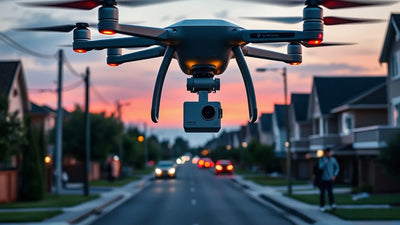
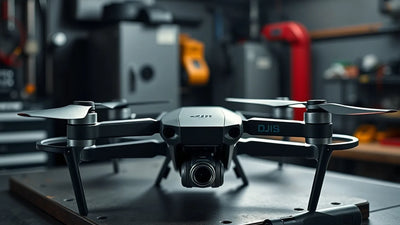
Officer Michael Torres, responding to a call on Huntington Avenue, reported hearing a low hum and observing a dark-colored multirotor aircraft with four visible arms pass approximately 100 feet overhead. The officer's corroboration of the civilian accounts has given the investigation significant evidentiary weight. The Norwich Police Department has declined to speculate on the operator's intent, but has confirmed it is coordinating with state law enforcement and federal aviation authorities.
Airspace Security Under the Microscope
The Norwich drone incursions arrive at a moment when U.S. airspace security protocols are being stress-tested like never before. The Department of Homeland Security and the FAA have been actively preparing Temporary Flight Restrictions (TFRs) covering all World Cup stadium venues, team training facilities, and official team hotels. These TFRs typically extend to a 30-nautical-mile radius with a surface-to-FL180 altitude restriction, effectively creating a massive no-fly zone for any unmanned aircraft not specifically authorized by federal authorities.
What makes the Norwich situation particularly troubling for security planners is the demonstrated capability of these drones. A craft that can navigate residential airspace at night, operate a directed spotlight, and execute a precision rooftop landing exhibits performance characteristics consistent with commercial-grade or even military-derived platforms. These are not off-the-shelf consumer drones. The operational profile suggests a machine with GPS-denied navigation capability, obstacle avoidance sensors, and a reliable datalink at low altitude over built-up terrain.
For context, the FAA's Part 107 regulations prohibit flights over people and moving vehicles without a waiver, and strictly forbid flights at night unless the aircraft is equipped with anti-collision lighting visible for three statute miles. While the Norwich drones reportedly had navigation lights, the low-altitude hovering and rooftop landing would almost certainly violate multiple Part 107 provisions-including reckless operation prohibitions-if these were being flown by a certificated remote pilot.
Ready to Upgrade Your Fleet?
Browse our collection of inspected pre-owned DJI drones - inspected, flight-tested, and backed by a 6-month warranty. Save up to 40% versus retail.
Commercial Drone Market: Operational and Regulatory Ripples
The Norwich incident is already sending shockwaves through the commercial drone industry. For everyday drone pilots holding a Part 107 Remote Pilot Certificate, this type of high-profile incident often triggers a predictable regulatory response: increased enforcement, tighter operational restrictions, and a public narrative that conflates lawful commercial operations with malicious or reckless activity.
Let's be direct about what this means for the industry. When unidentified drones operate with apparent impunity over a residential area-landing on rooftops, shining spotlights into backyards-the public and political reaction is rarely nuanced. Law-abiding surveyors, real estate photographers, and infrastructure inspectors who follow every FAA guideline to the letter can find themselves facing new restrictions born from incidents they had nothing to do with. The FAA has historically responded to security incidents by expanding TFRs and tightening waiver approval processes. Commercial operators planning BVLOS (Beyond Visual Line of Sight) operations in the Northeast corridor should prepare for heightened scrutiny on all pending waiver applications.
From a market perspective, this incident reinforces a trend we have been tracking closely at Reboot Hub: the bifurcation of the drone market between trusted, traceable hardware and platforms with unknown provenance. In a security-sensitive environment, buyers and operators are increasingly prioritizing drones with clear chain-of-custody documentation and verifiable maintenance histories. This is driving demand toward the inspected pre-owned segment, where every aircraft has been inspected, flight-tested, and logged.
Insurance carriers are also taking note. Several major aviation insurance underwriters have quietly revised their policy language for drone operators over the past year, adding explicit exclusions for incidents involving unregistered aircraft or flights conducted outside authorized airspace. A high-visibility case like Norwich-especially if the perpetrators are never identified-could accelerate the trend toward mandatory telemetry logging and geofencing compliance as conditions for coverage.
For commercial operators, the immediate action items are clear: verify that every aircraft in your fleet has updated Remote ID broadcast capabilities, ensure your Part 107 operations manual includes specific protocols for encountering unknown drones in your operational area, and review your insurance declarations page for any newly added exclusions or requirements. The Norwich incident is not just a headline-it is a regulatory inflection point.
Navigating the New Normal for Drone Operators
What does the Norwich event mean for the average drone pilot or commercial operator? It means the window for building a compliant, audit-ready operation is closing faster than many realize. Federal and state agencies are actively discussing new reporting mandates that would require any drone observed operating in a suspicious manner to be immediately logged with a central database. Some proposals under consideration would require commercial operators to carry digital manifests of all flight logs for inspection on demand.
For operators managing a mixed fleet of new and pre-owned equipment, maintaining compliance has never been more critical. This is where the value of a trusted hardware source becomes paramount. Investing in pre-owned DJI drones through a platform like Reboot Hub ensures that every aircraft in your fleet has a documented service history, verified firmware compliance, and a 6-month warranty that covers both hardware defects and flight performance. In an environment where regulators are increasingly examining the provenance of commercial UAS equipment, traceability is no longer optional.
We are also seeing a surge in demand for maintenance and repair services that use genuine OEM parts. The used drone market is evolving rapidly, and the days of accepting unverified hardware at a discount are ending. Every component-from motors to flight controllers to sensor payloads-must be authenticated if operators want to maintain regulatory compliance and insurance coverage. Reboot Hub's professional DJI repair services use only genuine parts and follow OEM specifications, giving fleet managers the documentation they need for audit-proof maintenance records.
The broader lesson from Norwich is that the drone industry operates within a social license that can be revoked quickly when public trust is broken. Every operator has a responsibility to demonstrate that commercial drone technology is safe, regulated, and accountable. Choosing a supply chain that prioritizes transparency and quality is part of that responsibility. At Reboot Hub, we are committed to providing the certified, inspected, and warrantied hardware that helps the industry maintain its operational license.
What specific regulations could be triggered by the Norwich incident?
The Norwich drone flights likely violate multiple provisions of 14 CFR Part 107, including operations over people without a waiver (107.39), operations from a moving vehicle (107.25), careless or reckless operation (107.23), and potentially flights at night without proper lighting (107.29). If the drones are found to be operating beyond visual line of sight, they would also violate the BVLOS restrictions inherent in Part 107. Additionally, the incident may prompt review under 49 U.S.C. - 46301, which carries civil penalties of up to $27,500 per violation. The Department of Justice could also pursue criminal charges under 18 U.S.C. - 39B for unmanned aircraft interference with law enforcement operations.
How can commercial operators protect themselves from being associated with incidents like Norwich?
Commercial operators should take three immediate steps. First, ensure all aircraft in the fleet are equipped with active and compliant Remote ID modules that broadcast identification and location data in accordance with the FAA's Remote ID rule. Second, maintain detailed electronic flight logs for every operation, including telemetry data, flight paths, and time-stamped video evidence. Third, verify that all aircraft have been obtained through traceable channels with documented maintenance histories. Platforms like Reboot Hub provide that chain-of-custody documentation for inspected pre-owned units, which can be critical if authorities ever need to verify that your equipment was not involved in an unauthorized flight.
Will the World Cup TFRs affect drone operators outside of host cities?
Yes. While the most restrictive TFRs will center on World Cup stadiums and team facilities, the FAA has historically implemented broader airspace security measures during major events. In 2026, operators should expect expanded TFRs covering major transportation corridors, energy infrastructure, and communications nodes in the Northeast corridor. Norwich's location in Connecticut places it within potential expanded security zones linked to international airspace management. All Part 107 operators should subscribe to FAA NOTAM alerts and check TFR maps before every flight through at least mid-August 2026. The Norwich incident may accelerate the publication of additional security TFRs even in areas not directly adjacent to World Cup venues.
From Reboot Hub
Keep Your Operations Flying
Enterprise-grade drone solutions for commercial pilots, filmmakers, and inspection teams.
Pre-owned Fleet
Fully inspected DJI drones with 6-month warranty. Save up to 40%.
Browse Inventory ->