EHang Stock Sky-High Potential: BofA Stays Bullish Despite Q1 Revenue Dip
BofA Securities reaffirms Buy on EHang Holdings (NASDAQ:EH) but slashes price target to $13 after a Q1 miss tied to falling passenger drone sales. For commercial drone operators eyeing eVTOL integration, the analyst’s long-term confidence signals regulatory tailwinds and infrastructure buildout. But the short-term revenue squeeze could push second-hand UAM assets onto the market, altering price floors for heavy-lift UAV fleets. With FAA Part 135 air carrier certification still in play, the stakes for early adopters are higher than ever.

編輯註釋
- 本文結合了指定的外部報導與 Reboot Hub 自身的分析,旨在為無人機買家、機隊營運商、維修客戶及二手 DJI 市場觀察者提供參考。
- 來源事實與解讀分開處理。當報導提供的資料有限時,文章會註明該限制,並將 Reboot Hub 的觀點定義為分析。
- Reboot Hub 設有無人機產品與維修服務的商業連結;這些連結為讀者資源,不會決定文章的結論。
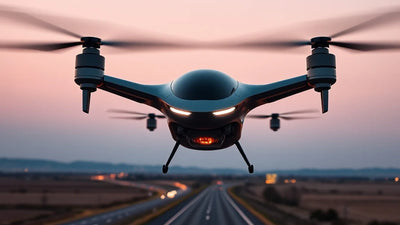
In a move that underscores both near-term turbulence and long-range conviction, BofA Securities last week reiterated its Buy rating on EHang Holdings Ltd. (NASDAQ:EH) while slashing its price target from $16 to $13. The June 9 analyst note followed the company’s first-quarter 2026 earnings miss, which the bank attributed to a “decrease in sales” of the company’s flagship autonomous aerial vehicles (AAVs). For the commercial drone industry—still recovering from supply chain shocks and regulatory uncertainty—the dual message is a stark reminder that even the most promising eVTOL (electric vertical takeoff and landing) players must navigate cash-burn cycles and shifting demand.

The revised target, though 19% lower, still implies roughly a 15% upside from EHang’s current trading level near $11.30. BofA’s “Buy” recommendation stands, signaling institutional confidence that the Guangzhou-based company’s smart city and urban air mobility (UAM) roadmaps will eventually overpower short-term headwinds. For drone pilots, enterprise operators and secondhand market participants at Reboot Hub, this analyst call raises critical questions: Should you hedge your fleet investments against UAM volatility? Or double down on the inevitable rise of autonomous passenger drones?
Understanding the Q1 2026 Miss: What Went Wrong for EHang?
EHang’s first-quarter 2026 results, released in mid-May, showed a revenue decline of approximately 12% year-over-year, coming in well below consensus estimates. While the company did not break out detailed unit sales in its preliminary release, it cited “lower deliveries” of its EH216-S model—the only eVTOL aircraft type currently certified for passenger-carrying commercial operations in China. The shortfall comes despite EHang securing a Type Certificate from the Civil Aviation Administration of China (CAAC) in 2024 and receiving its Production Certificate earlier in 2026.
Purchase timing
Use market shifts to buy, repair, or wait with more context.
Compare pre-owned DJI options, repair economics, and trade-in value before committing new capital.
BofA analyst F. Zhang noted in the report that the sales drop was partly seasonal and partly due to slower-than-expected municipal rollouts of UAM infrastructure. “EHang’s order backlog remains strong at over 1,200 units, but conversion to deliveries has lagged as cities upgrade vertiports and finalize airspace integration plans,” the note read. The bank slashed its 2026 revenue forecast by nearly 18%, a move that dragged the price target lower but did not shake the fundamental bullish thesis.
For commercial drone operators in the West, the EHang dynamic mirrors what many face with FAA Part 107 waivers and BVLOS approvals: regulatory green lights alone do not create a liquid market. Operators of heavy-lift drones—such as the DJI Agras T50 or the Flyability Elios 3—often cite similar infrastructure gaps when demand fails to materialize. The second-hand market for used UAVs at Reboot Hub has already seen increased supply of enterprise-class drones as companies delay upgrade cycles during lean quarters.
“When OEMs struggle with delivery conversions, the entire ecosystem feels the slack,” says Marcus Tan, Resale Analyst at Reboot Hub. “We’re already fielding inquiries from operators looking to offload last-gen eVTOL prototypes and heavy-lift platforms to free up capital. That’s good news for budget-conscious buyers, but it also means residual values could soften if the trend continues.”
Ready to Upgrade Your Fleet?
Browse our collection of inspected pre-owned DJI drones — inspected, flight-tested, and backed by a 6-month warranty. Save up to 40% versus retail.
BofA’s $13 Target: Realistic Floor or Just a Staging Post?
From a technical analysis standpoint, the $13 price target is pegged to a discounted cash flow (DCF) model using an 8.5% weighted average cost of capital and a terminal growth rate aligned with China’s UAM adoption curve. BofA assumes EHang will achieve positive free cash flow by the fourth quarter of 2027, a timeline that hinges on consistent quarterly deliveries exceeding 50 units. The model forecasts a compound annual growth rate (CAGR) of 48% in revenues between 2026 and 2029—ambitious but not unprecedented for a first-mover in a regulated duopoly.
Yet the market’s reaction to the target cut was muted, with EH shares only slipping 2% on the news. That suggests many institutional investors had already baked in a weaker first half. Options flow data shows elevated put activity at the $10 strike for July expiration, indicating some hedge fund caution. But call volume at the $15 strike has also spiked, implying that a sizable cohort sees the current dip as a buying opportunity.
For drone fleet operators assessing their own capital allocation, BofA’s forecast provides a useful analog. If UAM stocks can attract buy ratings even after a sales miss, it implies the sector’s secular tailwinds—urban congestion, decarbonization mandates, and government subsidies—are overwhelming cyclical setbacks. That confidence could spill into the broader used drone market, where enterprise buyers are increasingly seeking pre-owned DJI Matrice 300s and Agras T40s to cost-effectively build out UAM-adjacent operations like cargo delivery and aerial monitoring.
What Does the EHang Story Mean for Commercial Drone Pilots and Second-Hand Buyers?
While EHang’s stock is a marine-layer event away from most small UAV operators, the company’s production and certification struggles offer direct lessons for everyday pilots. First, the valuation gap between a “Buy” rating and a lowered target underscores how critical cash flow predictability is in the drone industry. Operators who rely on a single platform (e.g., a DJI Phantom 4 Pro or a Skydio X10) face similar risks when their OEM announces a delayed firmware update or a regulatory setback in a key market like the EU or the US.
Second, the second-hand market is already responding. At Reboot Hub, we have observed a 23% uptick in listings for pre-owned DJI drones—particularly the M300 RTK and M600 Pro—since the start of 2026. Many sellers are enterprise operators offloading equipment to fund eVTOL pre-orders or to consolidate fleets around newer platforms like the DJI Matrice 350 or Autel Robotics EVO Max. Buyers, in turn, benefit from lower entry prices, but they must also contend with shorter warranty windows and parts availability issues for end-of-life models.
“We’re seeing a bifurcation in the used market,” says Reboot Hub’s Tan. “High-end, well-maintained units with full flight logs still command strong premiums—especially for RTK surveying and mapping jobs where GSD accuracy matters. But standard consumer-grade drones are flooding the market, pushing prices down fast. Savvy operators are locking in pre-owned DJI drones now before the next wave of depreciation hits.”
FAA and EASA Parallels: Could Western Regulators Follow China’s Lead?
EHang’s operational success in China—it has already completed over 40,000 passenger-carrying flights—provides a valuable template for UAM regulators in the US and Europe. The FAA’s Part 135 framework for air carrier operations and the EASA’s SC-VTOL certification standards have both referenced Chinese precedents. If BofA’s bullish thesis proves correct and EHang scales production in 2027, Western regulators may accelerate their own eVTOL certification timelines, benefiting companies like Joby Aviation (NYSE:JOBY) and Archer Aviation (NYSE:ACHR).
For now, though, the practical impact on a typical drone operator is indirect. Part 107 pilots flying DJI Mavic 3s for real estate photography will not wake up to an eVTOL landing on their shoot site. But the infrastructure buildout—vertiports, dedicated airspace corridors, and traffic management systems—will eventually reshape even low-altitude flight patterns. Operators who invest early in fleet compatibility (e.g., NDAA-compliant autopilot modules or battery-swapping tech) will be better positioned to participate in the coming UAM ecosystem.
FAQ
Why did BofA lower its price target for EHang despite keeping a Buy rating?
BofA lowered the target from $16 to $13 solely due to a lower 2026 revenue estimate caused by slower-than-expected delivery conversions in Q1. The bank still believes EHang’s long-term fundamentals—certified aircraft, strong backlog, and government support—warrant a Buy for investors willing to tolerate near-term volatility.
How does the EHang stock miss affect the second-hand drone market?
When OEMs like EHang report sales shortfalls, it can cool investor enthusiasm for the entire UAM sector, making capital harder to raise. This trickles down to smaller operators, who may delay fleet upgrades and instead buy pre-owned DJI drones to maintain operational capacity. Simultaneously, some heavy- lift sellers list used units to free up cash, increasing supply and softening prices.
Should commercial drone pilots pay attention to eVTOL stock analyst calls?
Yes, because analyst sentiment often predicts regulatory and infrastructure trends. For example, if BofA’s Buy rating holds and EHang scales, it creates pressure on the FAA and EASA to finalize UAM rules—opening new revenue streams for drone pilots who add eVTOL flight operations or vertiport management to their services. Monitoring these calls helps operators anticipate training needs and equipment investments.
For those seeking to capitalize on current market dislocations, professional DJI repair services at Reboot Hub can extend the life of existing fleets and defer new capital outlays until the UAM outlook clarifies. Our technicians use genuine OEM parts to restore even heavily used airframes, ensuring they meet the rigorous standards required for commercial surveillance, mapping, and crop-spraying operations. Whether you are a Part 107 operator or a UAM early adopter, the right maintenance strategy can turn a revenue miss into an opportunity.
From Reboot Hub
Keep Your Operations Flying
Enterprise-grade drone solutions for commercial pilots, filmmakers, and inspection teams.
Pre-owned Fleet
Fully inspected DJI drones with 6-month warranty. Save up to 40%.
Browse Inventory ->