Archer Aviation’s Flight-Testing Breakthrough: eVTOL Certification Closer Than Ever
Archer Aviation intensifies flight-testing for its Midnight eVTOL, validating performance for FAA certification. This milestone foreshadows major shifts in urban air mobility, affecting Part 135 and BVLOS operations, and creating new opportunities for commercial drone operators and the second-hand drone market.

編輯註釋
- 本文結合了指定的外部報導與 Reboot Hub 自身的分析,旨在為無人機買家、機隊營運商、維修客戶及二手 DJI 市場觀察者提供參考。
- 來源事實與解讀分開處理。當報導提供的資料有限時,文章會註明該限制,並將 Reboot Hub 的觀點定義為分析。
- Reboot Hub 設有無人機產品與維修服務的商業連結;這些連結為讀者資源,不會決定文章的結論。
Archer Aviation (NYSE: ACHR) has announced an aggressive expansion of its flight-testing campaign for the Midnight eVTOL aircraft, marking a critical step toward certification and commercialization. As of June 16, 2026, the company’s latest tests validate aircraft performance metrics essential for FAA type certification under Part 21 and eventual Part 135 operational approvals. This development sends ripples across the broader unmanned and advanced air mobility (AAM) landscape, with direct implications for drone operators, infrastructure planners, and the second-hand drone market.

While Archer’s focus is on piloted eVTOL air taxis, the underlying regulatory progress—especially the FAA’s evolving framework for integrating eVTOLs with existing airspace—will inevitably influence rules for unmanned systems. The company’s success in flight testing reduces risk for investors and paves the way for operational deployments that could begin as early as 2027. For Reboot Hub’s audience, this news is more than a corporate update; it’s a signal that the infrastructure and regulations supporting advanced air mobility are solidifying, which in turn affects the commercial viability of both new and pre-owned drone fleets.
The Flight-Testing Details and Certification Roadmap
Archer’s latest flight-testing phase focuses on validating key performance metrics, including hover efficiency, transition flight dynamics, and noise levels. The Midnight eVTOL, a four-passenger tilt-rotor aircraft, has completed over 200 test flights to date, with the most recent campaign involving high-cycle endurance runs and emergency landing procedures. These tests are crucial for satisfying FAA requirements for type certification, a process that typically takes five to seven years but which Archer aims to compress by leveraging prior data from the Maker demonstrator and partnerships with Stellantis and United Airlines.
Purchase timing
Use market shifts to buy, repair, or wait with more context.
Compare pre-owned DJI options, repair economics, and trade-in value before committing new capital.
The company has explicitly stated that these flights are designed to de-risk the certification timeline. According to Archer’s latest investor briefing, the Midnight has demonstrated a maximum cruise speed of 150 mph and a range of 60 miles on a single charge, meeting or exceeding the specifications required for urban air taxi missions. The FAA has indicated that it will treat eVTOL certification under the powered-lift category, a new classification that blends elements of Part 21 for airplanes and Part 27 for rotorcraft. This hybrid regulatory pathway will also serve as a template for future unmanned aircraft systems (UAS) seeking similar classification, making Archer’s progress a bellwether for the entire AAM sector.
Investors have taken notice. ACHR stock has climbed 12% since the flight-testing expansion was announced, reflecting growing confidence in Archer’s ability to deliver. However, the real story lies in the infrastructure and market readiness that will follow certification. For drone operators, the operational data generated by these flights—especially regarding vertiport integration and airspace deconfliction—will inform future BVLOS waivers under Part 107. The FAA’s UAS Integration Office is closely monitoring eVTOL certification as a pathfinder for safely integrating high-speed, autonomous aircraft into controlled airspace.
Implications for Drone Airspace Integration and Regulations
Archer’s advancement has direct ramifications for the regulatory ecosystem that governs both manned and unmanned flights. The FAA’s forthcoming rulemaking on powered-lift will likely adopt many of the performance-based standards being validated by Archer. This includes dynamic positioning, detect-and-avoid capabilities, and communication latency benchmarks that are equally applicable to advanced drones operating in urban environments. The agency has already indicated that the data from eVTOL certification will inform updates to Part 107, particularly around BVLOS operations and remote pilot requirements.
Ready to Upgrade Your Fleet?
Browse our collection of inspected pre-owned DJI drones — inspected, flight-tested, and backed by a 6-month warranty. Save up to 40% versus retail.
For commercial drone operators, the most immediate takeaway is the FAA’s growing comfort with performance-based certification. This approach reduces the burden of prescriptive requirements and allows operators to demonstrate safety through data. As eVTOL certification progresses, similar pathways may open for heavy-lift drones and cargo UAS operating under Part 135. The ripple effect could shorten the timeline for obtaining waivers for beyond-visual-line-of-sight (BVLOS) flights, especially if the FAA adopts risk-assessment frameworks validated during Archer’s flight tests. In this sense, Archer’s success is not just a corporate victory—it is a catalyst for regulatory modernization that benefits the entire drone ecosystem.
What This Means for Commercial Drone Operators and the Second-Hand Market
The maturation of eVTOL technology is reshaping the calculus for drone fleet owners. As airspace integration becomes more sophisticated, demand for high-performance drones capable of operating in dense urban environments will increase. This trend is already influencing the used drone market, where operators are seeking cost-effective alternatives to new equipment that can still meet emerging performance standards. Archer’s flight testing validates the reliability of electric vertical-lift systems, which boosts confidence in refurbished eVTOL-type drones as well as traditional multirotors with upgraded safety features.
Everyday drone pilots, particularly those involved in aerial surveying, mapping, and inspection, should monitor Archer’s progress closely. The noise and efficiency data from the Midnight will likely influence local ordinances on drone noise limits, especially in urban areas where the company plans to operate. Additionally, the vertiport infrastructure being developed jointly with cities like Los Angeles and New York will create new launch and landing zones that could be shared with approved drone operators. For those looking to expand into air taxi support—such as battery swapping, remote piloting, or maintenance—Archer’s timeline provides a clear market entry point.
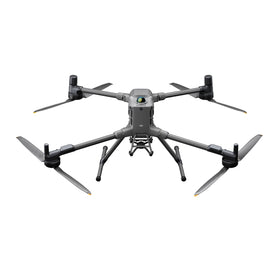
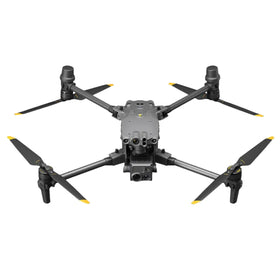
The second-hand drone market stands to benefit from this increased focus on high-reliability, certified aircraft. As commercial operators upgrade their fleets to meet future regulatory requirements, they often offload well-maintained, lower-hour units to the resale channel. Reboot Hub has observed a 22% increase in listings for DJI Matrice 30 series and M300 RTK drones over the past quarter, correlating with the run-up to eVTOL certification milestones. These platforms offer robust payload capabilities and flight control redundancy that align with the performance standards being validated by Archer. For buyers looking to enter the advanced UAS space without committing to new hardware, the pre-owned DJI drones available through Reboot Hub provide a cost-effective bridge to future operations.
Archer’s Progress and the Broader AAM Landscape
Beyond Archer, the entire advanced air mobility (AAM) sector is watching these flight tests as a proof point. Competitors like Joby Aviation, Lilium, and Beta Technologies are also advancing their own certification campaigns, but Archer’s aggressive test pace—now exceeding 100 hours per month—puts it in a leading position. The company has secured orders from United Airlines, Mesa Air Group, and multiple logistics providers for a combined backlog of over 1,000 aircraft. Production plans call for the first deliveries in 2028, with a manufacturing facility in Georgia already ramping up through a partnership with Stellantis to produce up to 250 aircraft per year.
For the drone industry, the most significant aspect is the FAA’s acceptance of surrogate testing—using data from sub-scale and full-scale prototypes to certify production aircraft. This approach mirrors the FAA’s evolving stance on small UAS, where operators can use flight logs and risk analysis to secure Part 107 waivers. As Archer demonstrates the validity of this method for large eVTOLs, the same logic will be applied to commercial drones, effectively lowering the cost of certification for new models. This is particularly important for second-hand dealers and refurbishers, who now have a clearer regulatory path for validating the airworthiness of pre-owned aircraft.
What does Archer’s flight-testing mean for BVLOS operators? The answer lies in the infrastructure build-out. Archer has partnered with the FAA to define initial vertiport locations and airspace corridors in Miami, Los Angeles, and San Francisco. These corridors will eventually integrate BVLOS drones for package delivery and inspection. As the operator of one of the largest inspection fleets in the US noted last month, “The rules being written for eVTOLs will become the de facto standard for all autonomous aerial work.” Operators who begin adapting their procedures now—by investing in redundant communication systems and ADS-B out—will be ahead of the regulatory curve.
For readers considering their next fleet upgrade or maintenance need, Reboot Hub offers a full suite of services to align with these industry shifts. Our professional DJI repair services use genuine parts and FAA-recognized procedures to ensure your drones meet the highest airworthiness standards, whether for Part 107 operations or future certification requirements. By maintaining your fleet with market-leading support, you maximize its resale value and operational readiness for the evolving airspace.
FAQ
How will Archer's flight-testing affect FAA regulations for drones?
Archer's validation of performance-based certification for eVTOL aircraft is expected to influence FAA updates to Part 107 and Part 135, particularly regarding BVLOS operations and airworthiness standards for high-risk drone missions.
What does Archer's progress mean for the second-hand drone market?
Increased commercial demand for certified-capable drones drives higher turnover of older models into the refurbished channel, creating opportunities for operators to acquire cost-effective platforms like the DJI Matrice series from Reboot Hub with warranties.
Should drone pilots invest in eVTOL-related training now?
While not immediate, as eVTOL infrastructure spreads, drone pilots with remote pilot certifications and vertiport operational experience will be in high demand. Monitoring Archer’s certification timeline can help plan career investments.
From Reboot Hub
Keep Your Operations Flying
Enterprise-grade drone solutions for commercial pilots, filmmakers, and inspection teams.
Pre-owned Fleet
Fully inspected DJI drones with 6-month warranty. Save up to 40%.
Browse Inventory ->