Flytrex Tests Restaurant-Staged Drones to Cut Delivery Wait Times
Flytrex is testing a new model that positions delivery drones at restaurants before orders arrive, targeting the ground-handling bottleneck that slows food delivery. The shift could reshape how drone logistics networks plan fleet placement, maintenance, and turnaround time.

Quick answer
Flytrex is testing a model where delivery drones wait at restaurants before orders are placed, aiming to reduce the time between food preparation and drone takeoff.
- Flytrex identified ground handling between restaurant and drone as a major delivery bottleneck.
- The test positions drones at restaurant locations ahead of incoming orders.
- DroneDJ reported the development on September 25, 2026.
- The approach could shift how commercial drone delivery networks stage and maintain fleets.
Evidence: DroneDJ · DIU Blue UAS
Market context
Turn market news into a buy, repair, or trade-in decision.
Compare pre-owned availability, resale timing, and repair economics before the market moves again.

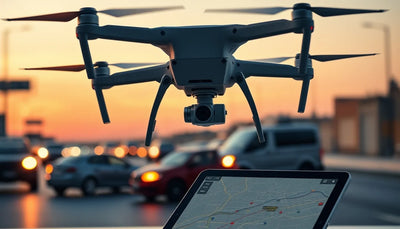
Drone delivery has largely solved the airborne portion of the logistics equation. The harder operational problem, according to reporting from DroneDJ on September 25, 2026, has been moving a freshly prepared meal from the restaurant kitchen to the drone quickly enough to preserve both food quality and delivery economics. Flytrex is now testing a different approach: placing delivery drones at the restaurant before the customer even places an order.
The concept targets what has quietly become one of the most persistent friction points in commercial drone delivery. While much of the industry conversation focuses on range, autonomy, and regulatory approvals, the seconds and minutes lost during ground handling can erode the speed advantage that drone delivery promises. Flytrex's reported test suggests that at least one operator sees restaurant-side staging as a practical fix rather than a hardware or software problem.
Why the restaurant-to-drone handoff matters
DroneDJ's reporting frames the restaurant-to-drone handoff as a bottleneck that has proven harder than the flying itself. A drone can cover a delivery radius in minutes, but if the food sits waiting for a drone to arrive, or if a drone sits idle waiting for food, the total delivery window stretches. For hot food, that delay affects customer satisfaction. For operators, it affects throughput, fleet utilization, and the number of deliveries a single aircraft can complete per hour.
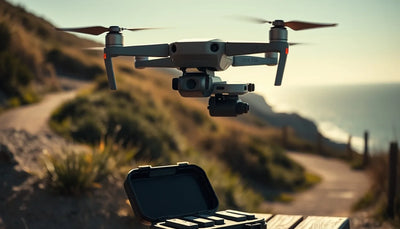
Flytrex's test appears to invert the traditional sequence. Instead of dispatching a drone after an order enters the system, the aircraft is already positioned at the restaurant. When the kitchen finishes the meal, the handoff can happen immediately. This is a logistics scheduling change rather than a new aircraft capability, which makes it notable for fleet planners who are evaluating how to deploy existing hardware more efficiently.
What this means for drone owners and the market
For commercial operators and fleet managers, the Flytrex test signals that delivery economics may depend less on raw flight performance and more on staging, turnaround, and ground coordination. A drone that waits at a restaurant is not flying, but it is also not burning transit time between a central depot and the pickup point. That tradeoff affects battery planning, maintenance scheduling, and the number of aircraft required to serve a given restaurant density.
The pre-owned DJI market could feel a secondary effect if restaurant-staged delivery models gain traction. Operators testing local delivery services often start with smaller, more affordable aircraft before committing to larger fleets. As service models evolve, demand for inspected pre-owned platforms can shift toward airframes that are easy to stage, swap, and repair at distributed locations. For buyers and repair customers, the key question is whether a given aircraft can support frequent short-hop missions with rapid turnaround rather than long single flights. Reboot Hub's Drone Wiki offers reference material for operators evaluating platform choices under changing mission profiles. For owners evaluating service and lifecycle risk, Drone Wiki explains the relevant repair, parts, resale, or operational path.
There is also a maintenance implication. Drones staged at multiple restaurant locations are no longer centralized in a single hangar or depot. That means inspections, firmware updates, and spare parts logistics must follow the aircraft rather than the other way around. For repair providers and parts suppliers, distributed staging could increase demand for on-site service capability and faster access to genuine OEM spare parts.
How ground staging could reshape delivery network design
DroneDJ's report does not specify the number of restaurants involved in Flytrex's test or the geographic scope. What it does establish is that the company sees value in rethinking where drones spend their idle time. If the test produces measurable reductions in order-to-takeoff time, other delivery operators may adopt similar staging strategies, particularly in dense suburban markets where restaurants cluster within short flight distances of residential areas.
The operational question for any fleet manager is whether restaurant-side staging increases or decreases total fleet cost. Staging aircraft at restaurants can reduce deadhead flight time, but it also fragments the fleet. A central depot allows consolidated maintenance and security. Distributed staging requires more coordination, more secure landing zones, and possibly more spare aircraft to cover maintenance downtime at individual sites. The Flytrex test is a real-world experiment in whether the speed gains outweigh those added complexities.
For drone buyers watching this space, the development reinforces a broader market trend: delivery networks are increasingly being shaped by ground logistics rather than airframe specifications alone. A platform that is easy to transport, quick to inspect, and simple to swap between locations may become more valuable than one with marginally better flight time. That has direct relevance for procurement decisions in the commercial and pre-owned segments.
The commercial outlook for restaurant-staged delivery
Flytrex's reported test is not a confirmed commercial rollout, and DroneDJ's reporting does not include official confirmation from the company about performance metrics or expansion plans. The development should be read as an early signal of how drone delivery operators are iterating on service design. The flying technology has matured enough that the next wave of efficiency gains may come from scheduling, staging, and ground operations.
For operators, the practical takeaway is to evaluate current fleet positioning. If aircraft are spending meaningful time traveling empty between a central point and pickup locations, restaurant-side staging may be worth modeling, even on a small scale. For repair customers and parts buyers, the shift toward distributed operations reinforces the value of rapid turnaround and reliable parts availability. The drone delivery market is still young, but the bottlenecks are becoming clearer, and the solutions are increasingly operational rather than purely technical.
FAQ
Frequently asked questions
What is Flytrex testing with restaurant-staged drones?
According to DroneDJ reporting from September 25, 2026, Flytrex is testing a model where delivery drones are positioned at restaurants before customer orders arrive, aiming to reduce the delay between food preparation and drone takeoff.
Why is the restaurant-to-drone handoff a bottleneck?
The handoff involves moving freshly prepared food from the kitchen to the drone quickly. If a drone must travel to the restaurant after an order is placed, the added transit time can extend total delivery windows and reduce fleet throughput.
How could this affect commercial drone fleet planning?
Restaurant-side staging could shift fleet design toward distributed operations, requiring more attention to on-site maintenance, spare parts availability, and the use of aircraft that support rapid short-hop missions with quick turnaround times.
Which sources support this update?
The visible evidence links identify DroneDJ and DIU Blue UAS; each source is used only for the claim it directly supports.
What remains subject to change?
Retail pricing, availability, product bundles and regulatory timelines can change. Readers should verify the latest terms with the named retailer, manufacturer or regulator before acting.
How should buyers or operators use this analysis?
Use the verified facts as a starting point, then compare mission fit, lifecycle support, maintenance needs and current procurement terms before making a purchase or fleet decision.
Sources consultées
- DroneDJ - primary source
- DIU Blue UAS - official government source
Reboot Hub Editorial propose des analyses d'achat, de réparation, de revente et d'exploitation pour les propriétaires de drones. Si vous constatez une erreur, contactez-nous pour une demande de correction conformément à notre politique éditoriale.