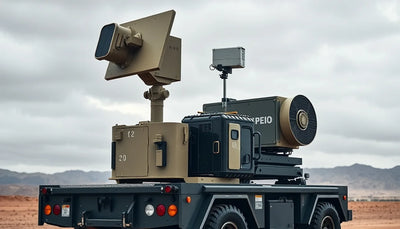
Kratos Expands Defense Launch Footprint With Offshore Platform Deal
Kratos Defense & Security Solutions announced a new partnership with Seagate Space for mobile offshore launch platforms and a separate gateway antenna contract for Gulf Space Technology. The defense contractor is widening its launch and satellite ground infrastructure footprint, with implications for commercial operators watching defense supply chains and procurement cycles.

Quick answer
Kratos Defense & Security Solutions announced a partnership with Seagate Space to support mobile offshore launch platforms for hypersonic and national security missions, alongside a contract to supply Q/V/Ka-band gateway antenna systems for Gulf Space Technology's next-generation high throughput satellite.
- Kratos and Seagate Space are targeting sea-based hypersonic and national security launch missions
- The gateway contract covers Q/V/Ka-band antenna systems for Gulf Space Technology
- Both announcements point to expanding defense and satellite ground infrastructure demand
- Commercial drone operators should watch how defense procurement cycles affect adjacent supply chains
Evidence: Source material · Defense.gov official source
Fleet readiness
Keep DJI hardware available without overbuying new units.
Use defense and fleet news as a planning signal for repair support, inspected pre-owned aircraft, and replacement timing.

Verified facts
What the available evidence confirms
| Announcement | Partner or customer | Reported focus |
|---|---|---|
| Offshore launch partnership | Seagate Space | Mobile sea-based hypersonic and national security mission launches |
| Gateway antenna contract | Gulf Space Technology | Q/V/Ka-band gateway antenna systems for next-generation high throughput satellite |
Kratos Defense & Security Solutions (NasdaqGS:KTOS) has moved to expand its launch and satellite ground infrastructure footprint through two separate announcements reported by Yahoo Finance. The company disclosed a new partnership with Seagate Space aimed at supporting mobile offshore launch platforms, alongside a contract to supply Q/V/Ka-band gateway antenna systems for Gulf Space Technology's next-generation high throughput satellite.
The reporting, drawn from a Yahoo Finance market article on Kratos, frames the offshore launch collaboration as a push into sea-based hypersonic and national security mission launches. The partnership would combine Seagate Space's maritime infrastructure with Kratos launch systems. The gateway antenna contract, meanwhile, positions Kratos within the ground segment of a next-generation high throughput satellite program led by Gulf Space Technology.
For commercial drone operators, repair customers, and fleet buyers, the announcements matter less for the specific hardware involved and more for what they signal about defense procurement, launch infrastructure, and the broader aerospace supply chain. When defense contractors expand into maritime launch and advanced satellite ground systems, the effects tend to ripple through component sourcing, testing capacity, and the availability of specialized engineering talent.
The offshore launch partnership in context
According to the Yahoo Finance report, Kratos and Seagate Space are collaborating to support mobile offshore launch platforms. The stated target is sea-based hypersonic and national security mission launches, using Seagate Space's maritime infrastructure paired with Kratos launch systems. The announcement does not specify a launch date, platform count, or contract value in the source material.
Offshore launch platforms have become a strategic asset for defense and commercial space operators because they allow launch operations to be repositioned away from fixed coastal ranges. That flexibility can reduce range congestion, improve scheduling, and support mission profiles that require specific geographic positioning. For defense buyers, mobile maritime launch infrastructure also complicates adversary targeting and expands operational options.
The commercial implication for drone and unmanned systems operators is indirect but real. Launch infrastructure expansion typically drives demand for range safety systems, telemetry, tracking, and support equipment, much of which overlaps with the sensor, communications, and autonomous systems supply chain that commercial drone fleets depend on. When defense contractors scale maritime launch operations, they often pull from the same pool of RF components, embedded systems, and precision manufacturing capacity that serves the broader unmanned systems market.
The gateway antenna contract and satellite ground infrastructure
The second reported development is a contract for Kratos to supply Q/V/Ka-band gateway antenna systems for Gulf Space Technology's next-generation high throughput satellite. The Yahoo Finance article states that Kratos management confirmed the contract, though the source does not provide a contract value or delivery timeline.
Q/V/Ka-band gateway antennas are used in high-capacity satellite ground stations to manage feeder links between satellites and terrestrial networks. High throughput satellites rely on these gateways to move large volumes of data, and the shift toward Q/V-band reflects the industry's need for more spectrum and higher data rates as Ka-band becomes congested.
For commercial operators, this is a useful signal about where satellite communications infrastructure is heading. Drone fleets that operate beyond visual line of sight, maritime inspection services, and remote sensing operations increasingly depend on satellite backhaul for command and control and data transfer. As gateway infrastructure modernizes, the practical ceiling for remote drone operations rises, even if the immediate beneficiaries are defense and large commercial satellite operators.
What this means for drone owners and the market
The most direct takeaway for drone buyers and fleet operators is that defense infrastructure spending remains a significant demand driver for adjacent aerospace and communications supply chains. Kratos is not a consumer drone company, but its expansion into offshore launch and advanced satellite ground systems competes for the same specialized components, RF engineering capacity, and manufacturing resources that support commercial unmanned systems. When defense programs accelerate, lead times for certain components can stretch, and pricing pressure can shift across the broader electronics supply chain. Operators planning fleet expansion or major repairs should track these procurement cycles rather than assuming component availability will remain stable.
For repair customers and owners of pre-owned DJI drones, the connection is more subtle. The second-hand drone market depends on predictable replacement part availability, and OEM-pulled parts and genuine OEM spare parts remain central to keeping inspected pre-owned aircraft operational. Defense-driven demand for RF components and embedded systems can influence the broader parts ecosystem, even when the specific components are not shared with consumer drones. Buyers evaluating pristine pre-owned DJI units should consider how broader aerospace supply chain pressure might affect repair turnaround times and spare part pricing over the next several quarters. Reboot Hub's Drone Wiki provides reference material for operators tracking these market dynamics. For owners evaluating service and lifecycle risk, Drone Wiki explains the relevant repair, parts, resale, or operational path.
Fleet managers should also note that the Kratos announcements reinforce a longer-term trend: defense and commercial space operators are investing in more flexible, distributed infrastructure. Offshore launch platforms and high-throughput satellite gateways are both designed to reduce dependence on fixed, vulnerable, or congested assets. Commercial drone operators face a similar pressure to diversify their own operational infrastructure, whether that means multi-network connectivity, redundant repair channels, or more flexible fleet planning.
Reading the signals without overreading the source
The Yahoo Finance report provides a limited factual basis. It confirms the Seagate Space partnership, the offshore launch focus, and the Gulf Space Technology gateway antenna contract. It does not provide financial terms, timelines, platform specifications, or customer commitments. Reboot Hub analysis should treat the broader supply chain implications as informed interpretation, not confirmed reporting.
That distinction matters for procurement decisions. A defense contractor announcing a partnership is not the same as a funded program with a delivery schedule. Operators should monitor whether these announcements translate into contract awards, hiring, and facility investment before adjusting their own planning assumptions. The source material supports the existence of the partnership and the gateway contract, but not the scale or pace of execution.
Still, the direction is consistent with broader defense and space industry patterns. Maritime launch infrastructure, high-throughput satellite gateways, and resilient ground networks are all areas where government and commercial demand have been converging. For commercial drone operators, the practical question is whether these defense-driven investments will tighten or loosen the supply of components and services they rely on.
FAQ
Frequently asked questions
What did Kratos Defense announce?
According to Yahoo Finance reporting, Kratos Defense & Security Solutions announced a partnership with Seagate Space to support mobile offshore launch platforms for hypersonic and national security missions, plus a contract to supply Q/V/Ka-band gateway antenna systems for Gulf Space Technology's next-generation high throughput satellite.
Why should commercial drone operators care about offshore launch platforms?
Offshore launch infrastructure expansion can increase demand for RF components, sensors, telemetry, and embedded systems that overlap with the commercial unmanned systems supply chain. That can affect component lead times and pricing for drone fleet operators and repair customers.
Does this news directly affect pre-owned DJI drone pricing?
Not directly. The Kratos announcements do not involve DJI products or consumer drone hardware. However, defense-driven pressure on the broader aerospace electronics supply chain can indirectly influence spare part availability and repair costs for pre-owned DJI drones over time.
Which sources support this update?
The visible evidence links identify Source material and Defense.gov official source; each source is used only for the claim it directly supports.
What remains subject to change?
Retail pricing, availability, product bundles and regulatory timelines can change. Readers should verify the latest terms with the named retailer, manufacturer or regulator before acting.
How should buyers or operators use this analysis?
Use the verified facts as a starting point, then compare mission fit, lifecycle support, maintenance needs and current procurement terms before making a purchase or fleet decision.
Sources consultées
- Source material - primary source
- Defense.gov official source - official government source
Reboot Hub Editorial propose des analyses d'achat, de réparation, de revente et d'exploitation pour les propriétaires de drones. Si vous constatez une erreur, contactez-nous pour une demande de correction conformément à notre politique éditoriale.