Ukraine's Delta System: The Drone Warfare Tech the US Is Racing to Match
While Trump claims Ukraine lacks leverage, Rubio calls Kyiv's military the strongest in Europe, and Driscoll admits the U.S. is playing catch-up with Ukraine's Delta command network. For commercial drone operators and defense contractors, this signals a massive shift in battlefield C2 architecture and a potential gold rush for AI-driven drone swarm integration. The implications for Part 107 waivers, BVLOS operations, and the second-hand drone market are immediate and severe.

Editorial notes
- This article combines named outside reporting with Reboot Hub's own analysis for drone buyers, fleet operators, repair customers, and pre-owned DJI market watchers.
- Source facts are separated from interpretation. When a report provides limited data, the article states that limitation and frames Reboot Hub's view as analysis.
- Reboot Hub has commercial links to drone products and repair services; those links are reader resources and do not determine the article's conclusion.
In a striking contradiction to former President Donald Trump's public dismissal of Ukraine's negotiating position, top U.S. officials have quietly acknowledged a very different reality on the battlefield. Secretary of State Marco Rubio recently described Ukraine's military as "the strongest in Europe," while a key Pentagon advisor, Lieutenant General (Ret.) John Driscoll, told a Senate Armed Services subcommittee that the United States is "playing catch-up" with Ukraine's Delta command-and-control network. The admission, made on May 19, 2026, has sent shockwaves through the defense and commercial UAV sectors.
For the drone industry, this is not just a geopolitical headline. It is a direct signal about the future of unmanned systems integration, data fusion, and networked warfare. The Delta system, developed by Ukraine's defense tech innovators, has proven to be the backbone of Kyiv's ability to coordinate real-time drone strikes, electronic warfare countermeasures, and artillery fire across a 1,000-kilometer front line. And now, the U.S. military-along with NATO allies-is scrambling to replicate its success.
This news, dated May 21, 2026, carries profound implications for commercial UAV operators, defense contractors, and the second-hand drone market. As the U.S. accelerates its own C2 (command and control) modernization, the demand for compatible hardware, software, and skilled operators is set to skyrocket. At Reboot Hub, we track these market shifts to help our clients make informed fleet decisions.
Fleet readiness
Keep DJI hardware available without overbuying new units.
Use this news as a planning signal for inspected DJI aircraft, repair support, and trade-in timing.

What Is the Delta System and Why Does It Matter for Drones?
The Delta system is a cloud-based, AI-enabled battle management platform that integrates real-time data from thousands of sensors-including reconnaissance drones, satellite imagery, ground-based radar, and human intelligence-into a single, unified operational picture. Developed by Ukraine's Ministry of Digital Transformation and private sector partners, Delta allows commanders to assign targets to specific drone units, track munitions expenditure, and adjust tactics in seconds.
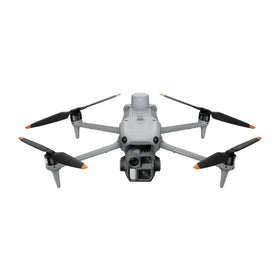
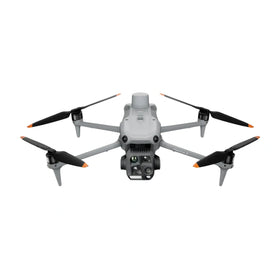
What makes Delta revolutionary is its low-latency data fusion. Unlike traditional military C2 systems that rely on hierarchical, stovepiped communication channels, Delta uses a mesh network architecture. Every drone, every operator, and every command post is a node. When a DJI Mavic 3E spots a Russian armor column, that data is instantly available to an artillery battery 50 kilometers away, a loitering munition team, and a headquarters cell simultaneously.

This capability is exactly what the U.S. military has been trying to achieve through its Joint All-Domain Command and Control (JADC2) concept, but with limited success. Driscoll's Senate testimony revealed that the Pentagon's efforts remain fragmented, with different branches still using incompatible systems. Meanwhile, Ukraine's Delta has been battle-tested for over two years, processing more than 100,000 sensor feeds per day.
For commercial UAV operators, the implications are clear: the future of drone operations is networked, AI-driven, and data-intensive. The days of flying a single drone with a standalone controller are numbered. The industry is moving toward swarms, BVLOS (beyond visual line of sight) corridors, and automated data pipelines. Companies that invest in compatible hardware and software now will be ahead of the curve.

How This Shifts the Defense Drone Market
Ready to Upgrade Your Fleet?
Browse our collection of inspected pre-owned DJI drones - inspected, flight-tested, and backed by a 6-month warranty. Save up to 40% versus retail.
The U.S. admission of playing catch-up is a massive market signal. Defense budgets for FY2027, currently being debated in Congress, are expected to include a dedicated line item for "Delta-like capabilities." This means billions of dollars in contracts for drone manufacturers, sensor integrators, and software developers. Companies like Anduril, Palantir, and Shield AI are already positioning themselves, but the real opportunity lies in the hardware layer.
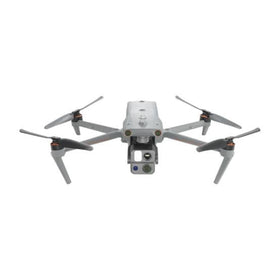
Specifically, the demand is shifting toward modular, open-architecture drones that can plug into any C2 system. Proprietary lock-in is becoming a liability. The U.S. military wants drones that can accept tasking from Delta, JADC2, or any future system. This favors platforms like the Skydio X10 and the Autel EVO Max series, which offer SDKs and API access. It also creates a booming market for used DJI drones, which remain the most widely deployed commercial UAVs globally and are often retrofitted with custom C2 modules.
Ready to Upgrade Your Fleet?
Browse our collection of inspected pre-owned DJI drones - inspected, flight-tested, and backed by a 6-month warranty. Save up to 40% versus retail.
What This Means for Commercial Drone Operators
While the Delta system is a military tool, its underlying principles are directly applicable to commercial UAV operations. The concept of a unified, real-time data mesh is exactly what large-scale drone programs need for inspections, surveying, and logistics. For example, a pipeline inspection company operating 50 drones across a 500-kilometer corridor could use a Delta-like system to manage flight paths, data ingestion, and anomaly detection from a single dashboard.
Question: What does the U.S. playing catch-up with Delta mean for a commercial drone pilot in 2026?
Answer: It means that the regulatory and technological landscape is about to shift dramatically. The FAA's current Part 107 framework, which requires visual line-of-sight for most operations, is already under pressure to accommodate BVLOS flights. The Delta system demonstrates that safe, scalable BVLOS is possible when you have robust C2 and situational awareness. Expect the FAA to accelerate its rulemaking on BVLOS waivers, especially for operators who can demonstrate integrated data management. Furthermore, the push for open-architecture drones will make it easier for commercial operators to mix and match hardware from different manufacturers, reducing vendor lock-in and lowering costs.
For independent pilots and small-to-medium enterprises, this is both a challenge and an opportunity. The challenge is that the bar for technical sophistication is rising. The opportunity is that the second-hand market will see a flood of older, closed-architecture drones being sold off as operators upgrade. This is where Reboot Hub's expertise becomes invaluable. We help our clients navigate the used drone market to find high-quality platforms that can be retrofitted with modern C2 modules, extending their useful life and maximizing return on investment.
The Second-Hand Drone Market: A Strategic Asset
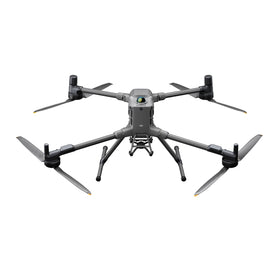
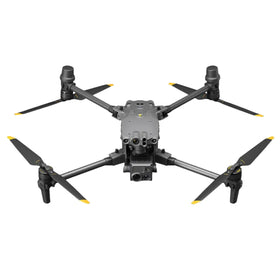
The Delta revelation has a direct and immediate impact on the second-hand drone market. As defense and commercial operators rush to adopt open-architecture systems, the value of older, proprietary drones is declining. However, this creates a buying opportunity for savvy operators. Many DJI Matrice 300 RTK and Mavic 3 Enterprise units, which are still highly capable airframes, are being sold at steep discounts. These platforms can be equipped with third-party payloads and communication modules to interface with modern C2 systems.
At Reboot Hub, we are seeing a surge in demand for pre-owned DJI drones from defense subcontractors and commercial inspection firms. They recognize that buying used allows them to allocate more budget to the software and integration layer-the part of the system that actually delivers the Delta-like capability. Our rigorous inspection and flight-testing process ensures that every unit we sell is mission-ready, and our 6-month warranty provides peace of mind.
Furthermore, the increased focus on C2 integration means that repair and maintenance services are more critical than ever. A drone that cannot communicate with the network is a liability. That's why we also offer professional DJI repair services using genuine parts, ensuring that your fleet remains fully compatible with evolving network standards. Whether you need a gimbal replacement, a firmware update, or a full C2 module retrofit, our technicians have the expertise to keep you operational.
In conclusion, the U.S. admission of playing catch-up with Ukraine's Delta system is a watershed moment for the drone industry. It validates the shift toward networked, AI-driven operations and creates immediate opportunities in defense contracting, commercial BVLOS, and the second-hand market. At Reboot Hub, we are committed to helping our clients navigate this transformation with high-quality, affordable hardware and expert support.
FAQ: Ukraine's Delta System and the Drone Market
1. What is the Delta system and why is it important for drones?
The Delta system is a Ukrainian-developed, AI-enabled battle management platform that integrates real-time data from drones, satellites, and ground sensors into a single operational picture. It allows for low-latency targeting and coordination across multiple units. Its importance lies in demonstrating that scalable, networked drone operations are achievable today, which has direct implications for both military and commercial UAV C2 architectures.
2. How does the U.S. playing catch-up affect commercial drone regulations?
This development increases pressure on the FAA to finalize BVLOS rules and approve more integrated C2 systems. The Delta system's success proves that safe BVLOS is possible with robust data fusion. Commercial operators should expect faster waiver approvals and new regulations that favor open-architecture, network-capable drones. This will likely accelerate the adoption of standards like ASTM F3411 for remote ID and C2.
3. Should I buy a used DJI drone now or wait for new models?
Given the market shift toward open-architecture systems, there is a strong case for buying used DJI drones now. Prices for older models like the Matrice 300 RTK and Mavic 3 Enterprise are dropping as operators upgrade. These airframes are still highly capable and can be retrofitted with third-party C2 modules. Buying refurbishment-labeled from a trusted source like Reboot Hub allows you to save up to 40% while still getting a flight-tested, warrantied platform. Waiting for new models may mean paying a premium for features you may not need immediately.
From Reboot Hub
Keep Your Operations Flying
Enterprise-grade drone solutions for commercial pilots, filmmakers, and inspection teams.
Pre-owned Fleet
Fully inspected DJI drones with 6-month warranty. Save up to 40%.
Browse Inventory ->