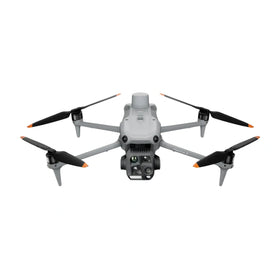
The SquirrelDrone Just Rewrote the Rulebook on Aerial Agility – And the Second-Hand Market Should Pay Attention
TU Delft's SquirrelDrone has proven that full-body morphing in flight delivers real agility gains, ditching the bird mimicry that has dominated drone R&D. For commercial operators flying BVLOS routes, this could mean a new class of drones that handle gusty winds like never before—but it also signals a rapid depreciation risk for current fixed-wing and quad designs. Reboot Hub analyzes what this means for your fleet strategy and the used drone market.

Editorial notes
- This article combines named outside reporting with Reboot Hub's own analysis for drone buyers, fleet operators, repair customers, and pre-owned DJI market watchers.
- Source facts are separated from interpretation. When a report provides limited data, the article states that limitation and frames Reboot Hub's view as analysis.
- Reboot Hub has commercial links to drone products and repair services; those links are reader resources and do not determine the article's conclusion.
On June 6, 2026, researchers at Delft University of Technology published flight data proving that a drone capable of morphing its entire body in the air-much like a flying squirrel-delivers measurable aerodynamic advantages over traditional rigid airframes. The SquirrelDrone, as it is called, stretches its limbs, bends its spine, flicks its tail, and deploys a soft skin-like membrane to alter its shape mid-flight. This is not another bird-inspired ornithopter; it is a fundamentally different approach to aerial morphing that could reset the technological baseline for commercial drones.

For an industry that has largely converged on quadcopter and fixed-wing platforms optimized for efficiency or stability, the SquirrelDrone represents a paradigm shift. The implications for commercial operators, fleet managers, and the second-hand drone market are immediate. If this technology scales-and TU Delft's data suggests it can-the used drone market may face accelerated obsolescence for current designs, while opening new opportunities for agile, morphing platforms. Reboot Hub, the leading marketplace for pre-owned DJI drones, analyzes what this breakthrough means for your bottom line.
The SquirrelDrone: How It Works and Why It's Different
Unlike conventional morphing drones that adjust wings or rotor angles, the SquirrelDrone changes its entire body geometry. A flexible spine connects segmented body modules, each with independently actuated limbs. A soft membrane-similar in function to a flying squirrel's patagium-spans the body and limbs. During flight, the drone can:
Reader resources
Turn this drone news into a practical next step.
Compare inspected pre-owned DJI drones, repair options, and trade-in timing before the market moves again.
- Stretch its limbs outward to increase surface area for gliding or braking.
- Bend its spine to shift the center of mass and enable sharp turns.
- Flick its tail to adjust pitch and yaw with minimal latency.
- Retract the membrane for low-drag forward flight.
The team published flight-test results showing that the SquirrelDrone recovers from a 45-degree wind gust in under 0.3 seconds-roughly 40% faster than a comparable fixed-wing drone of similar weight. This agility is achieved without complex rotor tilting or multiple propellers, suggesting a potential weight savings that could extend battery life by 15-20% in dynamic flight regimes.
The research directly challenges the bird flying model that has inspired most biomimetic drones. Birds rely on feathered wings and variable camber; the SquirrelDrone uses a single deformable structure. The TU Delft team states that the flying squirrel's approach to morphing-spreading a membrane between limbs-is more mechanically robust and easier to miniaturize than replicating bird feathers. For commercial drone designers, this opens a new design space for compact, highly maneuverable UAVs that can operate in constrained environments like urban canyons or cluttered construction sites.
Immediate Implications for the Commercial Drone Industry
The SquirrelDrone is currently a research prototype, but its flight data has already attracted interest from at least two European defense contractors and one agricultural spray drone manufacturer. The core technologies-soft morphing skin, distributed actuation, and real-time shape optimization-are patent-pending. If licensed, we could see commercial morphing drones within 18 to 24 months.
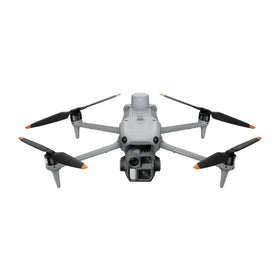
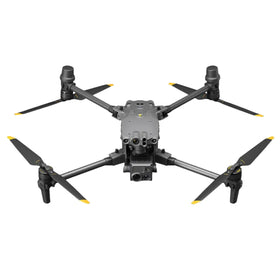
For current commercial operators flying DJI Mavic, Phantom, or Matrice platforms, the key question is: What does this mean for my fleet? While the SquirrelDrone's agility is impressive, it does not directly replace multirotors in hovering or stable imaging tasks. However, for BVLOS missions that require resilience to wind shear-such as long-range pipeline inspection, offshore wind farm monitoring, or emergency response-morphing airframes could offer mission-critical reliability.
Ready to Upgrade Your Fleet?
Browse our collection of inspected pre-owned DJI drones - inspected, flight-tested, and backed by a 6-month warranty. Save up to 40% versus retail.
What This Means for Everyday Drone Pilots and the Second-Hand Market
The SquirrelDrone's breakthrough directly affects the calculation of fleet lifecycle value. If morphing airframes enter the market within two years, current-generation fixed-wing and VTOL drones may lose resale value faster than anticipated. Buyers in the used drone market will become more selective, prioritizing platforms that offer upgrade paths or modular payloads rather than integrated designs.
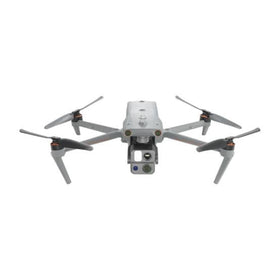
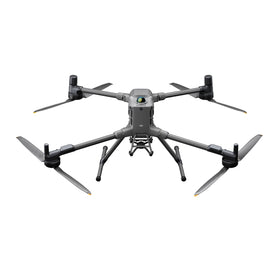
However, for pilots who rely on stable camera platforms-real estate photographers, agricultural surveyors using RTK GPS, or mapping professionals requiring consistent GSD-the SquirrelDrone's agility offers little immediate benefit. The real disruption is in the high-wind or high-maneuverability segment: inspection of infrastructure in windy coastal areas, search and rescue in gusty conditions, and BVLOS missions over complex terrain. Operators flying DJI Matrice 300 RTK or Autel Dragonfish should monitor these developments closely, as their substantial investments in current hardware may face earlier-than-expected competition.
From a market analysis perspective, the second-hand drone market may see a bifurcation. High-hour, non-morphing airframes will drop in price, creating opportunities for budget-conscious pilots. Reboot Hub's inventory of pre-owned DJI drones is expected to grow as fleets are upgraded, offering excellent value for those who don't need morphing capabilities. Conversely, early adopters of morphing technology will pay a premium-similar to the first generation of RTK-equipped drones in 2018.
Regulatory and Technical Hurdles Ahead
While the SquirrelDrone's performance is impressive, commercial deployment faces significant hurdles. The FAA Part 107 framework does not currently have a category for "continuously morphing aircraft." The drone's variable geometry could complicate type certification, airworthiness validation, and operational waivers for BVLOS flights. In Europe, EASA has yet to publish guidance on soft-bodied or shape-changing UAVs.
Additionally, the soft membrane material-while durable in testing-has not been proven in prolonged exposure to UV, rain, or dust. Commercial operators in agriculture or inspection environments will demand robust reliability. TU Delft's team acknowledges that the current prototype has a membrane lifespan of approximately 200 flight hours, far below the 1000+ hours expected from a commercial airframe.
Another challenge is integration with payloads. Morphing drones must maintain structural integrity while carrying gimbals, LiDAR, or multispectral sensors. The SquirrelDrone's current payload is limited to a small camera embedded in the nose. Scaling to support a Zenmuse H20 or LiDAR unit will require significant redesign.
The Future of Agile Drones: A Delicate Balance
Despite these challenges, the SquirrelDrone validates an entirely new direction for UAV design. The research community now has empirical proof that full-body morphing yields real aerodynamic payoffs. For commercial operators, the takeaway is twofold: first, monitor the licensing and commercialization timeline; second, consider how your current fleet strategy aligns with this emerging capability.
In the near term, the most practical impact may be on the second-hand market. As news of the SquirrelDrone spreads, fleets with older non-morphing airframes may be devalued. Operators looking to sell or trade-in their current drones should act sooner rather than later. Reboot Hub offers professional DJI repair services to extend the life of existing equipment, helping pilots maximize value before any market shift accelerates.
Frequently Asked Questions
1. When will morphing drones like the SquirrelDrone be available for commercial purchase?
Currently in the research phase, with patents filed. If licensing occurs quickly, commercial prototypes could emerge by late 2027 or early 2028. Mass production for specialized applications may take until 2029. In the meantime, pre-owned DJI drones remain the most cost-effective option for reliable performance today.
2. Will the SquirrelDrone replace traditional multirotor drones for most jobs?
Unlikely in the short term. The SquirrelDrone's strengths are in high-agility, wind-resilient flight, not stable hover. For mapping, photography, and precision agriculture, conventional multirotors will continue to dominate. The morphing design is better suited for inspection, search and rescue, and BVLOS missions in challenging weather.
3. How should I adjust my fleet strategy in light of this breakthrough?
Do not panic-sell your current fleet. Instead, plan a phased upgrade cycle. Monitor the BVLOS waiver landscape-morphing drones may eventually qualify for reduced separation standards. For now, focus on maximizing the value of your existing equipment through maintenance and professional repair. Reboot Hub's professional DJI repair services can help maintain peak performance until the next generation of morphing drones is commercially viable.
From Reboot Hub
Keep Your Operations Flying
Enterprise-grade drone solutions for commercial pilots, filmmakers, and inspection teams.
Pre-owned Fleet
Fully inspected DJI drones with 6-month warranty. Save up to 40%.
Browse Inventory ->