Ukraine Certifies Kolibri 10 Advance – Autonomous FPV Strike at 40 km
Ukrainian firms have certified the Kolibri 10 Advance, an FPV drone that can autonomously complete its final attack run after a human designates the target. Range exceeds 40 km, raising new fleet planning and compliance questions for commercial operators.

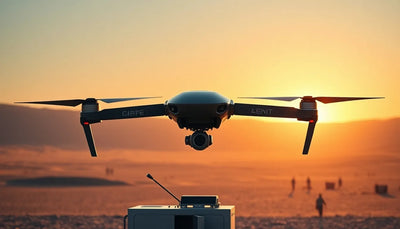
Ukrainian defense technology firms Fourth Law and TAF Industries have certified the Kolibri 10 Advance, a new FPV strike drone capable of flying up to 25 miles (approximately 40 kilometers) and completing its final attack run fully autonomously after a human operator designates a target. This certification, reported by DroneXL.co on July 21, 2026, marks a significant shift in how low-cost loitering munitions are being deployed in the field. While the Kolibri 10 Advance is purpose-built for military operations, its underlying architecture—combining beyond-line-of-sight range with AI-driven terminal guidance—has implications far beyond the battlefield. For commercial drone fleet operators, repair shops, and second-hand market participants, this development signals a new wave of autonomous-capable airframes that will eventually filter into civilian use, influence regulatory thinking, and alter the resale value of pre-owned DJI drones and other legacy equipment.
The Kolibri 10 Advance is not a consumer product. It is a purpose-engineered strike drone designed for the Ukrainian Armed Forces, but its certification process and public disclosure are noteworthy because they demonstrate that autonomous terminal guidance—once limited to expensive military systems—can now be achieved with commercial-off-the-shelf electronics and open-source flight controller software. Fourth Law and TAF Industries are both Ukrainian private firms, not state-owned defense giants, which suggests that the barrier to entry for autonomy in FPV-class drones is lowering quickly. Drone buyers, fleet operators, and repair customers should pay close attention to the Kolibri’s architecture because it previews the type of flight-control and computer-vision hardware that may soon appear in commercial inspection, survey, and agriculture drones.
What the Kolibri certification means for autonomous drone operations
The Kolibri 10 Advance certification by Ukrainian authorities is a concrete regulatory milestone. According to the source, the drone can fly 25 miles (40 km) from its launch point and then, after the human operator designates a target via the controller’s video feed, the Kolibri executes the final attack run without any further pilot input. This is not a simple “return to home” or “hold position” failsafe; it is a decision-making AI that routes the drone to a moving or stationary target using on-board computer vision and inertial navigation.
Fleet readiness
Keep DJI hardware available without overbuying new units.
Use defense and fleet news as a planning signal for repair support, inspected pre-owned aircraft, and replacement timing.

For commercial operators, the operational significance is clear: autonomous terminal guidance could reduce pilot workload in complex delivery or inspection scenarios, such as landing on a moving platform or navigating into a GPS-denied pipe. However, civilian regulations in most jurisdictions currently prohibit fully autonomous drone operations without a human-in-the-loop safety override. The Kolibri’s certification in a military context may accelerate the development of equivalent safeguards for commercial use, but it also sharpens the line between allowed semi-autonomous modes (like DJI’s ActiveTrack) and the kind of fully autonomous run that the Kolibri performs. Fleet managers planning to adopt higher levels of autonomy should watch for EASA and FAA rulemaking expected in late 2026 and early 2027.
Implications for the pre-owned DJI drone and repair market
When defense-focused autonomous drones like the Kolibri 10 Advance gain certification, they often spur a secondary effect on the commercial second-hand market. Military surplus, retired test airframes, or components from development cycles sometimes trickle into the civilian supply chain. For a purchaser of pre-owned DJI drones, the emergence of low-cost autonomy hardware means that legacy DJI airframes—such as the Mavic 3 Enterprise or Matrice 300 RTK—may be retrofitted with aftermarket companion computers running similar guidance algorithms. This creates both opportunity and risk.
On the opportunity side, independent repair shops and fleet operators can offer upgrades: adding a dedicated AI payload processor, thermal camera, or RTK GPS module onto a pre-owned DJI platform to replicate some of the Kolibri’s autonomous strike capability for non-violent applications like wildlife tracking or power-line inspection. On the risk side, any modification that adds autonomous terminal guidance to a civilian drone may void the original manufacturer’s warranty and run afoul of local aviation regulations. Repair customers should seek professional DJI repair services that use genuine OEM spare parts to ensure the airframe remains compliant and insurable. The Kolibri certification does not change DJI’s repair policy, but it does raise the profile of autonomy-as-an-add-on, which may drive more operators toward inspected pre-owned units with known service histories.
What this means for drone buyers
For a buyer considering a drone purchase today—whether new or pre-owned—the Kolibri 10 Advance certification is a signal to think about future-proofing. The era of fully autonomous drone flight is arriving sooner than many estimates predicted. If you buy a drone in mid-2026 that lacks any on-board compute or computer vision capability beyond basic obstacle avoidance, you may face obsolescence within two years as software-defined payloads and flight controllers become the standard.
Reboot Hub analysis: Practical advice: prioritize drones with accessible payload bays or expansion ports. The Matrice 350 RTK, Autel Robotics Dragonfish, and even high-end FPV frames like the iFlight Chimera can accept companion computers that run autonomy stacks. If you are purchasing from the second-hand market, ask for the airframe’s flight controller version, camera sensor model, and any previous modification history. A drone that has been upgraded with an aftermarket Pixhawk or Cube Orange flight controller may be easier to retrofit with autonomous suites. Use the drone trade-in guide to evaluate whether your current fleet holds value in this changing landscape. Finally, stay informed about your local aviation authority’s stance on autonomous flight modes; the Kolibri certification may lead to stricter rules on high-altitude beyond-visual-line-of-sight (BVLOS) operations that use AI for obstacle avoidance.
Fleet planning and repair considerations after the Kolibri certification
Fleet managers who operate multiple drones for commercial inspection, security, or delivery should revisit their maintenance and upgrade schedules. The Kolibri 10 Advance relies on a combination of long-range digital video transmission (the source reports 40 km range) and AI processing. In a military context, reliability is paramount; the drone must complete its mission without losing video link or computing power. For commercial fleets, equivalent reliability requires meticulous battery health management, firmware version control, and payload compatibility testing.
Repair shops see a growing demand for upgrading older DJI drones with newer communication modules that support extended range and lower latency. The Kolibri certification illustrates that 40 km BVLOS is now feasible with commercial hardware, which may push DJI competitors to offer similar range specifications on next-generation enterprise drones. For now, fleet operators should standardize on a single flight controller platform and maintain a spare parts inventory focused on antennas, radio modules, and companion computer mounting kits. Professional DJI repair services that use genuine OEM spare parts are best positioned to handle these upgrades without compromising airframe integrity. When evaluating whether to repair an older drone or replace it, factor in the cost of adding an autonomy payload; sometimes a complete pre-owned DJI airframe from a trusted source is more cost-effective than retrofitting.
Frequently asked questions
Is the Kolibri 10 Advance available for commercial purchase?
No. According to the source, the drone is certified by Ukrainian authorities and is being used by the Ukrainian Armed Forces. It is not listed for commercial sale, and there is no indication of export availability. Civilian operators should not expect to buy this model directly.
Does the Kolibri certification affect DJI drone resale values?
Reboot Hub analysis: Indirectly, yes. The emergence of low-cost autonomous guidance may make older DJI drones that lack expansion ports or modern flight controllers less attractive to buyers who want to experiment with autonomy. Pre-owned DJI airframes with good payload capacity and open flight controller compatibility are likely to hold value better. The second-hand market will likely split into “upgradeable” airframes and “fixed” consumer drones.
What should a drone repair shop do to prepare for autonomy retrofitting demand?
Repair shops should invest in diagnostic tools that work with Pixhawk, Cube Orange, and other open-source flight controllers. Offer services including wiring harness design, payload mounting, and dual-GPS antenna installation. Stock genuine OEM spare parts for DJI airframes to maintain warranty compliance for clients who want to keep their aircraft insurable while adding aftermarket autonomy features.
Sources consulted
- DroneXL.co - primary source
- FAA UAS official guidance - official regulator source
Reboot Hub Editorial adds buyer, repair, resale, and operational analysis for drone owners. If you spot an error, contact us for correction review through our editorial policy.