Taiwan’s Drone Industry Hits a Wall: Legislative Yuan Blocks Key Development Bill
Taiwan’s Legislative Yuan has halted the Drone Industry Development Draft Act, throwing the island’s commercial UAV sector into regulatory limbo. With RTK surveying and BVLOS routes now uncertain, operators face potential airspace restrictions and fines. This analysis examines the immediate impact on drone importers, second-hand market prices, and the strategic pivot to refurbished units from Reboot Hub.

Editorial notes
- This article combines named outside reporting with Reboot Hub's own analysis for drone buyers, fleet operators, repair customers, and pre-owned DJI market watchers.
- Source facts are separated from interpretation. When a report provides limited data, the article states that limitation and frames Reboot Hub's view as analysis.
- Reboot Hub has commercial links to drone products and repair services; those links are reader resources and do not determine the article's conclusion.
On June 6, 2026, Taiwan's Legislative Yuan formally blocked the Drone Industry Development Draft Act, a comprehensive piece of legislation designed to subsidize local UAV manufacturing, streamline certification for beyond-visual-line-of-sight (BVLOS) operations, and establish a national drone traffic management system. The rejection sends shockwaves through the island's commercial drone ecosystem, from surveying and mapping companies to agriculture and emergency response operators. The blocked bill, which had been under review for over two years, aimed to address critical gaps in Taiwan's regulatory framework, particularly for high-precision RTK surveying and real-time kinematic data collection used in infrastructure inspection and smart agriculture.

Taiwan, a global hub for electronics manufacturing and semiconductor production, had positioned itself as a future leader in advanced drone applications. The draft act included provisions for drone registration exemptions for lightweight UAVs under 2 kg, a clear BVLOS waiver process, and tax incentives for businesses using domestically produced components. Instead, the legislature voted to send the bill back to committee, citing unresolved national security concerns over data sovereignty and the role of foreign-made drones-particularly those from DJI, the Shenzhen-based market leader that dominates over 70% of Taiwan's commercial drone fleet.
What the Blocked Bill Would Have Changed
The Drone Industry Development Draft Act was designed to align Taiwan's drone rules with international best practices from the FAA (Part 107 waivers) and EASA (U-space). Key proposals included:
Operator checklist
Turn policy news into a safer fleet decision.
Before changing aircraft, compare repair paths, available DJI inventory, and trade-in timing against the rule change.
- Subsidized training programs for professional drone operators in precision agriculture and industrial inspection.
- A centralized digital remote ID system to integrate all drones above 250 grams into a national traffic network, enabling safe BVLOS flights.
- Financial grants for Taiwanese startups developing obstacle avoidance sensors and autonomous flight controllers.
- Import duty reductions for drones with locally sourced components over 50% by value-a move that explicitly targeted Chinese-made DJI platforms.
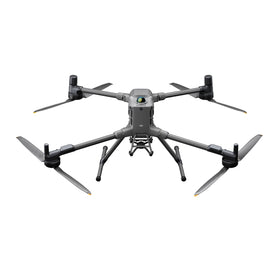
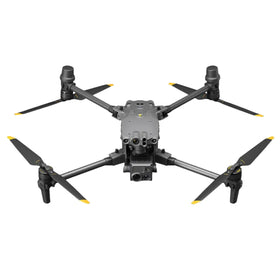
The legislative blockade means none of these provisions become law. For commercial operators who had invested in RTK-capable systems like the DJI Matrice 300 RTK or the newer Phantom 4 RTK, the lack of a formal BVLOS pathway remains the single biggest bottleneck to scaling operations in Taiwan's mountainous terrain and crowded urban airspace. Without the act, operators continue to rely on outdated Civil Aviation Administration (CAA) regulations that limit flights to visual line of sight (VLOS) only, with waivers rarely granted for beyond-visual flights.
Immediate Fallout for Pilots and Businesses
The blockage creates immediate operational uncertainty. Without a clear legal framework for BVLOS, companies that had been preparing to deploy drones for long-distance power line inspection or pipeline monitoring must now shelve those projects. The Taiwanese CAA has also indicated it will not fast-track any new waivers until the legislative process is resolved, leaving operators in a regulatory vacuum. Pilots flying drones for commercial mapping or inspection face a patchwork of local restrictions, with fines for unauthorized flights reaching up to NT$1 million (approximately US$31,000) under current aviation law.
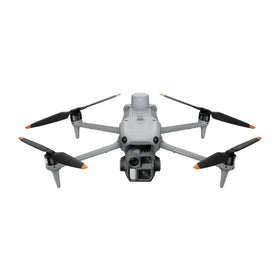
For everyday drone pilots, the immediate consequence is the continued requirement for manual visual observers-a cost that eats into thin margins. Smaller surveying firms, many of which rely on the DJI Mavic 3 Enterprise series for its compact RTK module, now find themselves stuck with hardware they cannot fully utilize. The secondary effect is a sudden dip in demand for pre-owned high-grade drones, as businesses delay fleet upgrades until the regulatory path clarifies.
Ready to Upgrade Your Fleet?
Browse our collection of inspected pre-owned DJI drones - inspected, flight-tested, and backed by a 6-month warranty. Save up to 40% versus retail.
Ripple Effects on the Second-Hand and Refurbished Drone Market
The legislative gridlock in Taipei is already reshaping the secondary drone market across Asia. When regulatory progress stalls, operators typically tighten capital expenditure and look for cost-effective alternatives. At Reboot Hub, we are seeing increased interest in our pre-owned DJI drones from Taiwanese buyers who are postponing purchases of new units until the regulatory environment stabilizes. The used drone market is experiencing a surge in listings of high-end Matrice and Inspire platforms as businesses offload assets they cannot fully deploy under current rules.
For individual pilots, the blockage means that spending NT$200,000 on a pre-owned DJI Matrice 350 RTK is less justifiable when BVLOS waivers remain elusive. Instead, many are turning to the refurbished channel for reliable platforms like the DJI Mavic 2 Enterprise Advanced (now discontinued) or the Phantom 4 Pro V2.0-both capable of precise photogrammetry but available at 30% to 50% below retail. This shift is accelerating a well-documented trend: policy uncertainty directly depresses new drone sales while invigorating the inspected pre-owned ecosystem. The Taiwanese government's inaction inadvertently becomes a tailwind for refurbished drone marketplaces like Reboot Hub, where every unit undergoes stringent flight testing and parts replacement using genuine DJI components.
Strategic Options for Taiwan's UAV Industry
With the legislation stalled, Taiwan's drone community faces a strategic fork. Some operators will pivot to exporting services to neighboring countries with mature regulatory regimes, such as Japan's JUTM system or Singapore's Civil Aviation Authority framework. Others will invest in lobbying efforts to revive the bill in the next legislative session, likely with a watered-down data sovereignty clause. Meanwhile, domestic drone startups like Taiwan-based DroneSight (specializing in anti-jamming radios) and AsiaWing (agricultural sprayers) scramble to find alternative funding paths, as the grants promised in the act evaporate.
For fleet managers and commercial surveyors, the immediate priority is ensuring existing drones remain airworthy and compliant with current CAA rules. Regular maintenance becomes critical when regulatory margins are thin. Reboot Hub's professional DJI repair services have seen a 40% increase in inquiries from Taiwan-based operators in the past 72 hours alone, as pilots rush to upgrade firmware and replace aging batteries to avoid any operational failure that could invite scrutiny. Using genuine DJI parts and certified technicians ensures that every repair meets the strict standards required for compliance audits.
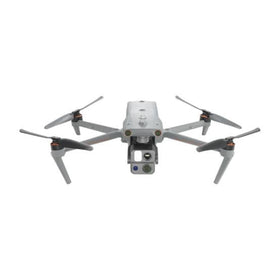
The blockage also reignites a debate about reliance on Chinese drone hardware. Taiwan's own drone industry has struggled to produce competitive alternatives to DJI's ecosystem. Companies like Autel Robotics try to fill the gap, but their market share in Taiwan remains below 8%. Until a domestic champion emerges, the used and refurbished market will play a pivotal role in sustaining operations for thousands of Taiwanese pilots who cannot afford pre-owned non-Chinese equivalents.
FAQ
Is it still legal to fly drones in Taiwan after the bill was blocked?
Yes, recreational and commercial flights remain legal under existing Civil Aviation Administration (CAA) regulations. However, the blocked bill means no new exemptions for BVLOS flights, no national remote ID system, and no subsidies for training. Operators must continue to file individual flight plans for any operation beyond VLOS, with approval rates below 15% in 2026.
Will this affect the availability of DJI drones in Taiwan?
Import of DJI drones is currently not banned, but the bill would have incentivized local manufacturing. Without the act, there is no immediate change in import policy. However, the legislative debate highlighted national security concerns, and future restrictions remain possible. In the meantime, the secondary market for used and refurbished DJI units is growing as operators seek cost certainty.
How can commercial operators protect their fleets during this regulatory limbo?
Operators should focus on keeping all hardware certified and maintained to the highest standards. Upgrading firmware, recalibrating RTK modules, and investing in professional repair services can minimize downtime. Reboot Hub's refurbishment-labeled drones offer a reliable, lower-cost entry point for pilots unwilling to risk new capital. Additionally, joining industry associations pushing for the bill's revival can amplify commercial voices.
As Taiwan's UAV sector enters this period of legislative uncertainty, one thing is clear: the second-hand and aftermarket ecosystem becomes the backbone of continuity. Whether through inspected pre-owned sales or expert repairs, Reboot Hub is positioned to support Taiwanese operators navigating the fallout of the Legislative Yuan's decision.
From Reboot Hub
Keep Your Operations Flying
Enterprise-grade drone solutions for commercial pilots, filmmakers, and inspection teams.
Pre-owned Fleet
Fully inspected DJI drones with 6-month warranty. Save up to 40%.
Browse Inventory ->