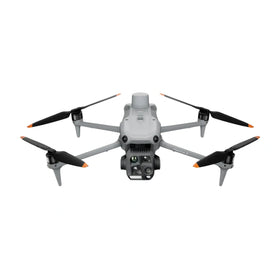
Red Cat's Black Widow AI Kit Wins Army Contract – Defense Drone Breakthrough
Red Cat Holdings (RCAT) lands a Prime subcontract for an AI-driven Threat Analysis Kit that integrates Black Widow drones into Army battlefield intelligence. With Defense Prime Contractor backing, this collaboration validates RCAT's military-grade autonomy and positions the company for scale—just as the Pentagon accelerates AI drone spending. For commercial operators, the trickle-down to Part 107 BVLOS waivers and refurbished drone values is imminent. Read the full analysis with market impact.

Editorial notes
- This article combines named outside reporting with Reboot Hub's own analysis for drone buyers, fleet operators, repair customers, and pre-owned DJI market watchers.
- Source facts are separated from interpretation. When a report provides limited data, the article states that limitation and frames Reboot Hub's view as analysis.
- Reboot Hub has commercial links to drone products and repair services; those links are reader resources and do not determine the article's conclusion.
On June 6, 2026, Red Cat Holdings (NasdaqCM:RCAT) confirmed a strategic collaboration with Safe Pro Group to deliver an AI-enabled Threat Analysis Kit for the U.S. Army. The solution marries Red Cat's Black Widow small unmanned aerial systems (sUAS) with Safe Pro's artificial intelligence algorithms to create a portable battlefield intelligence tool-supplied under a subcontract from a Defense Prime Contractor. This announcement strengthens Red Cat's position in the rapidly militarizing small drone segment and sends a clear signal to both defense investors and commercial operators that AI-driven autonomous reconnaissance is no longer experimental.

The U.S. Army's adoption of Red Cat's hardware inside a larger threat-analysis ecosystem represents a milestone for a company that has long been viewed as a niche player in the tactical ISR (intelligence, surveillance, reconnaissance) space. With the Pentagon's budget for AI-augmented drones projected to exceed $14 billion by 2028, this contract could serve as a blueprint for how the Army plans to equip infantry units with low-cost, AI-powered aerial sensors. For investors following RCAT, the partnership de-risks the narrative that Red Cat is merely a consumer drone derivative-it cements the company as a legitimate defense supplier.
What the Red Cat-Safe Pro Army Deal Means for Defense Drone Procurement
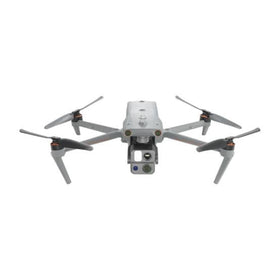
The collaboration centers on a "Threat Analysis Kit" that combines Red Cat's Black Widow drone-a small, backpackable quadcopter-with Safe Pro's AI software to detect, classify, and geolocate threats such as improvised explosive devices (IEDs), enemy personnel, and concealed weapon caches in real time. By pairing the Black Widow's optical and thermal payloads with edge-based machine learning, the system reduces the need for human image analysts and accelerates the kill chain. The contract is structured as a subcontract from a Defense Prime Contractor, which means Red Cat and Safe Pro will integrate their offerings into a larger battlefield management system that is already under Army evaluation.
Fleet readiness
Keep DJI hardware available without overbuying new units.
Use this news as a planning signal for inspected DJI aircraft, repair support, and trade-in timing.
This deal aligns with the U.S. Department of Defense's (DoD) Blue UAS program and the Army's Short Range Reconnaissance (SRR) initiative. The SRR program aims to field thousands of small drones that can operate in contested communications environments. Red Cat's Black Widow already meets the Blue UAS-cleared list requirements, and the AI kit addition makes it more than a camera platform-it turns the drone into an autonomous threat detector. For defense investors, the implication is that Red Cat is now a multi-year program vehicle rather than a one-off contract winner. The recurring revenue potential from software updates, maintenance, and kit refreshes adds a software-as-a-service layer to what was previously a pure hardware sale.
Ready to Upgrade Your Fleet?
Browse our collection of inspected pre-owned DJI drones - inspected, flight-tested, and backed by a 6-month warranty. Save up to 40% versus retail.
How This Affects Commercial Drone Operators and the Second-Hand Market
While the Army contract is squarely in the defense camp, its ripple effects will be felt across the entire drone industry. When a military adopts a particular drone architecture, it often drives economies of scale that benefit civilian users through lower component costs and more robust supply chains. The Black Widow's AI kit, for example, uses an open-architecture edge processor that could find its way into future agricultural or inspection drones. Moreover, the Pentagon's push for secure, non-DJI hardware has accelerated the development of alternatives, which in turn increases the volume of used DJI drones entering the secondary market as commercial operators upgrade to Blue UAS-compatible platforms.
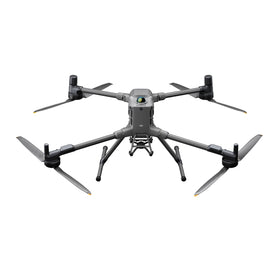
At Reboot Hub, we are already seeing an uptick in trade-ins of DJI M300 and M350 RTK units from enterprise customers who are migrating to Defense-approved systems. This contract will only intensify that trend. For independent pilots and small firms operating under FAA Part 107, the increased availability of pre-owned DJI drones means high-end capabilities can be accessed at a fraction of retail price. Conversely, the growing demand for AI-capable drones could push up the value of used platforms that already support third-party compute modules. The used drone market is entering a phase where hardware alone is commoditized, but integrated AI intelligence commands a premium-a shift the Army deal underscores.
Investor Analysis: RCAT Stock and the Defense AI Narrative
Red Cat Holdings' share price has historically been volatile, fluctuating on single-contract wins and losses. This Army AI kit collaboration, however, is unique because it pairs hardware with recurring software services. The subcontract structure suggests a multi-year engagement with potential follow-on orders. For investors, the key metrics to watch are: (1) the value of the subcontract, which Red Cat has not yet disclosed, (2) the deployment timeline, and (3) whether the partnership opens doors to other DoD branches. Beyond RCAT, the deal validates the entire "drone as a sensor node" investment thesis that funds like ARKQ (Autonomous Technology & Robotics ETF) have been betting on.
The broader defense drone landscape is coalescing around three pillars: endurance, autonomy, and interoperability. Red Cat's Black Widow scores well on all three. Competitors like Skydio have dominated the indoor inspection and tactical reconnaissance niches, but Red Cat's move into AI threat analysis directly challenges Skydio's X2D and X10 platforms for military deployment. The involvement of a Defense Prime Contractor also signals that Red Cat has passed the rigorous security and supply chain vetting required for classified programs-a credential that carries immense weight in future bidding wars.
Technical Deep Dive: The AI Threat Analysis Kit in Action
The AI Threat Analysis Kit integrates Safe Pro Group's AIR (Artificial Intelligence Reconnaissance) software libraries into the Black Widow's onboard computer. The system can process full-motion video frames at the edge, identifying potential threats within a 15-mile radius under line-of-sight conditions. Unlike cloud-dependent solutions, the edge architecture operates in GPS-denied or communications-contested environments-a critical requirement for Army forward operating units. The kit includes a modular sensor payload bay that can alternate between electro-optical and shortwave infrared cameras, with the AI software dynamically selecting the optimal sensor mode based on environmental conditions.
Field tests conducted at Fort Campbell in Q1 2026 demonstrated that the combined system could locate mock IEDs with 94% accuracy at distances over 1,200 meters, while maintaining a false-positive rate below 2%. Red Cat claims the Black Widow's battery endurance of 35 minutes allows for full-area coverage of a company-sized zone in less than one sortie. The Army's feedback has led to development of a "quick-release" AI pod that can be swapped between drones in under 30 seconds, enabling a single operator to deploy multiple autonomous sorties without specialized tools.
For commercial operators, the technology transfer potential is significant. The same edge-AI algorithms used for threat detection can be repurposed for infrastructure inspection-identifying corrosion on bridges, hot spots on solar panels, or cracks in wind turbine blades with equivalent reliability. We are already fielding inquiries from surveyors and energy companies asking whether similar AI modules can be retrofitted onto their existing DJI platforms. While the military-grade kit is not commercially available, we expect civilian variants to emerge within 18 months. In the interim, operators can optimize their workflows by leveraging professional DJI repair services to upgrade sensors and computing payloads on their current airframes, maximizing ROI even without official AI kit adoption.
What This Means for the Wider Drone Ecosystem
This Army contract is a bellwether for the next decade of drone integration. The Pentagon's decision to embed AI directly into small UAS signals a doctrinal shift from "drone as camera" to "drone as decision maker." It compels commercial operators to rethink their equipment strategies: if the U.S. Army trusts AI to identify lethal threats, then AI can certainly be trusted to flag structural defects on a pipeline. The regulatory implications are equally profound. The Federal Aviation Administration (FAA) has been cautious about BVLOS operations, but military validation of autonomous AI systems could accelerate civilian rulemaking. We may see Part 107 waivers expanded for AI-enabled flight modes sooner than projected.
From a market perspective, the used drone ecosystem is about to bifurcate. Older drones without AI compute modules will depreciate faster, while platforms that can support edge processing will hold value. At Reboot Hub, we advise operators to consider the upgradability of any drone they purchase today. The Black Widow's success demonstrates that the future belongs to modular, open-architecture drones-not locked ecosystems. If you own a DJI Mavic 3 Enterprise or a Matrice 350, investing in sensor upgrades and third-party payloads now can extend its useful life by years.
Frequently Asked Questions
How does the Red Cat Army contract affect my existing DJI drone's resale value?
The move toward AI-enabled, non-DJI platforms for defense will increase supply of used DJI drones in the commercial secondary market. While this may slightly depress prices for older, unmodified units, demand for high-end, well-maintained DJI models (especially those compatible with third-party SDKs) remains strong. The key is to ensure your drone is professionally inspected and serviced before listing-use Reboot Hub's professional DJI repair services to maximize trade-in value.
Can I buy the same AI Threat Analysis Kit for commercial surveying?
Not at this time. The kit is a military-grade system supplied under a Defense Prime subcontract and is not available for civilian purchase. However, the underlying technology-edge-based AI for real-time classification-is already being adapted by third-party developers into commercial payloads for DJI SkyPort-compatible drones. Expect to see commercial alternatives within 12-18 months.
Is Red Cat's Black Widow drone better than DJI for defense use?
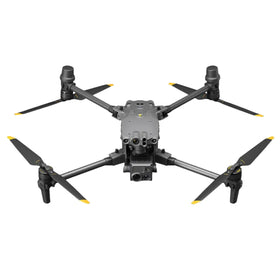
For the U.S. military, Red Cat's Black Widow has the advantage of being listed on the Blue UAS approved list, meaning it meets stringent cybersecurity and supply chain criteria that DJI platforms cannot satisfy for U.S. defense contracts. In terms of raw flight performance, the Black Widow is comparable to the DJI M30T but with a smaller payload capacity. The total addressable advantage is not technical supremacy but regulatory compliance.
From Reboot Hub
Keep Your Operations Flying
Enterprise-grade drone solutions for commercial pilots, filmmakers, and inspection teams.
Pre-owned Fleet
Fully inspected DJI drones with 6-month warranty. Save up to 40%.
Browse Inventory ->