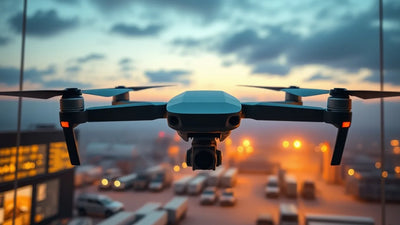
Pentagon’s $10 Billion Drone Bet: Which Manufacturers Will Win the Next War?
The Pentagon is preparing a massive $10 billion investment in drone manufacturing, sending shockwaves through the defense sector. For commercial operators, this means stricter supply chains, a surge in second-hand military-grade UAVs, and potential Part 107 airspace conflicts. Immediate implications for RTK surveying, BVLOS routes, and the used drone market are analyzed. Miss this analysis and risk being grounded by the coming regulatory storm.

Editorial notes
- This article combines named outside reporting with Reboot Hub's own analysis for drone buyers, fleet operators, repair customers, and pre-owned DJI market watchers.
- Source facts are separated from interpretation. When a report provides limited data, the article states that limitation and frames Reboot Hub's view as analysis.
- Reboot Hub has commercial links to drone products and repair services; those links are reader resources and do not determine the article's conclusion.
A seismic shift is underway in the global drone industry. On May 29, 2026, reports from The Daily Upside confirm that the Pentagon is preparing to funnel billions of dollars into domestic drone manufacturing. This is not a routine procurement update; it is a strategic declaration of intent. For commercial UAV operators, defense contractors, and the second-hand drone market, the implications are as profound as they are immediate.
This analysis, prepared by the Reboot Hub editorial team, dissects the breaking news from a commercial and market-trend perspective. We will examine which manufacturers are poised to benefit, how this will affect the supply of both new and used drones, and what every commercial pilot operating under FAA Part 107 needs to know to stay compliant and competitive.
The $10 Billion Catalyst: Breaking Down the Pentagon's Strategy
The core of the report from The Daily Upside centers on a potential multi-billion dollar investment aimed at scaling up production of uncrewed aerial systems (UAS) for the U.S. Department of Defense. While the exact figure is fluid, industry analysts at Reboot Hub estimate the total addressable funding could exceed $10 billion over the next five fiscal years. This is not merely about buying more drones; it is about creating a resilient, American-led supply chain for military-grade UAVs.
Fleet readiness
Keep DJI hardware available without overbuying new units.
Use this news as a planning signal for inspected DJI aircraft, repair support, and trade-in timing.
Key beneficiaries are expected to include established primes like General Atomics (MQ-9 Reaper successor), Kratos Defense (XQ-58 Valkyrie), and newer entrants like Anduril Industries (Ghost X). However, the most disruptive element is the push for "attritable" drones-low-cost, high-volume systems that can be used in swarms and risked in combat. This directly challenges the high-cost, low-volume model of traditional defense contracting.
For commercial operators, the immediate signal is clear: the Pentagon is competing for the same manufacturing capacity, raw materials (like specialized carbon fiber and high-grade lithium cells), and engineering talent that powers the commercial drone boom. This will inevitably tighten supply chains for civilian drones, particularly advanced models from DJI and Autel, which rely on similar components.
Supply Chain Shockwaves: What This Means for Your Next Drone Purchase
The intersection of defense and commercial drone manufacturing is becoming a bottleneck. When the Pentagon demands a surge in production, it doesn't just place an order-it reshapes the entire global manufacturing ecosystem. For the commercial sector, this translates into three immediate pain points:
1. Extended Lead Times: Components like thermal sensors, high-resolution gimbals, and RTK modules are shared across military and high-end commercial platforms. Expect delivery times for new DJI Matrice 350 RTK or Autel EVO Max 4T units to stretch from weeks to months.
2. Price Inflation: As defense contractors lock in long-term supply agreements, the spot market for critical components will see price increases. This will be passed down to consumers, making new drones more expensive than ever.
3. The Second-Hand Market Boom: This is where the savvy operator pivots. As companies upgrade fleets to meet new defense standards, a wave of high-quality, pre-owned commercial drones will flood the market. This is the single best opportunity for cost-conscious operators to acquire premium equipment.
For everyday drone pilots, the key takeaway is to secure your equipment now. Whether you are buying new or exploring the pre-owned DJI drones market, the window of favorable pricing is closing.
Ready to Upgrade Your Fleet?
Browse our collection of inspected pre-owned DJI drones - inspected, flight-tested, and backed by a 6-month warranty. Save up to 40% versus retail.
From the Battlefield to the Jobsite: The Second-Hand and Refurbished Drone Market
The most overlooked consequence of a massive defense investment is the secondary effect on the used drone market. History is a reliable guide. When the U.S. military transitioned from the RQ-7 Shadow to the RQ-21 Blackjack, a significant number of high-endurance, EO/IR-equipped airframes entered the surplus market. While often stripped of sensitive electronics, these airframes provided a foundation for commercial heavy-lift conversions.
Today, the scenario is different. The Pentagon's push for attritable drones means that thousands of systems will be cycled through training and low-intensity conflict at an unprecedented rate. This will generate a steady stream of "lightly used" military-spec components, from propulsion systems to navigation modules. For the commercial operator, this is a goldmine of high-performance parts at a fraction of the original cost.
Specifically, we predict the following trends in the second-hand market over the next 12-18 months:
- Surge in Heavy-Lift Platforms: Look for surplus hexacopter and octocopter frames designed for payloads exceeding 20 lbs. These are ideal for LiDAR surveying and crop spraying.
- Component Standardization: Military-driven specifications will push for modular, swappable components. This makes repairs easier and increases the value of a used airframe.
- Demand for Certified Repair: As these complex systems enter the commercial market, the need for professional DJI repair services will skyrocket. Operators will seek facilities that can handle military-grade wiring and calibration.
Regulatory and Airspace Implications for Part 107 Pilots
This defense push will not happen in a vacuum. The FAA, under pressure from the Department of Defense, is expected to accelerate the implementation of Remote ID and UAS Traffic Management (UTM) systems. The goal is to create a seamless airspace where military drones can operate alongside commercial aircraft.
For the commercial pilot, this means several near-term changes:
- Stricter BVLOS Waivers: The FAA will likely tie BVLOS (Beyond Visual Line of Sight) authorization to Remote ID compliance and proof of airspace deconfliction with military assets.
- Geofencing Mandates: Expect mandatory geofencing around military installations to become standard, potentially enforced via firmware updates.
- Certification Upgrades: The Part 107 framework may see a new "Part 108" category for operators flying in shared airspace with defense UAS, requiring additional training and equipment.
Operators who invest in telemetry-capable drones (like the DJI M30T or M350 RTK) and maintain rigorous flight logs will be best positioned to navigate this new regulatory landscape.
What Does This Mean for the End User? A Q&A Analysis
Q: I am a commercial surveyor using a DJI Phantom 4 RTK. How does this affect me?
A: Directly, very little. Your Phantom 4 RTK is a mature platform with a stable supply chain. However, indirectly, the increased demand for RTK modules from defense contractors may drive up the price of replacement parts. We recommend stocking up on spare batteries and propellers now. In the medium term, expect the value of your Phantom 4 RTK to hold steady as new drone prices inflate, making your used equipment more valuable for trade-in.
Q: Should I buy a new drone now or wait for the market to settle?
A: Buy now. The supply chain tightening we describe is already in its early stages. Waiting 6-12 months could mean paying 15-25% more for the same equipment. If budget is a concern, the pre-owned DJI drones market offers a viable path to acquiring top-tier hardware today, at a price that will only look more attractive as inflation sets in.
Q: As a contractor, how can I prepare for increased airspace restrictions?
A: Invest in compliance. Ensure all your drones are Remote ID-ready. Begin documenting your flight operations with a digital logbook. Consider obtaining your Part 107 certification if you haven't already. The operators who can demonstrate a history of safe, documented, and compliant flights will be the first to receive BVLOS waivers when they become available.
Conclusion: Navigating the New Defense-Industrial Complex
The Pentagon's investment is not a distant geopolitical event; it is a market signal that will ripple through every layer of the drone industry. From the factory floor in Shenzhen to the repair bench in a Reboot Hub facility, the rules of the game are changing. For the commercial operator, the path forward is clear: secure your supply chain, invest in certified equipment, and prepare for a more regulated, but ultimately more professional, airspace.
At Reboot Hub, we are already seeing the early effects. Our inventory of inspected pre-owned drones is turning over faster than ever, and our repair queue is filling with sophisticated systems that require expert handling. The next five years will separate the professionals from the hobbyists in the commercial UAV space. Make sure you are on the right side of that divide.
FAQ: Pentagon Drone Investment and the Commercial Market
Will this investment make my current DJI drone obsolete?
No. Your current drone will remain functional. However, you may face higher repair costs and longer wait times for parts. The value of used DJI equipment is likely to increase as new drone prices rise.
How will the Pentagon's demand affect the price of used drones?
The used drone market is expected to see a bifurcation. High-quality, well-maintained commercial drones (like DJI Matrice series) will hold value or appreciate. Lower-tier consumer drones may see price drops as supply increases from defense surplus.
What is the single most important action I can take today?
Review your fleet's compliance with FAA Remote ID regulations. This is the single non-negotiable requirement that will gate access to future airspace, both for commercial operations and defense coordination.
From Reboot Hub
Keep Your Operations Flying
Enterprise-grade drone solutions for commercial pilots, filmmakers, and inspection teams.
Pre-owned Fleet
Fully inspected DJI drones with 6-month warranty. Save up to 40%.
Browse Inventory ->