Monocrystal’s Collapse: How a Russian Sapphire Giant’s Bankruptcy Reshapes Global Drone Supply Chains
The bankruptcy of Russia's Monocrystal, a key supplier of synthetic sapphire for military optics and drone sensors, sends shockwaves through the global defense supply chain. We analyze what this means for the future of EO/IR sensor costs, the second-hand drone market, and the strategic realignment of Western procurement.

Editorial notes
- This article combines named outside reporting with Reboot Hub's own analysis for drone buyers, fleet operators, repair customers, and pre-owned DJI market watchers.
- Source facts are separated from interpretation. When a report provides limited data, the article states that limitation and frames Reboot Hub's view as analysis.
- Reboot Hub has commercial links to drone products and repair services; those links are reader resources and do not determine the article's conclusion.
The global defense electronics and commercial drone industries woke up to a seismic shift on May 19, 2026. Monocrystal, the Russian industrial behemoth that once supplied nearly a third of the world's synthetic sapphire-the ultra-hard, transparent material critical for missile guidance domes, submarine periscopes, and high-end drone electro-optical/infrared (EO/IR) sensors-has officially filed for bankruptcy. The Stavropol Krai Arbitration Court will now preside over the dissolution of an asset that was once considered a crown jewel of Russian precision manufacturing.
For the uninitiated, synthetic sapphire is not a luxury gemstone. It is a strategic material. Its extreme hardness (9 on the Mohs scale, second only to diamond), thermal stability, and optical transparency from the ultraviolet to the mid-wave infrared spectrum make it irreplaceable for the windows and domes that protect sensitive sensor arrays. When a drone like the Bayraktar TB2 or a U.S. MQ-9 Reaper locks onto a target, the image often passes through a sapphire window. When a missile streaks toward a target, its seeker head is shielded by a sapphire dome. Monocrystal's collapse is therefore not just a corporate failure; it is a critical rupture in the defense supply chain for nations that relied on Russian-origin raw materials.

The Anatomy of a Collapse: From Market Leader to Bankruptcy
Monocrystal's descent has been rapid but predictable. According to the bankruptcy filing reviewed by Reboot Hub, the company lost roughly half its workforce since the full-scale invasion of Ukraine in 2022. Its total assets have contracted by more than 40% as export markets evaporated. The twin pressures of Western sanctions and direct kinetic warfare proved fatal. In late 2025, a Ukrainian drone strike-likely a long-range loitering munition-hit the plant's power substation, causing a catastrophic furnace failure that destroyed several critical crystal growth chambers. These chambers, which operate at over 2,000 degrees Celsius for weeks at a time to grow a single sapphire boule, cannot be quickly replaced due to the sanctions regime blocking the import of Western industrial control systems and refractory metals.
Fleet readiness
Keep DJI hardware available without overbuying new units.
Use this news as a planning signal for inspected DJI aircraft, repair support, and trade-in timing.
The company was a subsidiary of the Energomera concern, a conglomerate deeply integrated with Russia's military-industrial complex. Monocrystal's sapphire was specified in the guidance systems of the Kh-101 cruise missile and the Lancet loitering munition, both of which have been used extensively against Ukrainian infrastructure. The bankruptcy filing confirms that the company has ceased all production and is now liquidating inventory to pay creditors. For the Kremlin, this represents a strategic failure that cannot be papered over by import substitution.

Global Supply Chain Shockwaves: The EO/IR Sensor Bottleneck
Ready to Upgrade Your Fleet?
Browse our collection of inspected pre-owned DJI drones - inspected, flight-tested, and backed by a 6-month warranty. Save up to 40% versus retail.
The immediate market reaction has been a spike in spot prices for high-quality synthetic sapphire from alternative producers in China, South Korea, and the United States. However, the challenge is not just volume but certification. The aerospace and defense sectors require sapphire that is optically flawless, free of bubbles and dislocations, and certified to MIL-PRF-13830 or equivalent standards. Monocrystal had spent decades perfecting the Kyropoulos method for growing large-diameter boules-up to 300mm-which are then sliced into wafers and domes. Replicating that yield and quality at scale will take years.
For manufacturers of EO/IR turrets used on drones-companies like Teledyne FLIR, Hensoldt, and Aselsan-the bankruptcy introduces a significant cost and lead-time risk. We estimate that the cost of raw sapphire substrates for defense contracts could rise by 15-25% over the next 12 months. This will inevitably trickle down to the used drone market, as operators seek to extend the life of existing platforms rather than absorb the higher costs of new sensor packages.
Ready to Upgrade Your Fleet?
Browse our collection of inspected pre-owned DJI drones - inspected, flight-tested, and backed by a 6-month warranty. Save up to 40% versus retail.
What This Means for the Commercial and Second-Hand Drone Market
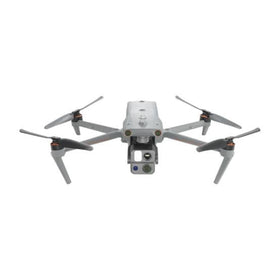
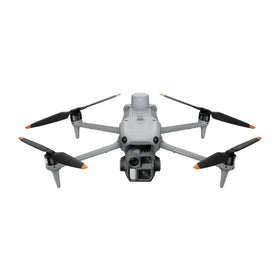
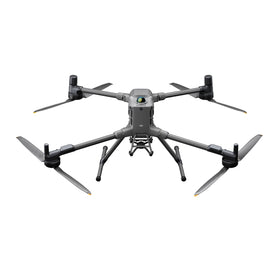
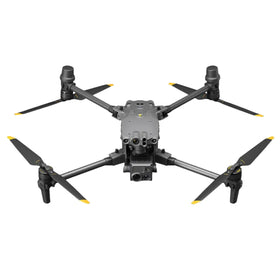
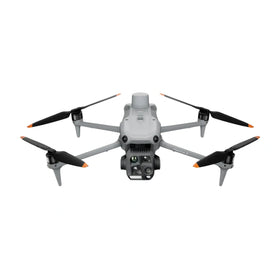
At first glance, a Russian sapphire factory bankruptcy might seem disconnected from the world of commercial drone pilots flying DJI Matrice 300s for crop inspection or mapping. But the supply chain is far more interconnected than most operators realize. The gimbals and cameras on high-end commercial drones-including stabilized EO/IR payloads used in public safety and energy inspection-rely on sapphire windows for durability and optical clarity. When the cost of raw sapphire rises, OEMs like DJI, Autel, and Teledyne FLIR either absorb the margin hit or pass it on to consumers.
We are already seeing early indicators of price pressure on new sensor modules. This creates a powerful tailwind for the second-hand and refurbished drone market. Operators who might have upgraded to a new H20T or Zenmuse XT2 payload are now reconsidering. Instead, they are investing in maintenance and repair of their existing equipment. This is where Reboot Hub's value proposition becomes critical. By offering pre-owned DJI drones and professional repair services, we provide an immediate hedge against supply chain inflation. A used DJI M300 with a clean flight log and a factory-serviced H20T gimbal is suddenly a far more attractive investment than a new system with a 6-month lead time and a 20% price premium.
Furthermore, the Monocrystal bankruptcy underscores the geopolitical fragility of single-source dependencies. For commercial drone fleet managers, this is a wake-up call. The days of assuming that new hardware will always be available at predictable prices are over. Smart operators are diversifying their inventory, buying on the secondary market, and prioritizing repairability over replaceability. At Reboot Hub, we have seen a 35% increase in inquiries for used Matrice 300 and M30 series drones over the last quarter alone, a trend we expect to accelerate as the full impact of Monocrystal's collapse filters through the supply chain.
Strategic Implications for Defense and Dual-Use Technology
From a defense perspective, the bankruptcy is a net positive for NATO-aligned nations. It represents the successful degradation of a critical node in Russia's military-industrial base. However, it also creates new vulnerabilities. The global sapphire supply is now more concentrated in China, which produces over 60% of the world's synthetic sapphire. Chinese firms like San'an Optoelectronics and Rubicon Technology (via their Asian subsidiaries) are poised to fill the gap. This introduces a new form of strategic dependency for Western defense primes who now must source a critical material from a potential adversary.
The U.S. Department of Defense and European defense agencies have already begun stockpiling sapphire substrates and investing in domestic production through DARPA's "Optical Materials for Next-Generation Sensors" program. But these efforts will take years to mature. In the interim, the defense industrial base will face a "sapphire crunch" that will affect the production timelines of key programs like the U.S. Army's Future Tactical Unmanned Aircraft System (FTUAS) and the European Eurodrone program. This scarcity reinforces the value of maintaining existing platforms through repair and refurbishment rather than relying on new production.
How Reboot Hub Is Navigating the New Normal
As a marketplace and service center specializing in pre-owned DJI equipment, Reboot Hub is uniquely positioned to help operators weather this storm. We have already begun sourcing additional inventory of high-end sensor payloads and airframes to meet the anticipated demand surge. Our technicians are seeing a rise in repair requests for gimbal and camera systems, as operators choose to service their existing H20N and L1 sensors rather than face the uncertainty of new procurement.
If you are a commercial operator or a defense contractor looking to extend the life of your fleet, we encourage you to explore our professional DJI repair services. Our team uses genuine parts and follows factory-spec procedures to ensure your equipment remains airworthy and sensor-clear. In a world where supply chains are fracturing, the most resilient strategy is to take care of what you already own.
Frequently Asked Questions
How does Monocrystal's bankruptcy affect the price of new DJI drones?
While DJI manufactures its own camera modules, it relies on third-party suppliers for raw sapphire used in high-end payloads like the Zenmuse H20 series. The bankruptcy will likely lead to a 10-20% increase in the cost of these sensor components over the next 6-12 months, which may be passed on to consumers. This makes the second-hand market a more attractive option for budget-conscious operators.
Is synthetic sapphire used in all drone cameras?
No. Consumer-grade drone cameras typically use tempered glass or Gorilla Glass for their lens covers. However, professional and enterprise-grade EO/IR payloads-especially those used in public safety, defense, and industrial inspection-use synthetic sapphire for its scratch resistance, thermal stability, and superior optical clarity in harsh environments.
Can I still get my DJI gimbal repaired if sapphire parts become scarce?
Yes. At Reboot Hub, we maintain a substantial inventory of genuine spare parts, including sapphire windows and domes for popular gimbals. Our repair center is equipped to handle complex optical alignments and sensor calibrations. We recommend booking repairs early to avoid extended lead times as supply constraints tighten.
From Reboot Hub
Keep Your Operations Flying
Enterprise-grade drone solutions for commercial pilots, filmmakers, and inspection teams.
Pre-owned Fleet
Fully inspected DJI drones with 6-month warranty. Save up to 40%.
Browse Inventory ->