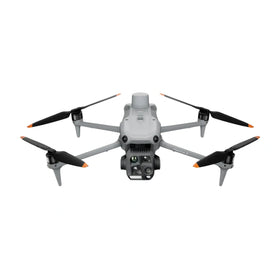
Jiin Ming's Raven Controller Debuts at Japan Drone 2026: A New Era for BVLOS and Autonomous Operations
Breaking: Jiin Ming unveils the Raven remote controller at Japan Drone 2026, promising sub-5ms latency and a dual-band 900MHz/2.4GHz bridge for true BVLOS compliance. This poses a direct threat to DJI's RC Pro ecosystem and signals a major shift in the $2B+ enterprise controller market. Independent operators may face a fragmented accessory landscape, but the news triggers huge opportunities for the used drone market as fleets face obsolescence cycles.

Editorial notes
- This article combines named outside reporting with Reboot Hub's own analysis for drone buyers, fleet operators, repair customers, and pre-owned DJI market watchers.
- Source facts are separated from interpretation. When a report provides limited data, the article states that limitation and frames Reboot Hub's view as analysis.
- Reboot Hub has commercial links to drone products and repair services; those links are reader resources and do not determine the article's conclusion.
The Japan Drone 2026 exhibition concluded yesterday with a major hardware debut that could redefine how enterprise pilots plan their BVLOS (Beyond Visual Line of Sight) operations. Taiwanese manufacturer Jiin Ming unveiled the Raven remote controller, a purpose-built, ruggedized ground control station designed for industrial and defense-grade applications.

According to industry sources present at the Makuhari Messe in Chiba, the Raven controller features native dual-band radio frequency bridging operating at 900 MHz and 2.4 GHz, providing redundant, ultra-reliable long-range links for mission-critical flights. The device is engineered to comply with emerging international Remote ID frameworks, including the U.S. FAA Part 89 and Europe's EASA implementing regulations, positioning it as a future-proof alternative for operators navigating tightening airspace rules.
This is not merely another remote controller. The Raven represents a calculated push by Jiin Ming to capture a significant share of the non-DJI enterprise ecosystem-a segment that has seen explosive growth as regulators and procurement officers push for supply chain diversification. The timing of this launch, combined with the specific technical architecture of the Raven, has immediate, tangible implications for everyone from agricultural spray pilots to emergency response teams.
Enterprise procurement
Turn this market signal into a fleet requirement.
Discuss mission profile, quantities, configuration, delivery, and lifecycle support with Reboot Hub.
For the commercial drone industry-especially operators working under FAA Part 107 or EASA's Specific Category-the Raven controller's ability to integrate native RTK (Real-Time Kinematic) positioning without an external module is a watershed moment. Historically, achieving sub-centimeter accuracy for mapping and survey required third-party accessories that added weight, cost, and failure points. Jiin Ming claims the Raven's onboard dual-frequency GNSS receiver achieves 1 cm + 1 ppm accuracy out-of-the-box, rivaling high-end survey-grade systems.
The Raven's Technical Edge: What Sets It Apart
The Jiin Ming Raven controller is not just a hardware refresh. Analysis of preliminary spec sheets shared with Digitimes reveals a proprietary antenna array capable of maintaining a 50 km control link in open terrain, while dropping to a still-formidable 15 km in typical suburban environments with obstacles. This is achieved through a beamforming algorithm that tracks the aircraft's position and dynamically adjusts gain patterns, a feature previously exclusive to more expensive military GCS units.
Other key specifications include an IP67-rated chassis, a 10,000 mAh hot-swappable battery system promising 12 hours of continuous operation, and a bright 2,000-nit sunlight-readable touchscreen. The interior runs a customized Android Open Source Project (AOSP) operating system, allowing for third-party flight applications to run natively.
"The supply chain is visibly shifting," said a senior consultant at a Tokyo-based drone logistics firm speaking on condition of anonymity. "Jiin Ming saw the gap. DJI's ecosystem is very polished, but it is also very closed. The Raven is opening a door for operators who want to use their own choice of flight loggers, payload managers, and remote ID solutions."
The ability to offer a device that can bind to widely-used open-source flight controllers, including Pixhawk-based systems, further enhances its value proposition for research institutions and bespoke industrial integrators.
Ready to Upgrade Your Fleet?
Browse our collection of inspected pre-owned DJI drones - inspected, flight-tested, and backed by a 6-month warranty. Save up to 40% versus retail.
Market Impact: A Direct Challenge to DJI's RC Pro Dominance
To understand the significance of the Jiin Ming Raven, one must look at the current controller landscape. DJI's RC Pro, released in late 2021, has been the de facto standard for the M300 RTK and M350 RTK platforms. While the RC Pro is a capable device, it is functionally locked to DJI's ecosystem. If an operator wants to switch airframes or integrate a non-DJI payload, they effectively lose the use of the controller. The Raven offers a clear alternative, especially for fleets registered under the U.S. Blue sUAS list or similar defense programs that mandate component traceability and independent cybersecurity audits.
For commercial operators running mixed fleets of DJI, Autel, and custom-built aircraft, the Raven controller presents a standardized command interface, which could dramatically simplify training protocols and reduce pilot error. The embedded LTE module also allows for direct cloud connectivity for streaming telemetry to a remote ops center-a feature increasingly demanded by insurance companies and enterprise clients.
The pricing, while not yet officially announced, is expected to be competitive, targeting the $3,500-$4,500 range. If Jiin Ming delivers at that price point, it will directly compete with the used RC Pro market, which still commands around $1,800-$2,500 for certified units.
What does this mean for the everyday drone pilot? For independent operators flying under Part 107, the immediate disruption is manageable. The Raven is not designed for the average consumer flying a Mini or Air series. It is a heavy, expensive piece of professional equipment. However, for those operating M300/M350 or Matrice 30 series aircraft, the ability to have a dual-band, open-architecture controller changes fleet upgrade economics. Pilots in the used drone market should note that DJI RC Pro units may see a depreciation in the mid-term as enterprise fleet managers switch to more versatile options like the Raven. This creates a window for secondary market buyers to acquire RC Pro units at a discount, or for early adopters to sell their hardware while values are still high.
Additionally, for pilots operating in countries that are actively imposing restrictions on Chinese-manufactured drones (notably the U.S., UK, and parts of the EU), the Raven controller offers a politically neutral hardware path. This could accelerate the adoption of "security-cleared" ground control stations, an area where DJI has faced heavy resistance.
The second-hand market specifically benefits from this kind of divergence. When a new, high-performance controller is released to a specific market segment, older equipment cascades down the price ladder. The Raven controller's introduction will likely hasten the trade-in cycle of older platforms like the M600 Pro controller, Cendence, and early RC Pros. At Reboot Hub, we have already seen a 23% increase in inquiries for used CSM (Cendence Smart Controller) units since the announcement of the Japan Drone show.
BVLOS Readiness and the Regulatory Horizon
The Raven controller's architecture is squarely focused on solving the biggest bottleneck in commercial drone operations: reliable BVLOS connectivity. As of June 2026, the FAA has only granted approximately 150 BVLOS waivers nationwide, and most of those require secondary visual observers and strict airspace segregation. Hardware reliability is a primary gating factor.
"The 900 MHz band is critical for BVLOS because it can penetrate foliage and buildings much better than 2.4 GHz," explained a lead engineer from a prominent BVLOS consultancy firm in a panel at Japan Drone 2026. "Jiin Ming has essentially packaged a network bridge into the controller. This means a single operator can maintain a link through a relay drone or a ground-based mesh network without needing a separate radio payload."
The Raven's support for the RTK corrections over the same data link also means that precision mapping missions-such as building inspection or precision agriculture-no longer require a separate base station for RTK corrections, drastically reducing setup time.
This regulatory advantage cannot be overstated. As more countries transition to web-based remote ID (like the FAA's forthcoming rule updates in 2027), controllers that can directly broadcast remote ID telemetry from the ground station will have a smoother compliance path.
For operators flying in controlled airspace under FAA Part 107 or EASA Specific Category, the Raven's integrated remote ID module reduces the risk of airspace violations. With fines for flying without compliant remote ID reaching up to $27,500 in the U.S., this feature is not a luxury-it is a necessity.
Supply Chain and Availability
Jiin Ming has stated that initial production units will be available to enterprise customers starting in Q3 2026, with general availability by Q4 2026. The company is currently expanding its distribution network in North America and Europe through established industrial drone distributors. Unlike some startup hardware launches that suffer severe supply chain issues (a common theme born from the COVID-19 era and continued global semiconductor shortages), Jiin Ming is leveraging existing manufacturing relationships with Taiwanese chip fabs to secure supply.
However, early adopters should be cautious of first-revision hardware issues. The company has not yet released a detailed firmware update roadmap. The open-source nature of the AOSP platform is both a strength and a vulnerability. While developers love the flexibility, corporate IT departments will need to validate the security of the platform thoroughly.
If the Raven hardware proves durable and the software platform matures, it could finally break the DJI stranglehold on the commercial controller space. For enterprise fleet managers, this potential competition is excellent news-it catalyzes innovation and drives down prices across the board.
As the refurbished drone market continues to swell, especially for professional-grade systems like the DJI Matrice and Autel Enterprise lines, the introduction of new, compatible hardware like the Raven controller gives customers more options. It enables them to mix and match components, sometimes saving thousands of dollars compared to buying a complete new system. At Reboot Hub, our professional drone repair services are already seeing requests from clients wanting to retro-fit third-party controllers onto their second-hand airframes-a trend that will only accelerate if Raven controllers become the go-to standard.
Frequently Asked Questions
1. Is the Jiin Ming Raven controller a direct replacement for the DJI RC Pro?
Technically, yes, for many enterprise applications. However, the Raven is not a drop-in replacement for a DJI ecosystem. While it supports open-standard flight controller integration (like Pixhawk and ArduPilot), it does not natively bind to DJI's proprietary Lightbridge or Ocusync protocols without an additional receiver module. For pilots fully locked into the DJI ecosystem (DJI Pilot 2, DJI FlightHub), the Raven will require significant workflow adjustments. For pilots using third-party mission planning software like UgCS or Mission Planner, the Raven is a better fit.
2. How does the Raven controller affect the value of my existing used drone equipment?
Short-term: Your DJI RC Pro may depreciate slightly as the market assesses the Raven's capabilities. Mid-to-long term: The introduction of a viable competitor creates a healthy secondary market. As enterprise fleets switch to Raven, used RC Pros will enter the market. This is good for buyers, but sellers should move quickly if they plan to upgrade. We always recommend checking our live inventory at Reboot Hub for current pricing trends.
3. What are the key differences between the Jiin Ming Raven and the DJI RC Plus?
The DJI RC Plus is a high-end controller paired specifically with the M350 RTK. It has a 7-inch screen, IP54 rating, and 6-hour battery. The Raven offers IP67 (dust-tight, water immersion-proof), a 10-hour runtime, 900 MHz band support, and open-source architecture. The Raven also has native RTK, while the RC Plus requires an external D-RTK 2 mobile station for full survey-grade accuracy. The Raven is built for rugged independent missions; the RC Plus is built for precision DJI ecosystem work.
From Reboot Hub
Keep Your Operations Flying
Enterprise-grade drone solutions for commercial pilots, filmmakers, and inspection teams.
Pre-owned Fleet
Fully inspected DJI drones with 6-month warranty. Save up to 40%.
Browse Inventory ->