Green Berets Deploy 500-lb Glider Drones: A New Era for Tactical Logistics
U.S. Army Green Berets and Romanian forces just deployed DZYNE Grasshopper autonomous cargo gliders in Trojan Footprint 26, the largest U.S.-led special operations exercise in Europe. This isn't a test—it's a fielded capability that bypasses traditional logistics chains. For commercial operators, the implications are stark: military-grade autonomous resupply is maturing fast, and second-hand drone markets are shifting. Are your Part 107 operations ready for payloads that fly themselves? The defense sector just leapfrogged your BVLOS roadmap.

Editorial notes
- This article combines named outside reporting with Reboot Hub's own analysis for drone buyers, fleet operators, repair customers, and pre-owned DJI market watchers.
- Source facts are separated from interpretation. When a report provides limited data, the article states that limitation and frames Reboot Hub's view as analysis.
- Reboot Hub has commercial links to drone products and repair services; those links are reader resources and do not determine the article's conclusion.
The drone industry just witnessed a paradigm shift in tactical logistics. On May 21, 2026, the largest U.S.-led special operations exercise in Europe, Trojan Footprint 26, concluded with a demonstration that signals a new era for autonomous cargo delivery. U.S. Army Green Berets, operating alongside a Romanian Air Force crew, successfully dropped DZYNE's Grasshopper autonomous cargo gliders from a C-130 Hercules over North Macedonia. These aren't experimental prototypes-they are fielded systems, the same family the U.S. Air Force quietly deployed last year. The message is clear: military-grade autonomous resupply is no longer a concept; it's an operational reality.
For commercial UAV operators, defense contractors, and second-hand drone market analysts, this event is a critical data point. The Grasshopper glider, capable of carrying up to 500 pounds of cargo over 40+ nautical miles using only its aerodynamic design and a small guidance computer, bypasses traditional logistics chains. It lands autonomously with an accuracy of under 10 meters, using a combination of GPS and visual navigation. This isn't just a military story-it's a commercial inflection point. The technology that allows a 500-lb glider to land within a few meters of a target is the same technology that will soon power commercial BVLOS cargo flights, agricultural resupply, and emergency medical delivery.

The Grasshopper Glider: A Technical Deep Dive
DZYNE's Grasshopper is a family of autonomous cargo gliders designed for precision resupply. The variant used in Trojan Footprint 26 is a fixed-wing, expendable or recoverable glider with a wingspan of approximately 12 feet. It is launched from a standard C-130 or CH-47 aircraft using a gravity drop or a low-velocity extraction system. Once released, the glider's onboard guidance system takes over, navigating via GPS and inertial sensors to a pre-programmed landing zone. The glider uses a combination of spoilers and a precision flare maneuver to land softly, often within a few meters of its target.
Enterprise procurement
Turn this market signal into a fleet requirement.
Discuss mission profile, quantities, configuration, delivery, and lifecycle support with Reboot Hub.
What makes the Grasshopper revolutionary is its payload-to-cost ratio. At a fraction of the cost of a powered drone, the Grasshopper can deliver critical supplies-ammunition, medical kits, batteries, or food-without risking a helicopter or ground convoy. The Air Force's quiet fielding of the system last year, followed by this high-profile NATO exercise, confirms that the Pentagon is betting big on glider-based logistics. For commercial operators, the core technology-low-cost, high-payload, autonomous precision landing-is directly transferable to civilian applications. Imagine a fleet of Grasshopper-derived gliders dropping emergency supplies in disaster zones, or delivering agricultural inputs to remote fields without a single rotor turning.

Ready to Upgrade Your Fleet?
Browse our collection of inspected pre-owned DJI drones - inspected, flight-tested, and backed by a 6-month warranty. Save up to 40% versus retail.
What This Means for Commercial Drone Operators and the Second-Hand Market
Ready to Upgrade Your Fleet?
Browse our collection of inspected pre-owned DJI drones - inspected, flight-tested, and backed by a 6-month warranty. Save up to 40% versus retail.
For the everyday commercial drone pilot operating under FAA Part 107, the Grasshopper demonstration might seem distant. But the implications are immediate. The autonomous precision landing technology used in the Grasshopper is the same class of system that will enable routine BVLOS (Beyond Visual Line of Sight) operations for package delivery, infrastructure inspection, and agricultural mapping. As defense spending accelerates autonomous cargo development, the spillover into civilian markets will compress timelines. The FAA is already working on rulemaking for BVLOS operations, and successful military demonstrations like this one provide the safety case regulators need to approve commercial equivalents.
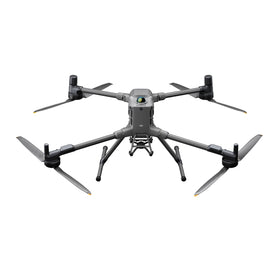
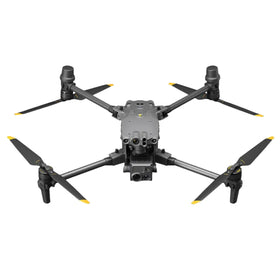
For the second-hand and refurbished drone market, the signal is equally clear. As military operators field newer autonomous systems, older platforms-including DJI's Mavic, Phantom, and Matrice series-will flood the used market. This creates both opportunity and risk. Commercial operators looking to expand their fleets can find incredible value in pre-owned DJI drones, which offer near-new performance at a fraction of retail. However, the influx of used units also depresses resale values, making it essential to buy from trusted sources that provide warranties and flight testing. The used drone market is maturing, and platforms like Reboot Hub are at the forefront of ensuring quality and reliability.
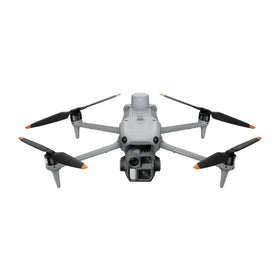
Moreover, the Grasshopper's success underscores a key trend: the future of drone logistics is about payload capacity and endurance, not just camera quality. Commercial operators who currently rely on DJI Mavic 3s for aerial photography should consider how glider-based systems could expand their service offerings. Imagine a construction company using a glider to deliver tools to a high-rise, or an agricultural cooperative using a glider to drop soil sensors. The technology is here, and the defense sector is proving it works.
Trojan Footprint 26: The Largest NATO Special Operations Exercise
Trojan Footprint 26, which ran from May 11 to May 21, 2026, involved over 4,000 personnel from 12 NATO and partner nations. The exercise spanned multiple countries, including North Macedonia, Romania, Bulgaria, and Greece. The Grasshopper drop was a highlight of the exercise, demonstrating the ability to resupply small, dispersed special operations teams in contested environments without exposing manned aircraft to enemy fire.
The mission profile was straightforward: a Romanian Air Force C-130, crewed by U.S. and Romanian personnel, flew a low-level approach over a designated drop zone in North Macedonia. The Grasshopper gliders were released from the cargo bay, and their onboard guidance systems immediately took control. Within minutes, the gliders had autonomously navigated to their landing zones, touching down within meters of the simulated resupply points. The exercise also tested the recoverability of the gliders, with some units being retrieved, inspected, and prepared for reuse.
This demonstration is significant for several reasons. First, it validates the concept of operations for autonomous glider resupply in a realistic, multi-national exercise. Second, it proves that the technology can be integrated with existing military aircraft and procedures without major modifications. Third, it sends a strong signal to adversaries that NATO forces can sustain remote operations without relying on vulnerable logistics chains.
The Regulatory and Market Ripple Effects
For drone regulators, the Grasshopper's success is a double-edged sword. On one hand, it provides a wealth of data on autonomous flight safety, precision landing, and airspace integration. On the other, it raises the stakes for commercial operators who are still waiting for BVLOS rules. The FAA, EASA, and other regulators will be closely watching these military demonstrations. The safety case for autonomous cargo delivery is being built in real-time, and commercial operators should prepare for accelerated rulemaking.
For investors and defense contractors, the Grasshopper is a reminder that the drone market is not just about quadcopters. The fixed-wing glider segment is poised for explosive growth, particularly in logistics, surveillance, and combat support. Companies like DZYNE, which focus on low-cost, high-payload autonomous systems, are well-positioned to capture market share. For commercial operators, this means that the next generation of drones will look very different from the DJI Phantom or Mavic. They will be larger, more autonomous, and capable of carrying significant payloads over long distances.
At Reboot Hub, we are already seeing the impact of these trends on the second-hand market. As military and government agencies upgrade to autonomous gliders and other advanced systems, they are divesting their older multirotor fleets. This influx of used drones is creating a buyer's market for commercial operators who need reliable equipment at competitive prices. Our professional DJI repair services are in high demand as operators seek to extend the life of their existing fleets while waiting for the next wave of autonomous technology to become commercially viable.
Frequently Asked Questions
What is the DZYNE Grasshopper glider drone?
The DZYNE Grasshopper is an autonomous cargo glider designed for precision resupply. It can carry up to 500 pounds of cargo over 40+ nautical miles, landing autonomously within meters of its target. It is launched from a C-130 or CH-47 aircraft and uses GPS and visual navigation. The system was fielded by the U.S. Air Force in 2025 and demonstrated in the Trojan Footprint 26 NATO exercise in May 2026.
How does the Grasshopper glider compare to commercial drones like DJI?
The Grasshopper is a fixed-wing glider with a much higher payload capacity and range than most commercial multirotor drones. While a DJI Mavic 3 can carry a small camera payload for about 30 minutes, the Grasshopper can deliver 500 pounds of cargo over 40 miles. However, the Grasshopper is not designed for aerial photography or inspection-it is a dedicated logistics platform. Commercial operators looking for reliable multirotor drones for surveying, mapping, and inspection should consider pre-owned DJI drones as a cost-effective alternative.
What does this mean for the second-hand drone market?
The Grasshopper demonstration signals that military and government agencies are upgrading to autonomous cargo systems, which will accelerate the divestiture of older multirotor fleets. This influx of used drones-including DJI Mavic, Phantom, and Matrice series-is creating a buyer's market for commercial operators. However, buyers should be cautious and purchase from trusted sources that offer warranties and flight testing. The second-hand market is maturing, and platforms like Reboot Hub are leading the way in quality assurance.
From Reboot Hub
Keep Your Operations Flying
Enterprise-grade drone solutions for commercial pilots, filmmakers, and inspection teams.
Pre-owned Fleet
Fully inspected DJI drones with 6-month warranty. Save up to 40%.
Browse Inventory ->