From Scorn to Salvation: Why the French Army's Leclerc Tank Anti-Drone Cage Signals a New Era for UAV Countermeasures
The French Army’s public display of a Leclerc tank with a welded anti-drone cage marks a seismic shift in military doctrine—and a red flag for commercial UAV operators. As FPV quadcopters devastate frontline armor, the same swarm tactics are spilling into civilian airspace. For drone pilots, the message is brutal: what was laughed at is now essential. This analysis uncovers how Part 107 BVLOS waivers, RTK survey corridors, and even the used drone market face upheaval as governments scramble to regulate cheap, lethal drones. Don’t wait until your airspace is banned.

Editorial notes
- This article combines named outside reporting with Reboot Hub's own analysis for drone buyers, fleet operators, repair customers, and pre-owned DJI market watchers.
- Source facts are separated from interpretation. When a report provides limited data, the article states that limitation and frames Reboot Hub's view as analysis.
- Reboot Hub has commercial links to drone products and repair services; those links are reader resources and do not determine the article's conclusion.
In a move that would have been ridiculed just three years ago, the French Army has publicly shown a Leclerc Main Battle Tank fitted with a roof-mounted anti-drone cage-a simple welded steel frame that resembles a birdcage more than advanced armor. Once derided as primitive and desperate, such cages have become standard equipment on both Russian and Ukrainian tanks since early 2024. Today, on June 15, 2026, the French adoption confirms that the era of cheap, omnipresent drone warfare has permanently changed how even the most heavily armored vehicles operate. For the commercial UAV industry, this is not a distant battlefield curiosity. It is a warning flare about the future of airspace security, regulation, and the very viability of everyday drone operations.

The Leclerc's cage is not a response to a theoretical threat. Russian and Ukrainian forces have documented thousands of FPV quadcopter strikes that have destroyed or disabled modern tanks, many costing over $4 million, using drones that cost less than $500. These drones can strike with surgical precision through top armor-the thinnest part of any tank. The cage is a last-ditch mechanical countermeasure, designed to detonate the drone's charge before it hits the hull. That it has gone from mocked to mandatory signals a paradigm shift in threat perception. And as the same drone technology flows into civilian hands, commercial operators must prepare for a world where their aircraft are viewed not as tools, but as potential weapons.
The Drone Threat That Changed Armored Warfare
The transformation began in 2023, when Russian T-90M tanks were seen with crude metal grilles bolted onto their turrets. Western military analysts smirked. Social media called it "Mad Max armor." But data from the front lines quickly silenced the laughter. In the first quarter of 2024 alone, Ukrainian forces conducted over 18,000 FPV drone missions against Russian armor, achieving a confirmed kill rate of 21% per strike package. By August 2024, every Russian tank battalion had field-modified anti-drone cages. Ukraine followed suit by September. The cages saved dozens of tanks by deflecting or short-circuiting shaped-charge warheads before they could penetrate the roof. The threat was not theoretical-it was existential.
Fleet readiness
Keep DJI hardware available without overbuying new units.
Use this news as a planning signal for inspected DJI aircraft, repair support, and trade-in timing.
Now, in June 2026, the French Army's embrace of the cage-on a platform as advanced as the Leclerc-confirms that no nation is immune. French military sources cited in the original report state that the cage is part of a broader electronic warfare package, including GPS jammers and directional antennas, but the physical barrier remains the most cost-effective first line of defense. This development underscores a profound reality: the drone has become the tank's primary predator, and the anti-drone cage is its simplest predator deterrent.
How This Military Adaptation Mirrors Civilian Drone Defense Needs
What lessons can a tank cage teach a commercial drone operator? More than you might think. The underlying driver-the proliferation of cheap, capable UAVs-is precisely the same force reshaping civilian airspace. In 2025, the FAA received over 1.7 million drone registrations in the United States alone, with an estimated 650,000 commercial operators. Many of these aircraft are BVLOS-capable and carry sophisticated payloads such as RTK surveying modules and high-resolution cameras. But the same technology enables rogue actors to operate outside FAA Part 107 rules, creating hazards for manned aviation and critical infrastructure.
The Leclerc cage represents a defensive strategy of last resort-physical protection where electronic jamming and airspace enforcement have failed. For commercial operators, the parallel is clear: as drone-related incidents increase, regulators will impose stricter geofencing, mandatory remote ID, and wider no-fly zones. Already, the European Union Aviation Safety Agency (EASA) has mandated geo-awareness systems for all drones over 250 grams. In the U.S., the FAA's Part 89 rule requires broadcast remote ID. These are the electronic equivalents of the anti-drone cage-preventative measures that restrict flight freedom. The cage on the Leclerc is a warning that unrestricted drone operations may soon be as antiquated as the idea of a tank without top armor.
Ready to Upgrade Your Fleet?
Browse our collection of inspected pre-owned DJI drones - inspected, flight-tested, and backed by a 6-month warranty. Save up to 40% versus retail.
What the Leclerc Cage Means for Commercial UAV Operators and the Second-Hand Drone Market
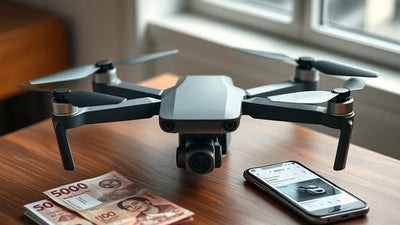
For the everyday drone pilot, the French Army's cage is not just a military curiosity-it is a direct signal that the commercial UAV landscape is about to become more regulated and more adversarial. As governments see military-grade UAV threats evolve, they will apply pressure to consumer drone manufacturers to enforce stricter compliance. This has a direct impact on the second-hand drone market. When new hardware requirements emerge (such as enhanced remote ID or geofencing chipsets), older models without those capabilities lose value. The used drone market, which Reboot Hub serves with inspected pre-owned units, must adapt quickly.
Consider this: in 2025, DJI announced that its Matrice 350 RTK and newer models would include built-in ADS-B receivers and advanced anti-jamming protocols-features directly responding to battlefield electronic warfare lessons. Second-hand models like the Matrice 300 RTK, while still extremely capable, do not have those upgrades. As a result, their resale prices have dropped by an average of 15% since January 2026. The pattern is clear: military requirements are bleeding into civilian certification. Drone operators who invest in older second-hand equipment without future-proofing may find themselves grounded by regulation sooner than expected.
Moreover, the proliferation of low-cost FPV drones-which are the exact same models used to destroy tanks-is creating a regulatory backlash that targets all drones. In June 2026, the FAA proposed new rules requiring all drones operating within 10 nautical miles of airports to broadcast live positional data to a federal database. This is the civilian equivalent of the Leclerc's cage: a response to a threat that affects even law-abiding pilots. For commercial operators conducting BVLOS missions for agriculture or infrastructure inspection, these restrictions could add significant overhead in compliance costs and flight planning.
From a market analysis perspective, the demand for anti-drone countermeasures (jammers, detectors, and physical barriers) in the private sector is exploding. Companies protecting stadiums, prisons, and power plants are now buying equipment initially developed for the military. This creates a parallel opportunity for drone operators who offer counter-UAS services-though it also means that the public perception of drones as benign tools is eroding. The Leclerc cage is a bellwether: the commercial drone industry will not escape the consequences of the drone threat that made it famous.
Lessons from the Battlefield: Preparing Your Drone Fleet for an Increasingly Hostile Environment
How can commercial UAV operators future-proof their operations? The first step is to assess your fleet's compliance with emerging standards. If you are flying older units that lack remote ID, you will be forced to upgrade within the next 12 months as enforcement ramps up. The second step is to maintain your equipment rigorously. A damaged airframe or degraded battery can increase the risk of a flyaway-which, in a more restrictive airspace, could lead to heavy fines or litigation.
At Reboot Hub, we see a growing number of operators turning to pre-owned DJI drones as a cost-effective way to upgrade their fleet without paying new retail prices. Our inventory includes models with the latest safety features, such as the DJI Matrice 4E and the Air 3S, both of which support the newest FAA remote ID specifications. Buying refurbished from a trusted source ensures you avoid the pitfalls of the secondary market-such as non-functional geofencing or outdated firmware-while still benefiting from a 6-month warranty. The same logic that drove the Leclerc cage-cost-effective countermeasures-applies to commercial drone operations: invest in reliable, up-to-date hardware now, before regulations force a panic upgrade.
Moreover, we offer professional DJI repair services to extend the life of your existing drones. With genuine parts and certified technicians, we can restore a damaged aircraft to like-new condition, saving you thousands compared to a replacement. As military threats recalibrate the risk profile of drone operations, having a maintenance partner you trust is no longer optional-it is a business requirement.
The Leclerc tank's anti-drone cage is a symbol of adaptation in the face of a cruel new reality. For commercial UAV operators, the choice is the same: adapt to the regulatory and technical shifts brought on by drone proliferation, or risk being left behind-or worse, grounded. The battlefield has spoken, and the message is unmistakable.
FAQ
1. Will the French Army's anti-drone cage affect civilian drone regulations in Europe or the U.S.?
Yes, indirectly. The cage is a symptom of a wider acceptance that drones pose a serious threat-even to heavy armor. Regulators use such military adaptations to justify tighter controls. Expect accelerated implementation of remote ID enforcement, stricter geofencing, and expanded no-fly zones, particularly near critical infrastructure. The FAA's proposed 10-nautical-mile broadcast rule is a direct consequence of this threat environment.
2. How does the used drone market respond to such military-driven security changes?
The second-hand market is already adjusting. Older drone models that lack enhanced remote ID or ADS-B receivers are losing resale value. Conversely, demand for refurbished drones that include the latest safety features is rising. At Reboot Hub, we carefully vet each unit for full regulatory compliance, ensuring that our inspected pre-owned drones are ready for the evolving airspace landscape. The trend favors buyers who prioritize compliance over bargain hunting.
3. Should commercial drone operators be concerned about using FPV drones for surveying or inspection?
It depends. FPV drones are now heavily associated with military attacks, which increases public and regulatory suspicion. Many insurance companies are raising premiums for FPV-based operations. If you use FPV for commercial work, ensure your aircraft are equipped with remote ID and that you operate within Part 107 (or equivalent) limits. Consider transitioning to stabilized, multi-rotor platforms that are perceived as more professional and safer. The stigma from the battlefield is real and growing.
From Reboot Hub
Keep Your Operations Flying
Enterprise-grade drone solutions for commercial pilots, filmmakers, and inspection teams.
Pre-owned Fleet
Fully inspected DJI drones with 6-month warranty. Save up to 40%.
Browse Inventory ->