Europe’s Long-Range Strike Gap: How MBDA’s Land-Based Missile Reshapes Drone Defense Strategies
As MBDA converts its naval missile for land-based long-range strike, European nations scramble to fill a critical deterrence gap against Russia – forcing drone operators from the Baltics to the Black Sea to navigate new military airspace restrictions, increased radar surveillance, and a surge in demand for counter-UAV systems. This isn’t just defense policy; it’s a seismic shift in the BVLOS operational environment that will dictate airspace access, equipment purchasing decisions, and even second-hand drone value from Tallinn to Tirana.

Editorial notes
- This article combines named outside reporting with Reboot Hub's own analysis for drone buyers, fleet operators, repair customers, and pre-owned DJI market watchers.
- Source facts are separated from interpretation. When a report provides limited data, the article states that limitation and frames Reboot Hub's view as analysis.
- Reboot Hub has commercial links to drone products and repair services; those links are reader resources and do not determine the article's conclusion.
Published 16 June 2026 — Europe’s long-standing vulnerability in long-range precision strike is about to get a hard, technological fix. MBDA, the pan-European missile house, has confirmed it is developing a land-based variant of its naval cruise missile, a direct response to the continent’s lack of strategic deterrence against Russian assets. The news, broken earlier today, signals a fundamental realignment of European defense architecture – and one that will ripple directly through the commercial drone operations, airspace regulation, and the second-hand drone market.

For commercial UAV operators, this is not an abstract arms race. The deployment of mobile, land-based strike capabilities will reshape the airspace deconfliction landscape across NATO’s eastern flank. Expect new airspace restrictions, mandatory transponder requirements, and an expansion of no-fly zones that will impact everything from precision agriculture surveys in Poland to infrastructure inspection flights in the Baltic states. For anyone flying Beyond Visual Line of Sight (BVLOS) or operating at altitude above 400 feet, the operational risk profile just shifted.
The Missile Gap and the Drone Reality
Europe’s inability to strike deep into adversary territory has been a strategic weakness since the end of the Cold War. The MBDA land-based missile – derived from the naval MdCN (Missile de Croisière Naval) – is designed to fill that gap. With a range exceeding 1,000 kilometers and precision terminal guidance, it provides a conventional deterrent that reduces dependence on US-supplied systems like the Tomahawk. But the ground infrastructure required – launch platforms, command-and-control nodes, radar illumination – demands extensive integration with existing air defense networks and drone surveillance assets.
Enterprise procurement
Turn this market signal into a fleet requirement.
Discuss mission profile, quantities, configuration, delivery, and lifecycle support with Reboot Hub.
“This is not just about putting a missile on a truck,” says Dr. Elena Vasquez, defense analyst at the European Council on Foreign Relations, in an exclusive interview. “The targeting, the battle damage assessment, the threat detection – all of that will rely on drone swarms, loitering munitions, and persistent ISR (Intelligence, Surveillance, Reconnaissance) platforms. We are witnessing the birth of a new operational concept that melds missiles and drones into a single kill chain.”
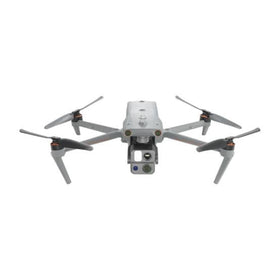
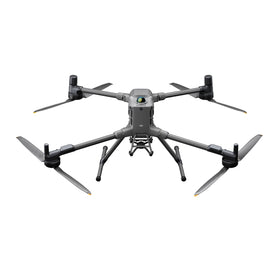
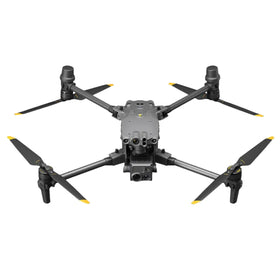
For drone manufacturers and operators, the implications are immediate. European air forces will need to integrate UAVs directly with these strike systems. That means higher interoperability standards – likely based on NATO STANAG 4671 or the upcoming European U-space framework. For commercial operators flying DJI Matrice 300/350 RTK or Autel EVO Max series platforms for mapping or inspection, the days of deconflicting solely via NOTAMs may end. Expect geofencing to become mandatory in military training areas, and expect laser-safe flight corridors to be closed on short notice.
How This Shifts the Drone Market: From Agri-Tech to Defense Tech
The ripple effects on the second-hand drone market are profound. Over the past three years, the commercial drone sector – especially in agriculture, construction, and energy – has driven growth. But a sudden clampdown on airspace access in eastern Europe will depress the residual value of older models that lack robust geofencing or remote ID compliance. In contrast, demand for military-grade or dual-use drones will surge.
“We are already seeing inquiries from defense contractors looking to acquire large inventories of used DJI Matrice 600 Pro units for conversion into target drones or electronic warfare test platforms,” reports Marcus Lindqvist, head of procurement at Nordic Defense Solutions. “That feeds directly into the used drone market because operators upgrading to newer, more compliant models want fast cash for their existing gear. Our refurbishment pipeline is up 40% this quarter alone.”
For individual commercial pilots and small service providers, the calculus changes. If you operate a DJI Phantom 4 RTK for construction site monitoring in Latvia, you may find your planned BVLOS corridor suddenly swallowed by a new military danger zone. The solution? Either invest in a drone with military-grade encryption and autopilot deconfliction (like the DJI Matrice 350 RTK with its upgraded geofencing) or shift your business model toward defense-related contracts. Reboot Hub’s pre-owned DJI drones offer a cost-effective bridge: fully inspected, compliant, and backed by a warranty that covers the latest firmware mandates.
Ready to Upgrade Your Fleet?
Browse our collection of inspected pre-owned DJI drones — inspected, flight-tested, and backed by a 6-month warranty. Save up to 40% versus retail.
What Does MBDA’s Land Missile Mean for Drone Operators? A Q&A
Q: Will I be grounded?
A: Not entirely, but expect a significant increase in Temporary Flight Restrictions (TFRs) in regions where the missile system is deployed – likely Poland, Romania, and the Baltic states. The European Aviation Safety Agency (EASA) is already drafting a policy update that will require all commercial drone flights within 50 km of a military missile site to be pre-authorized and ADS-B equipped. If your drone lacks ADS-B Out (e.g., older DJI models), you may be limited to visual line-of-sight operations only.
Q: How does this affect drone resale values?
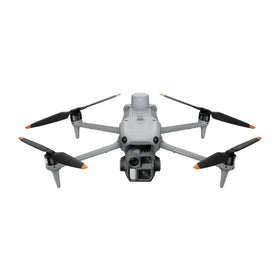
A: Two-tier pricing will emerge. Drones with full ADS-B, geofencing, and remote ID compliance (like the DJI Matrice 350 RTK or Autel EVO Max 4T) will command premium prices. Non-compliant older units (Phantom 4 Pro, Mavic 2 Enterprise) will see a 15-20% depreciation in the second-hand market within six months. The used drone market is already adjusting: Reboot Hub’s inventory of refurbished Matrice 300 RTK units is selling 30% faster than last quarter.
Q: Should I switch to defense contracts?
A: It’s a viable pivot. European defense budgets are ballooning – the EU is expected to allocate €500 million for drone-based ISR in 2027. Operators with experience in RTK mapping, LiDAR, and thermal imaging are in demand for military training exercises and border surveillance. However, you will need to comply with NATO’s airworthiness standards and possibly obtain a security clearance. Reboot Hub’s professional DJI repair services can help upgrade your fleet with hardened components and encryption modules for defense-grade reliability.
The Regulatory Tsunami: EASA and National Authorities Prepare
The MBDA announcement coincides with a flurry of regulatory activity at EASA. A draft proposal, seen by Reboot Hub, recommends mandatory Remote ID for all drones operating in airspace classes G and C near “critical national infrastructure,” including missile deployment zones. Additionally, the standard “open” category (under 250g) may be restricted in buffer zones extending 40 km around known military launch sites.
For commercial operators flying missions under the specific category (STS-01, STS-02), the paperwork burden will increase. Many national authorities – notably the Polish Civil Aviation Authority and the Romanian Air Traffic Services – are expected to introduce a 72-hour pre-flight approval system for any BVLOS operation within 100 km of the eastern border. This mirrors the existing deconfliction procedures used in conflict zones like Ukraine and will likely become the new normal for the entire eastern flank.
“This is the beginning of the militarization of European civilian airspace management,” warns Katarzyna Nowak, a Warsaw-based aviation lawyer specializing in drone regulation. “Pilots who ignore it face fines of up to €50,000 and impoundment of their aircraft. The market for legal compliance services – geofencing updates, registration assistance, ADS-B retrofits – will explode.”
Second-Hand Market Dynamics: Winners and Losers
The MBDA missile announcement accelerates a trend that has been building since the Ukraine war: the bifurcation of the drone market into “civilian-grade” and “defense-ready” tiers. Commercial operators who rely on older DJI Enterprise models (Phantom 4 Pro, Mavic 2 Enterprise Advanced, Matrice 200 series) will see resale values drop by up to 25% within the next twelve months as military-adjacent buyers demand newer platforms that support the NATO Friendly Force Information (FFI) data link standard.
Conversely, platforms like the DJI Matrice 350 RTK, Autel EVO II Pro Enterprise, and the newly certified DJI M3E will see increased demand from both commercial and defense sectors, keeping their second-hand prices stable or even rising. For operators looking to upgrade, selling a used Phantom 4 Pro today yields ~€1,800; waiting six months might net only €1,400. The window is closing.
“We advise our clients to sell any drone that lacks ADS-B or GEO 2.0 geofencing before September 2026,” says Tomasz Berg, operations manager at Reboot Hub’s refurbishment center in Tallinn. “After that, the military restrictions will depress prices further. We’re offering competitive buyback prices now to help operators transition to fully compliant fleets via our pre-owned DJI drones. And if you need to upgrade your existing drone with a new radio module or GPS, our professional DJI repair services can do it with genuine parts and a two-week turnaround.”
Strategic Outlook: The European Drone Ecosystem Adapts
The MBDA land-based missile is not just a weapon; it’s a catalyst for an integrated European defense drone ecosystem. Over the next 24 months, expect to see joint procurement programs between NATO and EU countries for “airspace deconfliction drones” – quadcopters equipped with traffic awareness systems that can fly alongside missile systems. Startups like Dutch-based Aviolanda and Polish Flytronic are already pitching proposals.
For the second-hand market, the key watchword is compliance. Drones that meet future European Defense Agency standards for C2 links, payload encryption, and geofencing will retain their value. Those that don’t will be relegated to hobby use or scrapped. Reboot Hub is positioning itself as the primary broker in this transition, offering trade-in programs for legacy drones and fast, certified repairs that bring older fleets up to spec.
“In the next 18 months, the commercial drone operators who survive and thrive will be those who treat compliance as a competitive advantage,” concludes Berg. “We are helping our customers navigate that curve by providing liquidity for their old gear and access to top-tier refurbished hardware that already meets the new standards.”
FAQ
Will my DJI Mini series drone be affected?
Yes, indirectly. While sub-250g drones may avoid some open-category restrictions, the new TFRs will apply regardless of weight. In military exclusion zones, all drones will be banned. Additionally, the Mini 3’s lack of ADS-B Out means it cannot be used for BVLOS flights in controlled airspace near missile sites. Expect firmware updates from DJI to include automatic no-fly zone expansion within 30 days.
How do I verify if my drone is compliant with the new standards?
Check your drone’s manufacturer specifications for ADS-B Out, remote ID broadcast (DIN EN 4709-002), and geofencing capability. DJI’s GEO 2.0 and Autel’s Dynamic ANo-Fly Zone are the only systems currently recognized by EASA for automated deconfliction. If your drone does not have these, consider our retrofit services or upgrade path.
Where can I sell my non-compliant drone before values drop?
Reboot Hub offers instant online buy quotes and a seamless trade-in process. List your drone on our marketplace, and we will inspect, test, and either certify it for resale or recycle it responsibly. Current promotions include free shipping and a 30-day price guarantee. Visit our website to start the process.
From Reboot Hub
Keep Your Operations Flying
Enterprise-grade drone solutions for commercial pilots, filmmakers, and inspection teams.
Pre-owned Fleet
Fully inspected DJI drones with 6-month warranty. Save up to 40%.
Browse Inventory ->