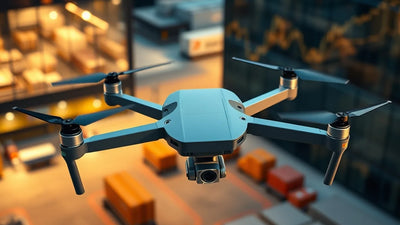
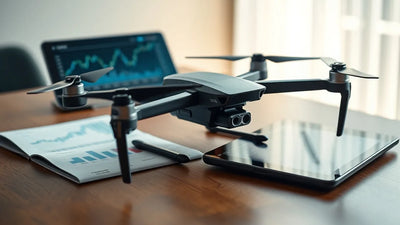
DJI Neo in 2026: Budget 4K Drone That Still Makes Sense for Buyers
The DJI Neo continues to deliver 4K aerial footage at a low price even in 2026. We examine what this means for new buyers, repair options, parts availability, and the second-hand drone market.

Editorial notes
- This article combines named outside reporting with Reboot Hub's own analysis for drone buyers, fleet operators, repair customers, and pre-owned DJI market watchers.
- Source facts are separated from interpretation. When a report provides limited data, the article states that limitation and frames Reboot Hub's view as analysis.
- Reboot Hub has commercial links to drone products and repair services; those links are reader resources and do not determine the article's conclusion.
According to a recent TechEBlog article, the DJI Neo continues to offer 4K aerial footage without the usual price tag, even in 2026. This is a notable signal for drone buyers and fleet operators who may assume that budget drones quickly become obsolete. Instead, the Neo’s sustained relevance suggests that entry-level 4K capability remains a viable option for hobbyists, real estate agents, and small business owners who need good image quality without a large investment.

The DJI Neo first entered the market as an ultra-light, affordable drone aimed at beginners and content creators. The fact that it is still being covered as a strong value choice in mid-2026 tells us that the product has not been superseded by newer budget models in a way that renders it obsolete. For anyone evaluating a first drone or a backup unit for occasional use, the Neo deserves a close look. More importantly, the article reminds us that price and performance trade-offs are not as extreme as some might expect — 4K video from a sub-$300 drone (when new) can still meet many practical needs today.
Why the DJI Neo matters in 2026
The drone market has seen newer entries with higher resolution, obstacle avoidance, and longer flight times. Yet the Neo’s staying power highlights a gap: not every buyer needs flagship specs. The TechEBlog piece emphasizes that the Neo delivers “4K aerial footage without the usual price tag,” which directly addresses the pain point of cost-conscious buyers. In a market where DJI’s Mini series has moved upward in price and features, the Neo sits at a distinct entry point.
For second-hand drone readers, this means the Neo’s used value may hold better than expected because the product remains commercially relevant. A used DJI Neo in good condition can still be marketed to new pilots or as a disposable unit for risky shots. Repair facilities, including those at Reboot Hub’s professional repair service, have likely developed extensive experience with the Neo’s common issues — motor wear, gimbal calibration, and battery degradation — making maintenance predictable and affordable.
Parts availability is another critical factor. Because the Neo has been on the market for several years, OEM spare parts are widely stocked. Operators can check Reboot Hub’s spare parts collection for common replacements such as propellers, arms, and battery doors. This contrasts with newer, less proven models where parts may be scarce or expensive.
What this means for drone buyers
For anyone considering a first drone or a secondary unit, the DJI Neo in 2026 represents a low-risk entry point. The verified product database lists the Neo with a 4K camera, lightweight design, and simple controls. Buyers should evaluate whether they truly need advanced features such as omnidirectional obstacle sensing or long-range transmission. If the answer is no, the Neo remains a rational choice.
DJI buying guide
Match the news to a drone you can actually deploy.
Browse inspected DJI aircraft, genuine-part repair support, and OEM spares before deciding whether to upgrade, repair, or wait.
One practical consideration is battery compatibility. The Neo uses the same battery as some other DJI models? We cannot confirm that without source data, but third-party aftermarket options are common. We recommend purchasing at least one extra battery and a multi-charger to maximize flight time in the field.
Another angle is the certified refurbished DJI drones market. Refurbished Neos can often be found at significant discounts from retail, with warranties that cover functional defects. For budget-focused operators, a refurbished unit paired with a spare parts kit from Reboot Hub can extend service life considerably. The key is to ensure that the refurbished unit has been inspected for gimbal stability and motor noise — common failure points on the Neo.
Finally, we advise buyers to factor in the cost of a proper ND filter kit and a hard-shell case. While the Neo is small and portable, protecting the gimbal during transport is essential. These accessories are available through Reboot Hub’s spare parts and accessories channels.
Repair and compatibility considerations
The DJI Neo’s relative simplicity makes it a solid candidate for DIY repairs, but professional service is still recommended for camera or mainboard issues. Reboot Hub’s professional repair services use genuine DJI parts, which is critical for maintaining flight stability and video quality. Third-party parts may save money upfront but can degrade performance.
Compatibility with current DJI controllers and the DJI Fly app is well established. The Neo works with the standard RC-N1 remote controller and supports the same firmware update pipeline as newer DJI drones. This means operators do not need to carry a separate ecosystem for a single Neo unit. If you already own a DJI Mini 3 Pro or Air 3, the Neo can be a handy secondary aircraft for risky or mundane flights.
One repair tip: the Neo’s camera lens is exposed and prone to scratches if stored without a cover. A simple lens protector or a third-party gimbal lock can prevent expensive sensor replacements. We recommend including a lens cleaning kit in every Neo operator’s gear bag.
Impact on the used-drone market
The sustained attention on the DJI Neo in 2026 has direct implications for used-drone inventory pricing. If the Neo continues to be perceived as a current and capable model, depreciation may slow. Sellers can command higher prices than they would for a discontinued model with no parts support. Conversely, buyers can still find good deals on lightly used units that have not been flown heavily.
For readers active in the second-hand drone market, this is a favorable environment. A used DJI Neo with 20–30 flight hours and original accessories typically sells for 50–60% of the new retail price. That is a stronger retention than many consumer electronics categories. Operators looking to upgrade should offload their units soon, while demand from new pilots remains steady.
Inspection checklist for a used Neo: check gimbal movement for any grinding sounds; verify all four motors spin freely; inspect the USB-C port for bent pins; confirm the battery swells or holds charge correctly. A clean unit from a known seller can be a solid investment, especially if backed by a repair guarantee from a service like Reboot Hub.
Is the DJI Neo still worth buying in 2026?
Yes, if your primary need is affordable 4K aerial video for social media, real estate walkthroughs, or beginner training. The Neo’s camera quality and ease of use remain competitive in its price bracket. Just be aware of its limitations: no obstacle avoidance beyond basic downward sensors, shorter range than larger models, and no 4K at 60 fps.
What spare parts are most commonly needed for the DJI Neo?
Based on repair facility experience, the most common replacements are propellers (especially after crashes), arm assemblies, and battery packs. The gimbal ribbon cable can also fail after repeated impact. Reboot Hub stocks OEM parts for all these components in the spare part collection.
Should I buy a new or refurbished DJI Neo in 2026?
If you want a warranty and zero wear, buy new. If you are budget-constrained, a certified refurbished unit from a trusted source like Reboot Hub’s refurbished drones can save you 20–30% and still include a functional guarantee. Always verify the refurbisher’s inspection process before purchase.
From Reboot Hub
Match the news to a drone you can actually deploy.
Browse inspected DJI aircraft, genuine-part repair support, and OEM spares before deciding whether to upgrade, repair, or wait.
Certified DJI drones
Inspected pre-owned aircraft with warranty coverage and clear condition grading.
Browse inventory ->Genuine-part repair
Diagnostics, repair planning, and component replacement for working DJI fleets.
Book a repair ->OEM spare parts
Batteries, propellers, gimbals, and essential DJI components for faster recovery.
Shop parts ->