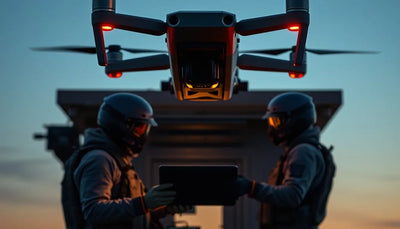
Canada Adopts Drones and Thermal Imaging for Wildfire Response
Prime Minister Mark Carney confirmed drones and advanced thermal imaging are now part of Canada’s national wildfire response. This G7-level endorsement signals rising demand for thermal-equipped drones, with major implications for fleet operators, repair services, and the pre-owned DJI market.

On July 19, 2026, Prime Minister Mark Carney announced that drones and advanced thermal imaging are now integrated into Canada’s national wildfire response strategy. The statement, delivered in a public briefing and reported by DroneXL.co, marks the first time a G7 leader has formally placed thermal-drone technology at the center of frontline firefighting operations. For commercial UAV operators, fleet managers, and the second-hand drone market, this is not just a political milestone—it is a clear signal of where institutional demand is heading.
Wildfire seasons in Canada have grown in intensity and duration, straining ground crews and conventional aerial assets. By deploying drones equipped with thermal sensors, Canada aims to detect hot spots, monitor fire perimeter shifts, and support suppression efforts after dark. The decision elevates drone-based thermal imaging from a niche tactical tool to a standard component of national emergency infrastructure. DroneXL’s coverage, which previously highlighted thermal-drone fireline use by individual agencies, now carries the weight of a formal government endorsement.
What the announcement means for the drone market
For buyers and fleet operators, the Canadian commitment creates a reference point that will influence procurement decisions worldwide. When a G7 government publicly adopts a specific drone capability, it drives standardization, accelerates certification pathways, and often shapes insurance requirements. Enterprise operators who service utilities, forestry, or emergency management should expect to see more requests for proposals that include thermal imaging requirements similar to Canada’s operational parameters.
Market context
Turn market news into a buy, repair, or trade-in decision.
Compare pre-owned availability, resale timing, and repair economics before the market moves again.

Reboot Hub analysis: From a supply-chain perspective, demand for thermal-capable drones is likely to increase among government agencies, private firefighting contractors, and environmental monitoring firms. This may tighten availability for certain DJI thermal models, particularly those with radiometric sensors or high-resolution infrared cameras. Fleet managers should evaluate their current thermal inventory and consider whether they need to expand their stable of pre-owned DJI drones to meet upcoming contract obligations.
The announcement also reinforces the value of professional DJI repair services. Thermal drones used in wildfire environments face extreme heat, smoke particulate, and physical stress. Reliable repair turnaround times and access to genuine OEM spare parts become critical when drones are part of a national response protocol. Operators who already maintain relationships with certified repair centers will have a competitive advantage when bidding for government contracts or supporting disaster response.
How thermal drones change firefighting logistics
Thermal imaging from drones offers capabilities that manned aircraft and ground crews cannot easily replicate. A drone can loiter over a fire line for hours, providing continuous temperature data that helps predict spread direction. It can operate at low altitude in heavy smoke without risk to human pilots. It can also fly after sunset, when fixed-wing thermal scans are often grounded due to safety regulations. Canada’s decision to integrate these drones into national response suggests that these operational benefits have been validated at scale.
DroneXL noted that the Prime Minister’s briefing included references to advanced thermal imaging. While specific sensor models were not named, the phrase “advanced” likely implies radiometric cameras that can measure absolute temperatures rather than simply displaying relative heat. For operators, this distinction matters. Radiometric data is often required for scientific analysis, post-fire assessment, and legal documentation. Fleets that already fly radiometric payloads—such as the DJI Mavic 3 Thermal series or Matrice with Zenmuse H20T—are well positioned to adapt to these new requirements.
Commercial implications extend beyond immediate fire suppression. After the fire is contained, thermal drones can assist in mop-up operations by identifying lingering hot spots. They can also map burn severity, monitor erosion risks, and support ecological recovery planning. These extended use cases increase the return on investment for thermal drone acquisitions and make a compelling argument for operators to add thermal capabilities even if they do not directly serve the wildfire sector.
What this means for enterprise operators
Enterprise operators should view Canada’s move as a procurement blueprint. Government agencies now have a tested framework for integrating thermal drones into emergency operations. Private sector contractors who can demonstrate they operate, maintain, and repair thermal drones to an equivalent standard will be preferred vendors. This is especially true for operators who serve multiple clients—a utility company that uses thermal drones for power line inspection can pivot to wildfire support without retooling their fleet.
Fleet planning should account for increased utilization rates. Drones deployed in wildfire response accumulate flight hours quickly, which accelerates wear on motors, batteries, and gimbals. Operators need a reliable maintenance pipeline. For those who already source genuine OEM spare parts and use professional DJI repair services, the transition to a high-tempo operational model is smoother. For others, now is the time to establish those partnerships.
Procurement strategy should also consider the pre-owned market. As government and institutional demand for thermal drones rises, prices for new thermal models may climb. However, the second-hand market—especially for pre-owned DJI drones with thermal payloads—offers a cost-effective entry point. Buyers should look for units that have been inspected and have documented flight logs, as thermal sensor calibration history is important for mission reliability. A drone that has been flown primarily in mild conditions may be a better value than one with high flight hours in smoky environments, even if the latter is newer.
One specific action for operators: start reviewing your thermal drone’s sensor calibration and repair history. If you plan to respond to wildfire tenders, you may need to provide evidence of routine maintenance and sensor accuracy. Keeping a digital log of firmware updates and component replacements will strengthen your proposals.
Implications for the pre-owned and repair market
Government adoption of thermal drones has a ripple effect on the secondary market. When a national program like Canada’s buys new drones in volume, older models used by agencies or contractors often enter the pre-owned channel. This creates opportunities for smaller operators and repair customers to acquire thermal-capable platforms at lower cost. However, buyers should exercise caution. Drones retired from firefighting use may have increased wear, particularly on thermal sensors exposed to smoke and heat. A thorough inspection and drone trade-in guide can help assess whether a used unit is worth the investment.
Repair businesses should expect higher demand for thermal sensor repairs and recalibration. The Canadian announcement will likely prompt other provinces and countries to follow suit, increasing the total number of thermal drones in operation. More drones in the field means more repairs, more spare parts orders, and a greater need for certified technicians. Workshops that invest in thermal payload diagnostic tools now will have a competitive edge within the next 12-18 months.
Spare parts availability is another consideration. Thermal camera components, especially for DJI’s Zenmuse and thermal Mavic series, have historically had longer lead times than standard RGB cameras. Operators and repair shops should stock critical parts such as gimbal flex cables, thermal sensor boards, and IR lens covers. Genuine OEM spare parts are preferred because aftermarket alternatives may not meet the precision required for radiometric accuracy.
For fleet managers looking to expand or upgrade, the pre-owned DJI drones market offers a practical path. As new institutional demand squeezes new-unit supply, pre-owned platforms with verified maintenance records become a reliable investment. The key is to buy from sources that provide transparent flight hours, sensor calibration logs, and a return policy for initial testing.
Frequently asked questions
How will Canada’s drone policy affect drone prices?
Increased government demand for thermal-capable drones may put upward pressure on new unit prices in the short term. However, the secondary market should see more inventory as agencies upgrade fleets. Buyers can expect a wider selection of pre-owned thermal drones within the next 6–12 months.
What should a drone operator do to prepare for wildfire contracts?
Ensure your thermal drone’s sensor is calibrated and documented. Establish a relationship with a professional DJI repair service that can handle fire-related damage. Review your fleet composition to confirm you have adequate thermal payloads. Also, check that your insurance covers wildfire operations, which may involve higher risk.
Are thermal drones from the pre-owned market reliable for firefighting?
Yes, if they come with maintenance records and have been inspected by a qualified technician. Look for drones with low flight hours and a history of gentle use. Avoid units with heavy heat or smoke exposure unless they have been professionally serviced. Buying from a reputable source that offers a trade-in guide can help evaluate options.
Sources consulted
- DroneXL.co - primary source
Additional official documentation was not available at publication time.
Reboot Hub Editorial adds buyer, repair, resale, and operational analysis for drone owners. If you spot an error, contact us for correction review through our editorial policy.