Oakland Sheriff Drones and K-9 Team Find Missing Toddler Safe
An 18-month-old boy wandered away from his Holly home. Oakland County Sheriff’s Office drones and a K-9 team located him quickly. The rescue shows how reliable UAVs and proper maintenance can support critical missions — and what commercial drone buyers can learn.

編輯註釋
- 本文結合了指定的外部報導與 Reboot Hub 自身的分析,旨在為無人機買家、機隊營運商、維修客戶及二手 DJI 市場觀察者提供參考。
- 來源事實與解讀分開處理。當報導提供的資料有限時,文章會註明該限制,並將 Reboot Hub 的觀點定義為分析。
- Reboot Hub 設有無人機產品與維修服務的商業連結;這些連結為讀者資源,不會決定文章的結論。
On June 19, 2026, a Holly homeowner’s doorbell camera captured an 18-month-old boy walking alone past the 500 block of Elm Street at 11:54 a.m. Within minutes, Holly Police requested assistance from the Oakland County Sheriff’s Office, and both a drone team and a K-9 unit were deployed. The missing toddler was found safe thanks to the coordinated aerial and ground search.

For commercial UAV operators, fleet managers, and anyone buying or maintaining drones today, this incident is more than a heartwarming news story. It is a real-world demonstration of mission-critical drone performance under pressure. The equipment, the pre-flight readiness, and the support ecosystem behind that drone all mattered in a window measured in minutes. This analysis explores what the rescue means for the drone market — especially for buyers of pre-owned DJI drones, professionals sourcing genuine OEM spare parts, and operators planning their next fleet upgrade.
The tactical value of air-ground coordination in search operations
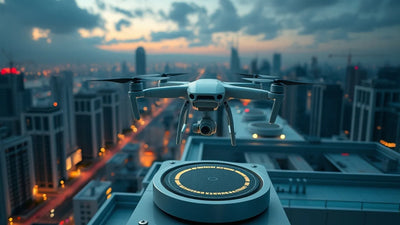
The Oakland County Sheriff’s Office used its drone team alongside a K-9 unit, reflecting a mature operational model that many public safety agencies now employ. The drone provided a wide, persistent aerial view while the K-9 tracked scent on the ground. This combination shortens search times dramatically in suburban environments where every minute increases risk for a small child.
From a commercial operator’s perspective, the takeaway is clear: drones are no longer experimental tools in emergency response. They are standard equipment, and agencies are integrating them with traditional ground resources. That means the reliability requirements for these aircraft are identical to those of any mission-critical tool. A drone that fails to launch, loses connection, or delivers degraded video during a search is not just an inconvenience — it can have life-or-death consequences. Fleet managers responsible for drones used in industrial inspection, law enforcement, or search-and-rescue must prioritize rigorous pre-flight checks, battery health management, and firmware currency. The same operational discipline that keeps a search drone in the air also extends the life of the hardware and maximizes the return on investment.
What this means for drone buyers
Every successful public safety drone operation reinforces the value of well-maintained, dependable aircraft. For commercial drone buyers, especially those considering pre-owned DJI drones, the Oakland rescue offers an important lesson: provenance and condition matter as much as price.
Fleet readiness
Keep mission-ready DJI hardware available without overbuying new units.
Reboot Hub helps teams source inspected pre-owned DJI platforms, repair genuine components, and keep essential spare parts moving.
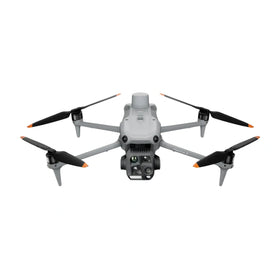
Police and sheriff departments often rotate their drone fleets as they adopt newer models with better sensors, longer flight times, or more advanced obstacle avoidance. These retired units, if properly maintained, can be excellent acquisitions for private operators who need a capable platform at a lower cost. However, not all pre-owned drones are equal. A drone that has logged hundreds of flight hours in demanding conditions — dust, temperature swings, frequent battery swaps — may have hidden wear.
Buyers should look for documentation of original purchase date, flight logs, and repair history. A drone that has been consistently serviced with genuine OEM spare parts will hold its value better and perform more reliably than one that received third-party repairs or generic components. The difference may not appear in a static specification sheet, but it can emerge during an urgent flight. Fleet managers who plan to use pre-owned aircraft for critical tasks, such as search support or industrial inspection, should consider having the drone inspected by a professional DJI repair service before accepting it into active rotation.
Lessons for fleet maintenance and part sourcing
The quick deployment of the Oakland County Sheriff’s Office drone suggests that the unit was ready to fly at a moment’s notice. That readiness does not happen by accident. It requires a disciplined maintenance schedule, an inventory of spare parts, and the ability to swap components quickly when wear or damage occurs.
For commercial operators, the lesson is straightforward: spare parts availability is a strategic asset. Waiting days or weeks for a replacement motor, arm, or gimbal ribbon cable can ground a drone during a critical contract period. Professional DJI repair services that use genuine OEM parts ensure that the drone remains as close to factory specification as possible. This is particularly important for aircraft used in search operations, where camera quality, flight stability, and battery performance cannot be compromised.
Operators who maintain their own fleet should stock commonly replaced items — propellers, landing gear, battery charging contacts, and gimbal dampeners — sourced from verified OEM suppliers. The difference between a genuine OEM spare part and an aftermarket alternative can be subtle in appearance but significant in fit, durability, and flight performance. A part failure mid-mission could escalate a routine inspection into a costly recovery effort or worse.
The growing role of drones in public safety and what it signals for the second-hand market
As more sheriff’s offices, police departments, and fire rescue teams integrate drones into their standard operating procedures, the overall installed base of public safety UAVs continues to grow. This creates a natural pipeline of used equipment entering the market as agencies refresh their fleets every two to four years. For commercial buyers, this represents an opportunity to acquire a drone that was likely maintained to a high standard — often with flight logs, regular service, and strong battery documentation.
However, the same market dynamic also means that buyers must become more discerning. Not every agency surplus unit is a bargain. Some may have sustained impact damage, logged heavy use in wet or dusty conditions, or been stored improperly. The best pre-owned DJI drones come from sources that can verify the service record and, if needed, provide a professional DJI repair service certification before sale. For the commercial operator, buying a drone with verifiable provenance reduces the risk of inheriting someone else’s maintenance problem.
One practical step every buyer should take: before closing a purchase, ask for the drone’s flight log and check for abnormal power cycles, error codes, or repeated compass calibration warnings. If the seller cannot provide logs, factor in the cost of a full inspection and potential part replacement. That due diligence is the same principle that guided the Oakland County team when they launched their drone to find a missing child — preparation and reliability are never wasted.
How can I tell if a pre-owned drone was used in public safety operations?
Request the drone’s serial number and ask the seller for a detailed flight log or maintenance record. Public safety agencies often keep digital logs that include flight time, battery cycles, and any repairs performed. If the drone shows signs of custom livery, mounting points for searchlights, or unusual antenna configurations, that may also indicate an operational history. Always verify that any pre-owned drone you purchase has been inspected and, if needed, serviced with genuine OEM spare parts.
Should I buy a drone that was used in search-and-rescue missions?
It can be a smart purchase if the drone was well-maintained and the seller provides clear documentation. Search-and-rescue drones typically fly in controlled conditions and receive regular maintenance. However, they may also have higher airframe hours and more battery cycles than a drone used for occasional photography. Have a professional DJI repair service evaluate the aircraft before committing, especially if you plan to use it for your own critical operations.
What maintenance is most important for a drone used in time-sensitive missions?
Battery health is paramount. Always verify that cells are not swollen, that charge cycles are within the manufacturer’s recommended limits, and that the battery firmware is current. Next, inspect all motors for smooth rotation and free of debris. Finally, ensure camera gimbal protection is intact and that the video transmission system has no intermittent dropout. For peace of mind, stock genuine OEM spare parts for the most failure-prone components, such as propellers, arms, and gimbal cables.
From Reboot Hub
Keep mission-ready DJI hardware available without overbuying new units.
Reboot Hub helps teams source inspected pre-owned DJI platforms, repair genuine components, and keep essential spare parts moving.
Pre-owned DJI drones
Inspected pre-owned aircraft with warranty coverage and clear condition grading.
Browse inventory ->Genuine-part repair
Diagnostics, repair planning, and component replacement for working DJI fleets.
Book a repair ->OEM spare parts
Batteries, propellers, gimbals, and essential DJI components for faster recovery.
Shop parts ->