Draganfly Closes Skip Dynamix Deal: What It Means for the Drone Defense Market
Draganfly's completed acquisition of Skip Dynamix injects ultra-low-cost, mass-producible fixed-wing drones into its defense portfolio—a move that redefines BVLOS swarm capabilities and disrupts traditional contracting. For commercial operators under Part 107, this signals rising demand for cost-effective airframes and a potential flood of used multirotors into the second-hand market. Asset managers must reassess fleet depreciation models now.

編輯註釋
- 本文結合了指定的外部報導與 Reboot Hub 自身的分析,旨在為無人機買家、機隊營運商、維修客戶及二手 DJI 市場觀察者提供參考。
- 來源事實與解讀分開處理。當報導提供的資料有限時,文章會註明該限制,並將 Reboot Hub 的觀點定義為分析。
- Reboot Hub 設有無人機產品與維修服務的商業連結;這些連結為讀者資源,不會決定文章的結論。
The drone industry woke up to a structural shift on June 11, 2026. Draganfly Inc. (NASDAQ: DPRO) announced the completion of its acquisition of Skip Dynamix Corporation, folding a high-volume fixed-wing drone manufacturer into its defense portfolio. The deal-first telegraphed on May 18, 2026-positions Draganfly to scale production of ultra-low-cost, mass-producible airframes purpose-built for military and security applications. For defense contractors, commercial operators, and second-hand market players watching from the sidelines, this acquisition is a signal that the era of cheap, disposable fixed-wing drones has officially arrived.

Skip Dynamix, a relatively low-profile firm, brings to Draganfly a manufacturing line that can push out fixed-wing drones at a fraction of the cost of traditional tactical UAS. The specific purchase price was not disclosed in the closing announcement, but industry estimates based on the initial May 18 memorandum suggest a deal in the tens of millions-a relative bargain for a capability that could reshape how governments procure small, attritable aircraft. Draganfly CEO Cameron Chell has previously emphasized that the acquisition is about "volume, not margin," a direct play for the Pentagon's increasingly vocal demand for low-cost mass production rather than bespoke, multi-million-dollar platforms.
Why Fixed-Wing Matters: The BVLOS and Mass Production Angle
Fixed-wing drones have always outperformed multirotors in endurance and range, but they have historically been more expensive to manufacture at scale-especially for defense-grade reliability. Skip Dynamix claims to have cracked the code by leveraging automotive-grade supply chains and modular design. Their airframes are reportedly built using injection-molded thermoplastic and honeycomb composites, cutting per-unit costs to a fraction of traditional hand-laid carbon fiber builds. For missions requiring long-endurance BVLOS (Beyond Visual Line of Sight) flights-such as persistent surveillance, communications relay, or even loitering munition roles-this cost structure makes one-way or high-risk operations economically viable.
Enterprise procurement
Turn this market signal into a fleet requirement.
Discuss mission profile, quantities, configuration, delivery, and lifecycle support with Reboot Hub.
From a regulatory perspective, the FAA's ongoing push to streamline BVLOS waivers under Part 107 will only amplify demand for such affordable fixed-wing platforms. Draganfly now owns a production line that can churn out hundreds of units quickly, a capacity that traditional defense primes like AeroVironment or Skydio cannot yet match in the sub-$50,000 airframe category. The implications for tactical ISR (Intelligence, Surveillance, Reconnaissance) are profound: smaller units can now deploy swarms of low-cost fixed-wing drones without bleeding their procurement budgets.
Ready to Upgrade Your Fleet?
Browse our collection of inspected pre-owned DJI drones - inspected, flight-tested, and backed by a 6-month warranty. Save up to 40% versus retail.
What This Deal Means for Commercial Drone Operators and the Second-Hand Market
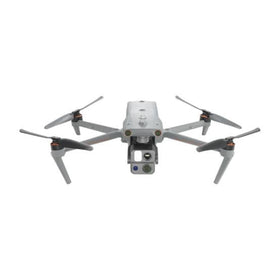
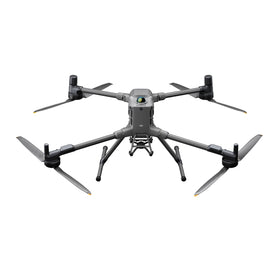
The immediate effect of Draganfly's acquisition on everyday commercial drone pilots may seem abstract, but it is anything but. Military and defense buyers shifting toward low-cost fixed-wing platforms will inevitably displace surplus multirotor inventory into the civilian and government contractor resale channels. Over the next 12 to 18 months, expect a wave of used DJI Matrice 300s, Autel Evo Max 4Ts, and even older Draganfly multirotors to hit the secondary market as defense fleets rotate toward fixed-wing assets. For operators running survey, inspection, or mapping missions under Part 107, this could depress pre-owned prices significantly-a golden opportunity for budget-conscious buyers.
At Reboot Hub, we are already seeing increased inquiries from fleet managers looking to sell their multirotor stock in anticipation of fixed-wing procurement cycles. The pre-owned DJI drones market is poised to benefit as companies upgrade-or trade sideways-into fixed-wing solutions for long-range work. Meanwhile, operators who rely on proven multirotors for high-precision tasks like RTK surveying and GSD mapping will find bargains as supply outstrips demand.
Defense Portfolio Deep Dive: Strategic Fit and Competitive Response
Draganfly's defense vertical has historically centered on multirotor platforms for SWAT, bomb disposal, and perimeter security. The Skip Dynamix acquisition injects a completely new dimension: fixed-wing endurance. Combined with Draganfly's existing software stack for autonomous mission planning and live video streaming, the new airframes can be deployed rapidly into contested environments. The ultra-low-cost nature also makes them ideal for loitering or decoy missions where losing a unit is operationally acceptable.
Rivals are taking note. Skydio, which acquired a fixed-wing startup in 2025, is now the primary competitor in this space. However, Skydio's drones are priced north of $60,000 per unit, while Skip Dynamix's platform is rumored to target the $10,000-$20,000 range. AeroVironment's Switchblade series remains a gold standard, but at a much higher per-unit cost and longer production lead times. Draganfly's play is pure volume: flood the market with cheap, capable fixed-wing drones that can be treated as consumables.
From a financial perspective, DPRO shares have been volatile since the May announcement, with analysts split on whether the acquisition will dilute near-term earnings. But the closing today removes execution risk. Revenue recognition from potential defense contracts-especially from the U.S. Department of Defense and allied nations-could start by Q4 2026. The company has also filed for FAA Part 107 waivers specifically for these fixed-wing platforms, targeting BVLOS operations over sparsely populated areas for ISR missions.
Ripple Effects Across the Supply Chain and Pilot Training
Mass-producible fixed-wing drones will also reshape training and maintenance ecosystems. Unlike multirotors, fixed-wing platforms require different piloting skills, landing techniques (parachute or belly land), and airframe maintenance. For commercial operators transitioning part of their fleet to fixed-wing, the learning curve is non-trivial. This creates an opening for third-party training providers and simulation software vendors.
Maintenance of injection-molded airframes is also different: cracks and repairs are often cheaper to replace than repair. That could reduce demand for traditional repair services on these airframes but simultaneously increase turnover. For multirotor fleets, however, the opposite holds true-repair expertise remains critical. At Reboot Hub, our professional DJI repair services are seeing steady demand as operators choose to extend the life of their existing multirotor assets rather than install new ones.
What Does Draganfly's Acquisition Mean for the used drone market?
For resellers and budget-conscious operators, this acquisition is a clear signal: fixed-wing drones are entering the mainstream, and multirotor inventory is likely to be offloaded in bulk. The second-hand market will see increased supply of high-quality used multirotors, pushing prices down by an estimated 10-15% over the next six months. Conversely, demand for used fixed-wing drones-especially those with BVLOS capabilities-will rise, but supply will remain tight until Draganfly and others ramp up production. This creates a two-tier market: cheap multirotors for tactical urban operations, and premium fixed-wings for wide-area surveillance. Savvy operators should start liquidating multirotor assets now before the glut, and prepare to acquire fixed-wing platforms later at competitive prices.
Frequently Asked Questions
How will Draganfly's new fixed-wing drones affect Part 107 commercial operators?
For commercial operators currently flying multirotors under Part 107, the availability of low-cost fixed-wing drones opens new revenue streams in long-range pipeline inspection, agricultural mapping, and search-and-rescue. However, transitioning requires additional training for fixed-wing flight characteristics and BVLOS waiver applications. The FAA has signaled a more streamlined approach for BVLOS, but operators must still invest in remote ID compliance and secure airspace authorizations. The short-term impact is positive for those who adapt; those who stick only with multirotors may face increased competition from fixed-wing service providers who can cover more ground per flight.
Is this acquisition a sign that DJI's dominance in the drone market is threatened?
Not directly. DJI remains dominant in the consumer and prosumer multirotor segments. However, the defense and government sector is increasingly shunning Chinese-made drones due to national security concerns. Draganfly and Skip Dynamix are specifically targeting that gap-offering a "Made in USA" fixed-wing alternative. This deal does not challenge DJI's core market, but it could accelerate polarization: DJI for general commercial use, and American defense primes for sensitive missions. For the second-hand market, DJI equipment remains the most liquid asset, but new fixed-wing entrants will gradually create a parallel ecosystem.
When will we see the first Skip Dynamix-based drones on the market, and what will they cost?
Draganfly expects to begin commercial deliveries of the integrated fixed-wing platforms in Q1 2027. Pricing is expected to range from $12,000 to $25,000 per unit depending on payload and endurance configuration. Early production will likely be absorbed by defense contract obligations, but commercial availability should follow by mid-2027. For cost-sensitive operators, the secondary market for these units may take 18-24 months to develop, but in the meantime, the flood of used multirotors provides a compelling alternative.
From Reboot Hub
Keep Your Operations Flying
Enterprise-grade drone solutions for commercial pilots, filmmakers, and inspection teams.
Pre-owned Fleet
Fully inspected DJI drones with 6-month warranty. Save up to 40%.
Browse Inventory ->