China's low-altitude economy enters routine operations phase in 2026
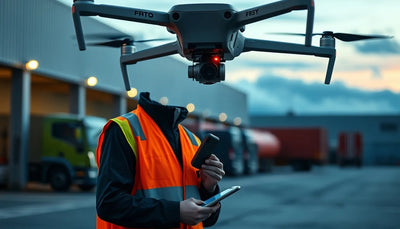
China's low-altitude economy has moved from pilot flights to routine operations in 2026, according to TGBUS reporting. The shift signals larger commercial drone fleets, more flight hours, and growing demand for maintenance, parts, and pre-owned equipment planning.

Quick answer
China's low-altitude economy has entered its first year of routine operations in 2026, moving beyond pilot flights, according to TGBUS reporting.
- The shift from pilot flights to routine operations marks a structural change in commercial drone activity in China.
- Routine operations imply higher flight frequency, larger fleets, and more predictable demand for maintenance and parts.
- The development could influence global drone supply chains and pre-owned DJI equipment availability.
- Operators should watch how routine low-altitude operations affect spare parts demand and fleet lifecycle planning.
China's low-altitude economy has crossed a meaningful threshold. According to reporting from TGBUS, 2026 is being framed as the first year in which the sector moves from pilot flights to routine operations. The report describes a trillion-yuan market now shifting from experimental deployments into a more regularized, operational phase, with the Peninsula App Sports Portal cited as one of the platforms tied to this transition.
Market context
Turn market news into a buy, repair, or trade-in decision.
Compare pre-owned availability, resale timing, and repair economics before the market moves again.

The language matters. Pilot flights are inherently limited, supervised, and often grant-funded. Routine operations imply scheduled activity, repeatable logistics, and commercial accountability. For drone buyers, fleet operators, and repair providers, that distinction changes how equipment is used, how often it flies, and how quickly it wears.
The shift from pilots to routine operations
TGBUS reports that the low-altitude economy has entered a phase where routine operations are becoming the norm rather than the exception. The source frames 2026 as the inaugural year of this transition, suggesting that the infrastructure, regulatory tolerance, and commercial demand have aligned enough to support sustained activity beyond demonstration projects.
For commercial operators, this is the kind of signal that changes procurement logic. A pilot program can tolerate downtime and ad hoc maintenance. Routine operations cannot. When drones fly on schedules, unscheduled repairs become direct cost events, and spare parts availability shifts from a convenience to an operational requirement. Fleet managers in adjacent markets should read the China development as an early indicator of where global low-altitude logistics may be heading.
What this means for drone owners and the market
A move toward routine low-altitude operations in China has ripple effects beyond Chinese airspace. China remains a major hub for drone manufacturing, component supply, and aftermarket parts. If domestic demand for commercial airframes and replacement components rises, global buyers may see shifts in parts availability, lead times, and pricing for popular enterprise platforms. The pre-owned market is not immune to these pressures. When new commercial units are absorbed by large domestic fleets, the flow of lightly used equipment into secondary channels can slow, which tends to support resale values for inspected pre-owned DJI drones and genuine OEM spare parts.
For individual buyers and small fleet operators, the practical takeaway is to think about maintenance capacity before adding flight volume. Routine operations reward platforms with predictable service intervals and accessible parts networks. Operators who rely on professional DJI repair channels or OEM-pulled parts should monitor how China's operational scale affects component supply. The Drone Wiki can help owners understand platform-specific maintenance and parts considerations as commercial flight hours increase across the industry. For owners evaluating service and lifecycle risk, Drone Wiki explains the relevant repair, parts, resale, or operational path.
Why routine operations change repair and parts demand
Routine operations generate wear at a different rate than occasional pilot flights. Motors, gimbals, landing gear, and battery connectors all accumulate stress through repetition. TGBUS does not provide specific technical failure data, but the operational shift it describes implies a higher baseline of flight hours across participating fleets. That is the variable that drives aftermarket demand.
For repair customers, the implication is straightforward. Waiting until a failure occurs becomes more expensive when replacement parts are in high demand. Operators who plan maintenance around known wear intervals, and who secure access to genuine OEM spare parts early, are better positioned than those who react to downtime. The same logic applies to pre-owned buyers. A drone that has logged consistent commercial hours should be evaluated differently from one used intermittently, and inspection quality becomes more important as the installed base works harder.
The broader commercial signal
The TGBUS report describes a trillion-yuan market, a figure that underscores the scale of investment and policy attention behind China's low-altitude push. Even if the exact market size is difficult to verify independently, the directional signal is clear: low-altitude commercial activity is being treated as infrastructure, not experimentation. That posture tends to attract capital, standardize operating rules, and accelerate equipment turnover.
For fleet planners outside China, the development is worth tracking as a demand-side indicator. If routine operations become the default model in one of the world's largest drone markets, manufacturers may prioritize high-volume commercial platforms, service networks may expand, and the secondary market may see more consistent turnover of enterprise equipment. None of this requires immediate action, but it does argue for a procurement mindset that treats drones as operating assets with lifecycle costs, not one-time purchases.
FAQ
Frequently asked questions
What exactly changed in China's low-altitude economy?
According to TGBUS reporting, 2026 marks the first year the sector is moving from pilot flights to routine operations. The report frames this as a structural shift rather than a single regulatory event.
How could this affect pre-owned DJI drone prices?
If Chinese commercial fleets absorb more new units for routine operations, fewer lightly used airframes may enter secondary channels, which could support resale values. Parts availability and lead times may also shift as domestic demand rises.
What should a drone owner do differently now?
Owners should evaluate maintenance capacity before increasing flight volume. Securing access to genuine OEM spare parts and understanding platform-specific wear patterns becomes more important as routine commercial operations expand globally.
Which sources support this update?
The article distinguishes reported information from analysis and does not present an unverified source as official confirmation.
What remains subject to change?
Retail pricing, availability, product bundles and regulatory timelines can change. Readers should verify the latest terms with the named retailer, manufacturer or regulator before acting.
How should buyers or operators use this analysis?
Use the verified facts as a starting point, then compare mission fit, lifecycle support, maintenance needs and current procurement terms before making a purchase or fleet decision.
參考來源
- TGBUS - primary source
發佈時尚未取得其他官方文件。
Reboot Hub 編輯部為無人機所有者提供購買、維修、轉售及營運分析。若發現錯誤,請根據我們的編輯政策聯絡我們進行更正審查。