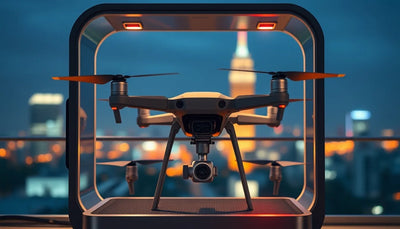
DJI Neo 3 Leak Suggests Square Sensor and Vertical Shooting
A new DJI Neo 3 leak suggests the compact drone may adopt a square sensor design similar to the Osmo Action 6, with vertical shooting capability. The report, sourced from DroneXL, points to a 193-gram platform that could reshape expectations for lightweight commercial and consumer drone workflows.

Quick answer
A DroneXL report suggests the DJI Neo 3 may feature a square sensor similar to the Osmo Action 6 and weigh around 193 grams, with vertical shooting capability.
- Source: DroneXL report via Google News DJI
- Reported weight: approximately 193 grams
- Sensor design: square sensor similar to Osmo Action 6
- Shooting capability: vertical video orientation
- No official DJI confirmation in the source data
Verified facts
DJI buying context
Match product news to hardware you can actually deploy.
Check inspected DJI aircraft, repair support, and trade-in timing before deciding whether to upgrade, repair, or wait.

What the available evidence confirms
| Attribute | Reported Detail | Source Status |
|---|---|---|
| Drone model | DJI Neo 3 | Leak report |
| Reported weight | Approximately 193 grams | Leak report |
| Sensor type | Square sensor, similar to Osmo Action 6 | Leak report |
| Shooting mode | Vertical shooting | Leak report |
| Primary source | DroneXL | Named source |
Update: This report has been refreshed to reflect the latest available information on the DJI Neo 3 leak. The central development remains unchanged: a DroneXL report suggests the upcoming DJI Neo 3 may adopt a square sensor design similar to the Osmo Action 6, with vertical shooting capability and a reported weight of approximately 193 grams.
DJI's Neo line has carved out a distinct position in the consumer and light commercial drone market since its introduction. The original Neo targeted creators and operators who wanted a compact, approachable platform without the bulk or complexity of larger folding drones. Now, a new report from DroneXL, surfaced through Google News DJI, indicates that the next iteration may take a meaningful step toward content-first camera performance. The report suggests the DJI Neo 3 could feature a square sensor similar to the one found in DJI's Osmo Action 6 action camera, paired with vertical shooting capability. If accurate, this would represent a deliberate shift in how DJI positions the Neo within its broader imaging ecosystem.
For commercial UAV operators, fleet managers, and repair customers, the leak matters less for what it confirms and more for what it signals about DJI's product strategy. A square sensor in a lightweight drone body suggests a focus on social-first and multi-orientation capture, which has become a dominant workflow for inspection documentation, real estate marketing, and rapid field reporting. The reported 193-gram weight would keep the Neo 3 in a category that is easy to deploy, simple to transport, and generally subject to fewer operational barriers than heavier enterprise platforms. However, it is important to note that the source data does not include official confirmation from DJI, and no verified specification context was available for this article.
What the leak actually shows
According to the DroneXL report, the DJI Neo 3 is expected to carry a square sensor similar to the Osmo Action 6. A square sensor is a notable design choice because it allows the camera to capture both horizontal and vertical frames without physically rotating the sensor or cropping heavily from a standard 16:9 capture area. This approach has become common in action cameras and smartphones, where creators frequently switch between landscape and portrait output. The report also indicates that vertical shooting will be a supported capability, which aligns with the square sensor design logic.
The reported weight of approximately 193 grams places the Neo 3 in the same lightweight class as the original Neo. For operators who fly in sensitive environments or who need to carry multiple aircraft to a job site, a sub-200-gram drone reduces logistical friction. It also tends to simplify certain regulatory considerations in markets where weight thresholds affect registration or operational requirements. That said, Reboot Hub analysis should be clear: the source data does not provide official regulatory guidance, and operators should verify local rules independently rather than assume a weight-based exemption applies.
The DroneXL report is the sole named source for this development. No DJI official statement, agency filing, or independent verification was available in the source data. This means the leak should be treated as an early signal rather than a confirmed product roadmap. In the drone industry, leaks of this nature often capture real design directions, but they can also reflect prototype configurations that change before commercial release.
What this means for drone buyers
For buyers evaluating the Neo line, the reported square sensor and vertical shooting capability introduce a new decision variable. The original Neo was positioned as a simple, accessible entry point into DJI's ecosystem. If the Neo 3 adds a more capable imaging pipeline, it could appeal to a broader set of commercial use cases, including social media content for property listings, quick site documentation, and visual inspection tasks where orientation flexibility matters. A buyer who previously dismissed the Neo as too consumer-focused may need to reconsider its fit for lightweight commercial workflows.
Pre-owned DJI market impact is a key consideration here. When a new model leaks with meaningful camera upgrades, the resale value of the outgoing model typically softens as buyers anticipate the replacement. For operators who already own a Neo and are thinking about upgrading, the window between a credible leak and an official launch is often the best time to evaluate whether to sell or trade in. Reboot Hub analysis suggests that owners of the current Neo should watch for further confirmation of the Neo 3's camera specifications before making a move. For those who want a capable lightweight platform today without waiting for an unconfirmed release, a Pristine Pre Owned Dji Neo remains a practical option that avoids the uncertainty of a rumored product cycle. For buyers comparing ownership options, Pristine Pre-Owned DJI Neo provides a practical next step for model, condition, and replacement timing.
Fleet managers should also consider how a square sensor and vertical shooting could change standard operating procedures. If the Neo 3 ships with native vertical capture, teams that currently crop horizontal footage for social or client deliverables may be able to streamline post-production. That is a modest efficiency gain, but across a fleet of multiple aircraft, it can reduce editing time and improve output consistency. The reported 193-gram weight also suggests that the Neo 3 will remain easy to deploy in tight spaces, which is valuable for indoor inspections and close-quarters documentation.
Repair and parts implications
From a repair and parts perspective, the Neo 3 leak raises questions that cannot yet be answered by the source data. A new sensor module and potentially revised gimbal assembly would mean new OEM part numbers, new repair procedures, and a period during which independent repair shops must learn the platform. For repair customers who currently own a Neo, the introduction of a successor does not immediately change parts availability for the existing model. DJI has historically maintained parts support for popular consumer drones well beyond their initial sales window, but no verified parts availability data was included in the source material.
What repair customers should do differently is simple: if you are considering a repair on an existing Neo, evaluate the cost against the likelihood of upgrading once the Neo 3 is officially announced. A minor repair on a drone you plan to keep is still worthwhile. A major repair on a drone you plan to replace may not be. This is standard lifecycle planning, but the leak gives it a concrete trigger point. Reboot Hub analysis does not suggest that the Neo 3 leak changes the fundamental reliability of the current Neo; it simply adds a forward-looking consideration to repair decisions.
For independent repair shops, the reported square sensor is a signal to prepare for a different camera module architecture. Square sensors in action cameras are typically mounted differently than traditional rectangular drone camera sensors, and the associated ribbon cables, connectors, and gimbal calibration procedures can vary. Shops that invest early in understanding the Osmo Action 6 sensor design may be better positioned to service the Neo 3 when it reaches the repair market.
Market positioning and what to watch next
Reboot Hub analysis: The Neo 3 leak, if accurate, suggests DJI is converging its action camera and lightweight drone imaging technologies. That convergence has strategic implications. DJI already dominates the consumer drone market, and its Osmo action camera line competes directly with GoPro. By bringing a square sensor into the Neo line, DJI could create a more unified content capture ecosystem where footage from a drone and an action camera shares similar color science, aspect ratio flexibility, and post-production workflows. For commercial operators who use both drone and ground-based cameras, that consistency has real value.
What to watch next is straightforward: any official DJI announcement, regulatory filing, or credible teardown that confirms the Neo 3's sensor and weight. The DroneXL report is a single-source leak, and until additional corroboration emerges, procurement decisions should remain measured. Buyers who need a lightweight drone immediately should not wait on an unconfirmed product. Buyers who can afford to wait should use the time to clarify whether vertical shooting and a square sensor would actually change their daily operations.
The broader market trend here is the continued blurring of lines between consumer content tools and light commercial platforms. Drones that were once dismissed as toys are increasingly capable of producing documentation-grade imagery. The Neo 3, as described in the leak, would sit squarely in that overlap. For pre-owned DJI buyers, that means the value proposition of the current Neo may shift quickly once the Neo 3 is officially confirmed. For fleet operators, it means another lightweight option may soon be available with camera features that reduce post-production friction.
FAQ
Frequently asked questions
Is the DJI Neo 3 officially confirmed?
No. The DJI Neo 3 has not been officially confirmed by DJI. The information in this report comes from a DroneXL leak surfaced through Google News DJI, and no official DJI statement or verified specification context was available at the time of writing.
What is the main camera change reported for the Neo 3?
The DroneXL report suggests the Neo 3 may feature a square sensor similar to the Osmo Action 6, which would enable vertical shooting without heavy cropping. The reported weight is approximately 193 grams.
Should I wait for the Neo 3 or buy a current Neo now?
If you need a lightweight drone immediately, waiting on an unconfirmed leak may not be practical. If vertical shooting and a square sensor would meaningfully improve your workflow, it may be worth waiting for official confirmation. A pre-owned current Neo remains a cost-effective option for operators who do not need the rumored camera upgrades.
Which sources support this update?
The article distinguishes reported information from analysis and does not present an unverified source as official confirmation.
What remains subject to change?
Retail pricing, availability, product bundles and regulatory timelines can change. Readers should verify the latest terms with the named retailer, manufacturer or regulator before acting.
How should buyers or operators use this analysis?
Use the verified facts as a starting point, then compare mission fit, lifecycle support, maintenance needs and current procurement terms before making a purchase or fleet decision.
參考來源
- DroneXL via Google News - primary source
發佈時尚未取得其他官方文件。
Reboot Hub 編輯部為無人機所有者提供購買、維修、轉售及營運分析。若發現錯誤,請根據我們的編輯政策聯絡我們進行更正審查。