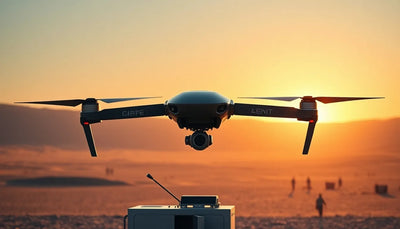
Army Shuts Down Specialized Drone Battalion, Lawmakers Demand Answers
A bipartisan group of lawmakers is pressing the Army to explain why a specialized drone battalion was shuttered less than a year after it was established. The move signals shifting priorities in military drone procurement that could ripple through the broader unmanned systems market.

Quick answer
A bipartisan group of lawmakers asked the Army to explain why it shut down a specialized drone battalion less than a year after establishing it, according to Defense News.
- The unit was operational for under one year before being closed
- Bipartisan legislators are formally requesting an explanation from the Army
- The shutdown raises questions about military drone procurement strategy
- The development may influence defense drone market expectations
Evidence: Defense News · Defense.gov official source
Fleet readiness
Keep DJI hardware available without overbuying new units.
Use defense and fleet news as a planning signal for repair support, inspected pre-owned aircraft, and replacement timing.

Defense News reported on September 3, 2026, that a bipartisan group of lawmakers has formally asked the U.S. Army to explain why it shut down a specialized drone battalion less than a year after the unit was established. The request signals growing congressional scrutiny over how the Army structures, funds, and sustains dedicated unmanned systems formations at a time when drone warfare has become central to modern military planning.
The reported shutdown is notable because it reverses a recent organizational commitment. Standing up a specialized drone battalion typically involves significant investment in personnel, training pipelines, equipment allocation, and operational doctrine. Closing such a unit within its first year raises practical questions about whether the Army encountered budget constraints, shifting mission priorities, integration challenges, or a strategic reassessment of how drone capabilities should be distributed across conventional units rather than concentrated in a dedicated formation.
What the reported shutdown signals about military drone strategy
According to the Defense News report, the lawmakers' inquiry focuses on why the Army moved so quickly to dissolve a unit that was only recently created. This kind of rapid organizational reversal can indicate several underlying dynamics. One possibility is that the Army is moving away from centralized drone battalions in favor of embedding small unmanned aircraft systems directly into infantry, armor, and artillery formations. Another possibility is that the specialized unit was a pilot program that did not meet performance or cost benchmarks.
For commercial drone operators and fleet managers, the reported development is a reminder that even large institutional buyers recalibrate their drone programs frequently. Procurement decisions in the defense sector are rarely final. Units get created, restructured, and dissolved as doctrine evolves. This pattern also appears in enterprise and public safety drone programs, where initial fleet purchases can outpace operational integration or maintenance capacity. Buyers who plan for modular, repairable, and resalable equipment are better positioned when organizational priorities shift.
Congressional oversight and defense drone procurement
The bipartisan nature of the lawmakers' request suggests that the shutdown has raised concerns beyond routine administrative interest. When legislators from both parties ask for an explanation, it often reflects broader worries about readiness, wasted investment, or transparency in how defense dollars are spent. Defense News did not report a specific cost figure for the battalion, but the establishment and rapid closure of any specialized unit involves sunk costs in recruitment, training, facilities, and equipment.
This oversight dynamic matters for the wider drone industry because defense procurement signals influence commercial markets. Military adoption of small unmanned systems has historically driven innovation in flight controllers, sensors, secure communications, and ruggedized airframes. When a visible military drone program is paused or restructured, suppliers, integrators, and service providers watch closely for what it means for future contract opportunities and technology priorities.
What this means for drone owners and the market
The reported shutdown does not directly change rules for civilian drone pilots, but it does highlight how quickly drone program priorities can shift at the institutional level. For commercial operators, the practical takeaway is that fleet planning should account for uncertainty. A drone purchased today may need to be repaired, redeployed, or resold within a shorter window than originally expected if a mission set changes or a program is restructured. This is where the pre-owned market becomes operationally relevant. Inspected pre-owned DJI drones and genuine OEM spare parts allow operators to adjust fleet composition without absorbing the full depreciation cost of new equipment. Reboot Hub's Drone Wiki provides reference material for operators evaluating repair, maintenance, and ownership decisions in a shifting market. For owners evaluating service and lifecycle risk, Drone Wiki explains the relevant repair, parts, resale, or operational path.
For defense-adjacent suppliers and enterprise drone buyers, the Army's reported move reinforces the value of flexible procurement models. Leasing, short-cycle refresh programs, and strong maintenance partnerships reduce exposure when an institutional customer changes direction. The pre-owned market also plays a role here: equipment that leaves one program can be inspected, serviced, and redeployed in another context, extending useful life and lowering total cost of ownership.
Buyers and fleet managers should treat this reported shutdown as a signal to review their own program assumptions. If a large military organization can reverse course on a specialized drone unit within a year, commercial and public safety programs should build in regular capability reviews, realistic maintenance budgets, and exit strategies for equipment that no longer fits the mission.
Broader implications for defense and commercial drone alignment
The Army's reported decision comes at a moment when small drone technology is advancing rapidly across both defense and commercial sectors. Military units increasingly rely on commercial off-the-shelf platforms, while commercial operators benefit from sensor and autonomy advances that originated in defense research. The line between military and civilian drone technology has blurred, which means procurement decisions in one sector can affect pricing, component availability, and service capacity in the other.
If the Army is indeed shifting toward distributing drone capabilities across conventional formations rather than concentrating them in a specialized battalion, that could increase demand for smaller, more portable, and more easily maintained systems. It could also accelerate interest in rapid repair and parts availability, since distributed units may lack the centralized maintenance infrastructure that a dedicated battalion would have had. For the commercial repair and pre-owned market, this trend would reinforce the importance of fast turnaround, genuine OEM-pulled parts, and transparent condition reporting.
Reboot Hub analysis: The reported congressional inquiry is likely to produce additional information in the coming weeks. Defense News did not indicate a timeline for the Army's response, but oversight requests of this nature typically require formal written answers. Operators, suppliers, and market analysts should watch for any clarification about whether the battalion was dissolved due to budget pressure, doctrinal change, or performance concerns, as each explanation carries different implications for future drone procurement.
FAQ
Frequently asked questions
Why did the Army shut down the specialized drone battalion?
Defense News reported that the Army closed the unit less than a year after establishing it, but the Army has not publicly detailed its reasoning. A bipartisan group of lawmakers is now asking for an explanation.
Does this affect commercial drone operators?
Not directly. The reported shutdown is a military organizational matter, but it highlights how quickly drone program priorities can change. Commercial operators can apply the lesson by building flexible fleet plans and considering pre-owned equipment to manage cost and risk.
What should drone fleet managers watch for next?
Fleet managers should monitor the Army's formal response to the congressional inquiry. The stated reason for the shutdown, whether budget, doctrine, or performance, will signal how defense drone procurement may evolve and whether commercial supply chains could feel secondary effects.
Which sources support this update?
The visible evidence links identify Defense News and Defense.gov official source; each source is used only for the claim it directly supports.
What remains subject to change?
Retail pricing, availability, product bundles and regulatory timelines can change. Readers should verify the latest terms with the named retailer, manufacturer or regulator before acting.
How should buyers or operators use this analysis?
Use the verified facts as a starting point, then compare mission fit, lifecycle support, maintenance needs and current procurement terms before making a purchase or fleet decision.
參考來源
- Defense News - primary source
- Defense.gov official source - official government source
Reboot Hub 編輯部為無人機所有者提供購買、維修、轉售及營運分析。若發現錯誤,請根據我們的編輯政策聯絡我們進行更正審查。