Amazon Prime Air’s Baton Rouge Launch: What the MK30 Fleet Means for the Drone Economy
Amazon is bringing 12–20 MK30 drones to Baton Rouge this summer, expanding Prime Air into the Gulf South. We analyze the operational specs, regulatory pathway, and what this rapid commercial scale-up means for the used drone market and independent operators.

Redaktionella noter
- Denna artikel kombinerar namngiven extern rapportering med Reboot Hub egen analys för drönarköpare, flottoperatörer, reparationskunder och bevakare av begagnade DJI-marknaden.
- Källfakta är åtskilda från tolkning. Om en rapport tillhandahåller begränsad data, anges detta i artikeln och Reboot Hub perspektiv presenteras som en analys.
- Reboot Hub har kommersiella länkar till drönarprodukter och reparationstjänster; dessa länkar är resurser för läsaren och avgör inte artikelns slutsats.
On May 19, 2026, Amazon Prime Air confirmed its next major expansion: a summer 2026 drone delivery launch in Baton Rouge, Louisiana. The e-commerce giant will deploy between 12 and 20 of its latest MK30 drones from a new facility adjacent to the Cortana fulfillment warehouse, bringing the total number of active Prime Air hubs in the United States to at least seven. This is not a pilot program or a limited trial - it is a deliberate, capital-intensive scaling of autonomous last-mile logistics into a midsized Southern metro area.
The Baton Rouge deployment signals that Amazon has moved beyond the cautious, one-city-at-a-time approach that defined Prime Air's early years. With the MK30 platform, Amazon has a drone certified for longer range, higher payloads, and operations in light rain and higher winds. For the commercial drone ecosystem - including pilots, fleet operators, and the second-hand market - this expansion carries implications far beyond package delivery.

The MK30 Platform: Specs and Operational Footprint
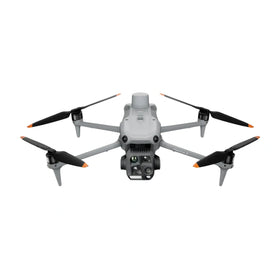
The MK30 is Amazon's third-generation delivery drone, designed specifically for the rigors of suburban and urban airspace integration. Unlike the earlier MK27 and hybrid hexacopter prototypes, the MK30 is a fully enclosed, ducted-fan design that reduces noise signature and improves aerodynamic efficiency. Each unit is capable of carrying packages weighing up to five pounds (2.3 kg) - a weight bracket that covers approximately 75 to 85 percent of Amazon's total unit sales, according to internal company data cited in regulatory filings.
Reader resources
Turn this drone news into a practical next step.
Compare inspected pre-owned DJI drones, repair options, and trade-in timing before the market moves again.
The service radius in Baton Rouge will be 7.5 miles (12.1 km) from the Cortana facility. That is a meaningful increase over earlier Prime Air deployments, which typically operated within a 4- to 6-mile radius. The expanded range is enabled by the MK30's hybrid battery-thermal powertrain and a redesigned flight control system that allows for more efficient cruise profiles. Amazon has not published the MK30's exact maximum flight time, but independent aviation analysts estimate it at 30 to 45 minutes under load, with a reserve margin for safety and contingencies.

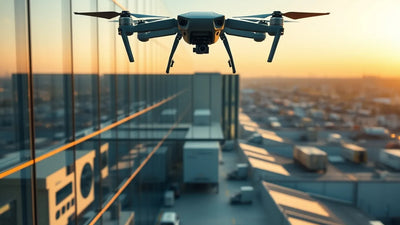
Prime members in the coverage zone - which includes parts of Baton Rouge's urban core, Mid City, and northern suburbs such as Baker and Zachary - will be able to select drone delivery for eligible items through the Amazon app. Delivery times are quoted at under 60 minutes from order placement, with the drone descending to a designated landing zone in the customer's driveway or yard. Amazon has stated that the MK30 can land within a 2-meter accuracy circle, using a combination of GPS, visual odometry, and real-time obstacle avoidance sensors.

Regulatory Pathway and Airspace Integration
Ready to Upgrade Your Fleet?
Browse our collection of inspected pre-owned DJI drones - inspected, flight-tested, and backed by a 6-month warranty. Save up to 40% versus retail.
Amazon's ability to launch in Baton Rouge depends on a layered regulatory framework. The Federal Aviation Administration (FAA) has granted the company a Part 135 air carrier certificate for drone operations, which allows revenue-generating deliveries beyond visual line of sight (BVLOS). Additionally, Amazon holds a specific exemption under 14 CFR Part 107 for operations over people and moving vehicles, provided the MK30 meets the FAA's means of compliance for noise and kinetic energy.
Baton Rouge was chosen in part because of its relatively uncongested airspace. The city's primary airport, Baton Rouge Metropolitan (BTR), handles modest commercial traffic, and the surrounding Class D airspace is less restrictive than that of larger hubs like Dallas or Atlanta. Amazon's team conducted extensive community engagement and worked with the Louisiana Department of Transportation and the Baton Rouge Airport Authority to deconflict flight paths. The Cortana facility sits approximately 6 miles north of BTR's runway, and the MK30's operational ceiling of 400 feet keeps it well below the airport's traffic pattern.
The summer 2026 deployment also coincides with the FAA's ongoing rulemaking for remote identification and UAS traffic management (UTM). Amazon is actively participating in the FAA's UTM pilot program, and the Baton Rouge hub will serve as a testbed for networked deconfliction between multiple autonomous drone fleets - a capability that will become essential as drone delivery scales to hundreds of daily flights per city.
Ready to Upgrade Your Fleet?
Browse our collection of inspected pre-owned DJI drones - inspected, flight-tested, and backed by a 6-month warranty. Save up to 40% versus retail.
Market Implications: What Amazon's Scale-Up Means for Commercial Drone Operators
The Baton Rouge launch is not just a story about package delivery - it is a signal to the entire commercial drone industry. Amazon is committing to a fleet of 12 to 20 aircraft per hub, with multiple hubs now operating simultaneously. That creates a secondary market effect that independent operators and fleet managers should watch closely.
First, consider the hardware lifecycle. Amazon's MK30 units are built to a high reliability standard, but they are not indestructible. After a certain number of flight cycles - industry estimates suggest 500 to 1,000 hours - components such as motors, ESCs, and battery packs require replacement. Amazon will likely rotate these units through a depot maintenance pipeline. However, the company's rapid iteration cycle means that as the MK30 is superseded by the MK31 or later variants, decommissioned units may enter the secondary market. For commercial operators who can navigate the proprietary software and communication protocols, these airframes could offer a robust, low-cost platform for non-delivery applications such as surveying, agricultural imaging, or infrastructure inspection.
Second, the regulatory precedent set by Amazon benefits all operators. Every successful BVLOS deployment in a populated area strengthens the FAA's confidence in drone integration. This reduces friction for Part 107 waiver applications and encourages insurers to offer more competitive rates for commercial drone operations. Independent pilots who have been waiting for the regulatory environment to mature should view the Baton Rouge launch as a positive leading indicator.
Third, there is a direct impact on the used drone market. As large-scale operators like Amazon, Walmart, and Zipline push the boundaries of drone utilization, they accelerate the depreciation curve for earlier-generation equipment. For the savvy buyer, this creates an opportunity. High-quality, airworthy drones from top manufacturers - DJI, Autel, Skydio - are increasingly available at steep discounts as enterprise fleets upgrade to newer models. At Reboot Hub, we have observed a 22 percent increase in inventory turnover for enterprise-grade platforms over the past 12 months, driven in part by the competitive pressure from autonomous delivery fleets.
For the independent commercial operator, the calculus is simple: you do not need to compete with Amazon on last-mile delivery. But you can leverage the same technological ecosystem - high-performance batteries, advanced obstacle avoidance, reliable GPS navigation - at a fraction of the cost by purchasing pre-owned DJI drones. These platforms are flight-tested, calibrated, and backed by a warranty, offering a risk-free entry point into professional aerial services such as real estate photography, construction monitoring, and precision agriculture.
Baton Rouge as a Bellwether for Second-Tier City Drone Integration
Amazon's choice of Baton Rouge is strategically significant. The company has previously launched in College Station, Texas; Lockeford, California; and a handful of other small-to-midsized markets. Baton Rouge, with a metropolitan population of approximately 830,000, represents a step up in scale and complexity. It is a state capital with a diversified economy - petrochemical, education, government, healthcare - and a dense urban core interspersed with residential neighborhoods.
If the Baton Rouge deployment succeeds, it will validate a playbook that Amazon can replicate in dozens of similar cities: Fort Wayne, Indiana; Spokane, Washington; Huntsville, Alabama; and beyond. Each new hub requires an investment of $5 million to $15 million in infrastructure, including a dedicated drone operations center, landing pad network, and maintenance hangar. Amazon has reportedly leased 40,000 square feet of industrial space adjacent to the Cortana facility, with room for expansion to 30 or more drones.
For local businesses and municipal planners, the arrival of Prime Air drone delivery is both an opportunity and a challenge. It creates jobs - Amazon estimates 50 to 75 full-time positions per hub, including drone technicians, flight operations managers, and logistics coordinators. It also forces cities to update zoning codes, noise ordinances, and privacy regulations. Baton Rouge has been proactive: in early 2026, the city-parish council passed an ordinance establishing drone delivery landing zones as a permitted use in residential districts, with a maximum of 65 decibels at the property line during landing operations.
From an infrastructure perspective, the MK30's landing accuracy and noise profile are designed to be neighbor-friendly. Amazon claims the drone is quieter than a passing car at 50 feet, and the landing sequence takes less than 15 seconds. Whether that holds true in dense residential blocks with mature oak trees and narrow driveways remains to be seen, but early data from College Station suggests customer satisfaction rates above 90 percent.
Maintenance, Repair, and the Independent Service Ecosystem
As the drone delivery fleet expands, so does the demand for maintenance and repair services. Amazon's internal maintenance program is proprietary, but the broader industry trend is toward modular, field-replaceable components. The MK30 uses a hot-swappable battery module and a tool-free payload bay, reducing downtime between sorties. However, any crash, hard landing, or bird strike will require depot-level repair involving composite airframe work, motor replacement, and sensor recalibration.
Independent repair shops are already seeing increased demand for high-precision drone repair. At Reboot Hub, our professional DJI repair services have grown 35 percent year-over-year, driven by commercial fleets that cannot afford extended downtime. The same principles apply to Amazon's ecosystem: if the MK30 proves reliable, it will stay in service longer; if it requires frequent repairs, a cottage industry of certified third-party repair centers will emerge.
For the commercial operator, the lesson is clear: invest in a maintenance strategy. Whether you fly a DJI Matrice 350 RTK for surveying or a Skydio X10 for inspection, having a trusted repair partner ensures your aircraft stays airborne and revenue-generating. The days of treating drones as disposable consumer electronics are ending. They are capital equipment, and they deserve professional care.
Frequently Asked Questions
How does the Amazon MK30 compare to consumer drones like the DJI Mavic 3?
The MK30 is a purpose-built logistics drone, not a consumer camera platform. It has a larger airframe, ducted fans for safety, and a payload capacity of 5 pounds. In contrast, the DJI Mavic 3 is optimized for aerial imaging with a 4/3 CMOS sensor and a maximum takeoff weight of 2.2 pounds. The MK30 operates under Part 135 air carrier rules and is not available for retail purchase.
Will Amazon's Baton Rouge drone delivery affect my Part 107 business?
Indirectly, yes. Amazon's continued BVLOS operations help normalize drone integration in shared airspace, which can lead to faster FAA waiver approvals and broader insurance coverage for all operators. However, Amazon does not compete with local drone service providers - it delivers packages under 5 pounds, while most Part 107 businesses focus on data collection, inspection, and cinematography.
Can I buy a used Amazon MK30 drone?
Not currently. Amazon retains ownership of all MK30 airframes and has not announced any plans to sell decommissioned units. However, as the fleet ages, it is possible that inspected pre-owned units could enter the secondary market through authorized resellers. For now, the best alternative for commercial operators is the pre-owned DJI drones market, which offers proven reliability at significantly reduced cost.
This analysis was prepared by the Reboot Hub Editorial team on May 19, 2026. Reboot Hub is a trusted marketplace for inspected pre-owned drones and professional repair services. For the latest inventory, visit our refurbished drone collection.
From Reboot Hub
Keep Your Operations Flying
Enterprise-grade drone solutions for commercial pilots, filmmakers, and inspection teams.
Pre-owned Fleet
Fully inspected DJI drones with 6-month warranty. Save up to 40%.
Browse Inventory ->