Aeronext's ActiveWing Drone: A New Era for Long-Range Logistics?
Aeronext's ActiveWing hybrid drone prototype promises BVLOS delivery at scale. This analysis breaks down the technical specs, regulatory hurdles (FAA Part 107), and what it means for commercial operators and the used drone market. Act now to stay ahead.

Redaktionella noter
- Denna artikel kombinerar namngiven extern rapportering med Reboot Hub egen analys för drönarköpare, flottoperatörer, reparationskunder och bevakare av begagnade DJI-marknaden.
- Källfakta är åtskilda från tolkning. Om en rapport tillhandahåller begränsad data, anges detta i artikeln och Reboot Hub perspektiv presenteras som en analys.
- Reboot Hub har kommersiella länkar till drönarprodukter och reparationstjänster; dessa länkar är resurser för läsaren och avgör inte artikelns slutsats.
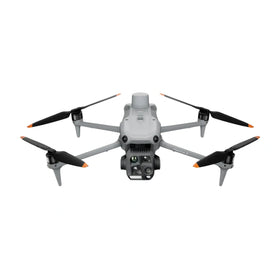
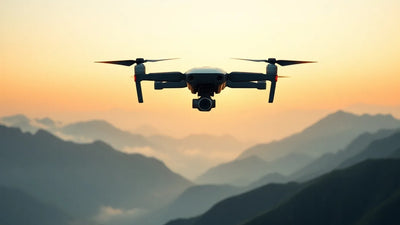
Aeronext, a Japanese aerospace startup backed by major logistics firms, unveiled the ActiveWing logistics drone prototype on June 4, 2026, signaling a transformative shift in long-range cargo delivery. The hybrid-electric aircraft, designed for beyond visual line of sight (BVLOS) operations, can carry payloads of up to 20 kilograms over distances exceeding 200 kilometres. This announcement arrives amid a global push toward autonomous middle-mile logistics, where regulators such as the FAA (Part 107 waivers) and EASA are slowly opening airspace for commercial BVLOS flights.
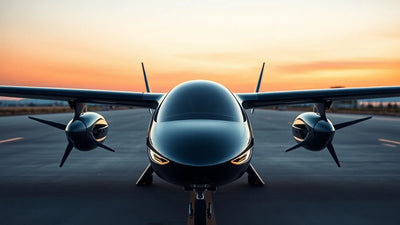
The ActiveWing leverages a unique tilt-wing mechanism that transitions from vertical takeoff and landing (VTOL) to fixed-wing forward flight. Unlike conventional quadcopter drones, this design dramatically reduces energy consumption during cruise phases, allowing extended range without sacrificing payload capacity. Aeronext claims a maximum endurance of 2.5 hours with a 15-kilogram payload, placing it in direct competition with established platforms like the DJI FlyCart 30 and Wingcopter 198.
Early test footage reveals a quiet, efficient rotor configuration and a lightweight composite airframe. The prototype integrates redundant flight controllers, dual GPS/GLONASS receivers, and an onboard sense-and-avoid system compliant with ASTM F3322-22 standards for BVLOS. These technical choices reflect Aeronext's strategy to meet certification requirements from the Japan Civil Aviation Bureau (JCAB) and eventually foreign regulators.
Enterprise procurement
Turn this market signal into a fleet requirement.
Discuss mission profile, quantities, configuration, delivery, and lifecycle support with Reboot Hub.
1. Design and Specifications: The Hybrid Advantage
The ActiveWing's tilt-wing architecture sets it apart from pure multirotor logistics drones. Its 3.5-meter wingspan and foldable rotor arms allow compact storage for ground transport. The hybrid powertrain—a combination of a small internal combustion generator and lithium-ion batteries—extends operational range beyond that of purely electric models. This is critical for rural and disaster-relief delivery where charging infrastructure is scarce.
Key specs include a maximum takeoff weight of 45 kilograms, a cruise speed of 80 km/h, and a service ceiling of 4,000 meters. The cargo bay is modular, accommodating custom containers for medical supplies, e-commerce parcels, or spare parts. Aeronext has partnered with Rakuten and Yamato Transport to conduct proof-of-concept deliveries in mountainous regions of Japan, demonstrating the drone's ability to handle wind gusts up to 15 m/s and light rain.
From a commercial perspective, the ActiveWing addresses a critical gap: the “middle mile” between regional distribution centers and local delivery hubs. Current drone solutions often fall short on range or payload, forcing operators to rely on ground vehicles for initial sortation. Aeronext claims the ActiveWing can cut total delivery time by 40% compared to truck-based routes for distances of 50–200 kilometres.
2. Regulatory Hurdles and BVLOS Certification
While the ActiveWing's technical capabilities are impressive, the path to widespread commercial deployment runs through regulatory agencies. In the United States, the FAA requires operators to obtain a Part 107 waiver for BVLOS flight, which typically demands rigorous safety cases including redundant links, detect-and-avoid systems, and real-time monitoring. Aeronext has indicated it will apply for an experimental airworthiness certificate from the JCAB by Q4 2026, with an eye on FAA type certification under the recently proposed MOSAIC framework.
The integration of an onboard sense-and-avoid system using 4D radar and optical cameras should ease the waiver process. However, operators must also navigate geofencing requirements, remote ID compliance (FAA Part 89), and airspace authorizations for beyond-line-of-sight operations. As of June 2026, only a handful of U.S. companies have secured BVLOS waivers for multi-rotor drones, and none for a tilt-wing hybrid of this size. This puts Aeronext's timeline in a careful balance between technology readiness and regulatory readiness.
Ready to Upgrade Your Fleet?
Browse our collection of inspected pre-owned DJI drones — inspected, flight-tested, and backed by a 6-month warranty. Save up to 40% versus retail.
3. What ActiveWing Means for Commercial Operators and the Second-Hand Market
The introduction of a serious long-range logistics drone like the ActiveWing has direct implications for everyday drone pilots and commercial operators. For small to medium-sized drone service providers (DSPs), the ActiveWing represents a potential upgrade path for routes that currently require ground vehicles or multiple battery swaps. However, the acquisition cost is expected to exceed $50,000—far higher than a DJI Matrice 350 RTK or even a used DJI FlyCart 30. This price point forces operators to calculate ROI carefully, factoring in payload capacity, flight frequency, and regulatory permit costs.
From a second-hand and refurbished drone market perspective, the ActiveWing’s launch could accelerate depreciation on older long-range platforms. As logistics contracts increasingly demand longer range and higher payload, used aircraft like the Wingcopter 178 or early-model DJI M300 series may lose value. Operators looking to sell or trade-in such equipment should act soon, as the used drone market is already seeing a glut of mid-range units. Reboot Hub’s inventory of pre-owned DJI drones offers a liquid alternative for DSPs who need proven reliability without the premium of new flagship models.
For individual pilots, the ActiveWing’s advanced autonomy reduces the need for constant stick-time, but also raises the bar for required certifications. BVLOS operations demand a Remote Pilot Certificate with instrument rating or equivalent training. This shift will likely increase demand for simulation-based training and maintenance courses, further professionalizing the industry.
4. Market Implications and Competitive Landscape
Aeronext enters a market dominated by DJI’s FlyCart 30, which also offers hybrid payload capability but with shorter range (about 30 km). Other contenders include Volansi (now folded), Zipline’s fixed-wing platform, and Wing (Alphabet). The ActiveWing’s tilt-wing design gives it a unique niche: VTOL convenience with fixed-wing efficiency. Analysts at Drone Industry Insights estimate the global logistics drone market will reach $29.6 billion by 2030, with long-range (over 100 km) applications growing at 22% CAGR.
One key competitive advantage is Aeronext’s partnership with major Japanese logistics firms for real-world testing. This operational data could accelerate certification and give the company first-mover advantage in Asia-Pacific markets. However, production scaling remains a challenge. The company plans to begin limited production in 2027, with initial deliveries to select enterprise clients.
For operators considering a switch from traditional multicopters, the ActiveWing requires a paradigm shift in mission planning: longer flights, higher altitudes, and reliance on air traffic management systems that are still in development. Ground control stations will need to support digital communications with U-space (Europe) or UTM (U.S.) services, adding another layer of complexity.
Frequently Asked Questions
How does the ActiveWing compare to existing logistics drones like the DJI FlyCart 30?
The ActiveWing offers significantly longer range—200 km versus under 30 km for the FlyCart 30—thanks to its hybrid tilt-wing design. However, the FlyCart 30 has a higher payload limit (30 kg) and is already certified in many jurisdictions. For operators needing short-range high-volume delivery, a used FlyCart 30 from the used drone market remains a cost-effective choice. The ActiveWing targets a different operational profile: middle-mile logistics with fewer flights but longer distances.
When can commercial operators expect to fly the ActiveWing under Part 107?
Realistic timelines suggest late 2028 for U.S. operations under a BVLOS waiver. The FAA's MOSAIC rulemaking, expected in 2027, may streamline certification for certain categories of drone, including tilt-wing hybrids. Until then, aeronext will likely operate under experimental certificates or in restricted airspace. Operators should monitor FAA Part 107 amendments and the JCAB rulemaking process closely.
Will the ActiveWing affect the resale value of older logistics drones?
Yes. As with any generational leap in capability, the second-hand market for mid-range logistics drones will experience downward price pressure. Owners of Wingcopter 178 or DJI M200 series should consider selling before the ActiveWing enters full production. Reboot Hub’s professional DJI repair services can help maintain existing fleets to maximize resale value.
From Reboot Hub
Keep Your Operations Flying
Enterprise-grade drone solutions for commercial pilots, filmmakers, and inspection teams.
Pre-owned Fleet
Fully inspected DJI drones with 6-month warranty. Save up to 40%.
Browse Inventory ->