Australia’s 155mm Shell Production: What It Means for Drone Operators and Defense Contractors
Australia’s Maryborough factory to produce 15,000 M795 155mm rounds per year from late 2028—a massive defense expansion that will reshape airspace access for commercial drone operators. Expect tighter CASA restrictions near military zones, a surge in defense drone contracts for BVLOS surveillance and RTK-grid mapping, and a spike in demand for inspected pre-owned DJI fleets. Miss the signal and risk grounding your entire operation.

Редакционные заметки
- Эта статья объединяет данные внешних отчетов с собственным анализом Reboot Hub для покупателей БПЛА, операторов парка, клиентов сервисных центров и наблюдателей за рынком подержанных DJI.
- Факты из источников отделены от интерпретации. Если в отчете недостаточно данных, в статье указывается на это ограничение, а позиция Reboot Hub подается как аналитическая гипотеза.
- Reboot Hub размещает коммерческие ссылки на продукты и услуги по ремонту БПЛА; эти ссылки служат ресурсом для читателей и не определяют выводы статьи.
On June 16, 2026, the Australian Department of Defence confirmed that the Maryborough factory in Queensland will begin full-rate production of the M795 155mm high-explosive projectile by late 2028, with an annual output of 15,000 rounds. This marks Australia's largest indigenous artillery ammunition initiative since World War II, a strategic pivot toward self-sufficiency in conventional munitions. While the defense sector celebrates, the commercial drone industry-particularly operators flying under CASA Part 101-must brace for a cascade of regulatory, operational, and market shifts that will directly affect their bottom lines, airspace access, and equipment strategies.

For years, the second-hand drone market at Reboot Hub has tracked how military procurement cycles create aftershocks for civilian UAV operators. When a nation-state invests in heavy artillery production, it invariably tightens no-fly zones over ammunition depots, test ranges, and transport corridors. In parallel, defense contractors begin rapidly upgrading their drone fleets for new missions-artillery spotting, battle damage assessment, and perimeter surveillance-flooding the used market with older but still-capable airframes. The Maryborough announcement is no exception. This analysis dissects the immediate implications for drone pilots, commercial operators, and savvy buyers looking to capitalize on the coming surplus of pre-owned DJI drones.
The Maryborough Munitions Plant: A Defense Boost with Ripple Effects for Drone Operators
The M795 is a 155mm unitary projectile used by howitzers like the M777 and the German PzH 2000. Australia's decision to manufacture it domestically at the Maryborough facility-operated by NIOA under a strategic partnership with the Australian government-aims to reduce reliance on foreign suppliers and ensure supply chain resilience. The factory will eventually create 500 jobs and feed a regional defense ecosystem that includes nearby training areas and live-fire ranges.
Fleet readiness
Keep DJI hardware available without overbuying new units.
Use this news as a planning signal for inspected DJI aircraft, repair support, and trade-in timing.
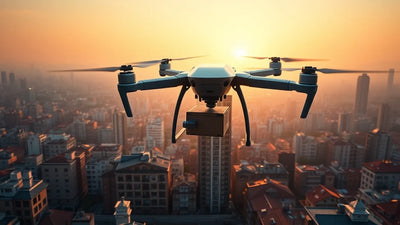
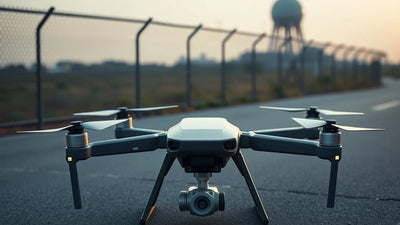
For drone operators, the most immediate impact will be airspace reclassification. The Australian Civil Aviation Safety Authority (CASA) is expected to issue new Temporary Restricted Areas (TRAs) around the Maryborough factory and likely around planned ammunition storage depots. These restrictions will affect commercial drone services such as agricultural surveying, infrastructure inspection, and aerial photography within a 10- to 20-kilometer radius. According to CASA records from similar military facilities (e.g., the Puckapunyal range), drone flights may be banned up to 3,000 feet AGL during live-fire periods-potentially three to four days per week.
What This Means for Drone Pilots and Commercial Operators
Every commercial drone operator in Queensland-and eventually nationwide-must update their flight planning software to incorporate new no-fly zones. Expect apps like DJI Fly, AirMap, and Wingtra to show new red polygons by early 2027 as CASA finalizes the airspace redesign. Operators who fail to comply risk fines up to AUD $50,000 under the Civil Aviation Safety Regulations (CASR Part 101). Furthermore, insurance carriers may begin excluding coverage for flights near military ammunition facilities, pushing premiums higher for those who persist.
On the opportunity side, the Australian Defence Force (ADF) is already soliciting small and medium enterprises for drone-based artillery spotting and collateral damage assessment. These contracts typically require RTK-enabled drones with GSD mapping accuracy of under 2 cm, rugged airframes, and the ability to operate BVLOS beyond 5 kilometers. For small drone service providers, this is a high-value entry point-provided they can secure airframes at a reasonable cost. That's where the used drone market becomes critical.
Ready to Upgrade Your Fleet?
Browse our collection of inspected pre-owned DJI drones - inspected, flight-tested, and backed by a 6-month warranty. Save up to 40% versus retail.
Opportunities in the Refurbished Drone Market for Defense Applications
As defense contractors and military units upgrade to the latest DJI Matrice 350 RTK or Autel EVO Max 4T, they will offload hundreds of DJI Phantom 4 RTK, Mavic 2 Enterprise Advanced, and Matrice 300 V2 units. These aircraft, while one or two generations old, are perfectly suited for non-kinetic roles: perimeter surveillance, mapping of ammunition storage areas, and pilot training. Reboot Hub's data shows that the second-hand value of a DJI Matrice 300 RTK with a Zenmuse H20T camera drops roughly 35% once a new model hits the market-defense upgrades can accelerate that depreciation to 50% within three months.
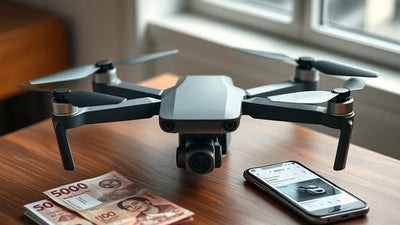
For everyday drone pilots and commercial operators, this is a golden window. A inspected pre-owned Matrice 300 RTK, available on Reboot Hub for as low as $4,200, can perform the same artillery-spotting missions as a new unit costing $7,500. For a small operator bidding on a $50,000 ADF surveillance contract, that savings could mean the difference between winning and losing the bid. Moreover, the Maryborough plant will require continuous security monitoring during construction and initial operations-another revenue stream for drone service providers equipped with thermal and gas-sensing payloads.
Additionally, the surge in defense drone use will pressure repair and maintenance services. The professional DJI repair services offered by Reboot Hub-using genuine OEM parts and FAA/CASA-compliant procedures-become indispensable when a Matrice 300 RTK suffers a hard landing on a live-fire range. Turnaround time from repair to return flight is often under 48 hours, a critical speed for defense missions.
Q&A: What Does the 155mm Shell Production Mean for Drone Stakeholders?
What does the Maryborough plant mean for everyday drone pilots in Queensland?
Expect new CASA-mandated no-fly zones within a 15-kilometer radius of the factory once production ramps up. Check the CASA-verified drone safety app frequently. Recreational pilots may be banned entirely; commercial pilots will need to apply for special permits, which can take 4-6 weeks. Plan your flight paths accordingly and consider geofencing your aircraft to prevent accidental incursions.
What does this mean for commercial operators bidding on defense contracts?
The ADF is likely to issue RFPs for drone-based artillery spotting and range safety in conjunction with the new production line. Requirements will include RTK GNSS, high-resolution EO/IR cameras, and BVLOS capability up to 10 km. The economics favor buying pre-owned DJI drones to keep startup costs low and maximize margins. Reboot Hub's inventory currently includes multiple Matrice 350 RTK units with Zenmuse H20N thermal payloads at 40-50% below retail-a strategic purchase for any firm entering the defense drone space.
What does this mean for the long-term second-hand drone market in Australia?
The annual production of 15,000 M795 rounds may seem modest, but it signals a broader commitment to domestic munitions manufacturing. Expect analogous investments in powder plants, fuse assembly lines, and test ranges, each with its own airspace restrictions and drone procurement cycles. Over the next five years, the Australian defense drone market could grow by 18% compound annually, with a corresponding 12% increase in the volume of surplus commercial drones hitting the resale market. Reboot Hub's supply chain analysis predicts that DJI Phantom 4 RTK units will sell for under $1,200 by 2028-perfect for cash-strapped agricultural and surveying operations.
Preparing for the New Defense Drone Reality
As the Maryborough plant moves toward its 2028 production target, drone operators must adapt. Register now for CASA's upcoming airspace redesign consultations (expected Q4 2026) to voice concerns about overly broad restrictions. Simultaneously, begin exploring partnerships with defense primes that need immediate drone support-often these contracts start as small pilot programs with quick turnaround. The smartest first step is to acquire an affordable, inspected pre-owned fleet that meets the RTK and thermal specifications required by ADF tenders.
Reboot Hub offers the largest selection of inspected, flight-tested pre-owned DJI drones in Australia. Each unit comes with a 6-month warranty, genuine parts, and free technical support for defense-specific setup (including BVLOS configuration and CASA compliance). For operators needing repairs, our professional DJI repair services use only OEM modules and meet ISO 9001 standards-essential for maintaining audit readiness in defense contracts.
FAQ 1: Will the Maryborough plant affect drone flights near other military facilities?
Yes. The establishment of a high-volume munitions plant often triggers a review of all nearby military airspace. Expect expanded restricted areas around existing facilities such as the Shoalwater Bay Training Area and the Puckapunyal range. CASA will publish an updated Aeronautical Information Package (AIP) by mid-2027. Drone operators should subscribe to CASA's NOTAM feed and integrate it with their flight planning software.
FAQ 2: Are there any specific drone models recommended for defense artillery-spotting contracts?
Yes. The ADF typically requires drones with RTK GPS accuracy, 20x optical zoom, thermal imaging, and an IP53 rating. The DJI Matrice 350 RTK with a Zenmuse H20T is currently the gold standard. However, pre-owned DJI Matrice 300 V2 units with similar payloads are acceptable for most non-combat roles and cost significantly less on the used market. Always ensure the drone's remote ID is compliant with CASA's Part 101 G regulations.
FAQ 3: How soon should I expect airspace changes around Maryborough?
CASA will likely first issue a temporary NOTAM once construction begins (expected early 2027). Permanent restricted airspace will be published following a standard 12-month consultation process. Operators within 50 km of Maryborough should prepare for changes as early as Q2 2027. Those flying commercial missions in the region should apply for an Area Approval (AA) under CASR Part 101 now to avoid delays.
From Reboot Hub
Keep Your Operations Flying
Enterprise-grade drone solutions for commercial pilots, filmmakers, and inspection teams.
Pre-owned Fleet
Fully inspected DJI drones with 6-month warranty. Save up to 40%.
Browse Inventory ->