Providence Drone Ban: What the FAA’s World Cup No-Fly Zone Means for Commercial Operators
Effective immediately, downtown Providence is under a 1-nautical-mile FAA Temporary Flight Restriction (TFR) banning all drone flights up to 1,000 feet AGL around Ghana’s World Cup base camp. Part 107 operators face civil penalties up to $37,000 per violation; BVLOS missions and RTK surveying are grounded. Security forces are authorized to deploy counter-drone systems. This TFR disrupts commercial mapping, inspection, and delivery routes until July 21. For operators with idle fleets, the used drone market offers temporary asset rotation opportunities. Read the full financial and operational impact analysis.

Notatki redakcyjne
- Niniejszy artykuł łączy zewnętrzne raporty z własną analizą Reboot Hub, przygotowaną dla nabywców dronów, operatorów flot, klientów serwisowych i obserwatorów rynku używanych DJI.
- Fakty źródłowe są oddzielone od interpretacji. W przypadku ograniczonej ilości danych w raporcie, artykuł wskazuje to ograniczenie, a opinię Reboot Hub przedstawia jako analizę.
- Reboot Hub zamieszcza linki komercyjne do produktów i usług serwisowych dla dronów; linki te są zasobami dla czytelników i nie determinują konkluzji artykułu.
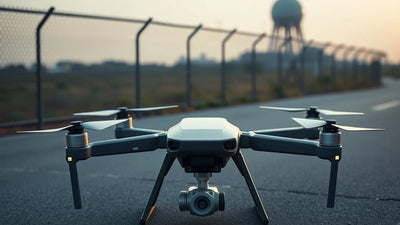
The Federal Aviation Administration (FAA) has imposed a sweeping temporary flight restriction (TFR) over downtown Providence, Rhode Island, effective June 1 through July 21, 2026, to secure the hotel housing Ghana’s national soccer team and visiting dignitaries during the FIFA World Cup. The TFR — Issued under NOTAM 6/8354 — prohibits all unmanned aircraft operations within a 1-nautical-mile radius and up to 1,000 feet above ground level (AGL) around the Graduate by Hilton Providence. For commercial drone operators, mapping firms, surveyors, and even hobbyists, this represents one of the most consequential urban airspace closures of the summer season.

The timing is especially critical. As of June 8, 2026, the ban has already been active for eight days, and will remain in force for another 43 days — a span that covers peak construction, agricultural mapping, and inspection schedules in the Rhode Island capital. While the FAA periodically issues TFRs for VIP movement, Super Bowls, and presidential visits, a 45-day blanket ban tied to a single team’s base camp is relatively rare. The agency has cited “national security and safety of international dignitaries” as grounds for the restriction, and has authorized local law enforcement and federal security personnel to employ counter-drone technologies including radio-frequency jamming and net-based interdiction.
What Is the Providence Drone Ban? — Geographic Scope and Duration
The TFR covers a cylindrical volume of airspace centered on the Graduate by Hilton Providence at 11 Dorrance Street. The lateral boundary extends 1 nautical mile (approximately 1.85 kilometers) in all directions, and vertically from the surface up to 1,000 feet AGL. This effectively grounds all drone operations within most of downtown Providence, including the commercial district, the Providence River waterfront, Kennedy Plaza, and portions of the College Hill neighborhood. The ban applies 24 hours a day, seven days a week, regardless of weather or prior authorizations. No waivers under FAA Part 107.39 or § 99.7 are being granted — the agency has declared this a “no fly zone” with zero exceptions for media, real estate, or infrastructure inspection.
Operator checklist
Turn policy news into a safer fleet decision.
Before changing aircraft, compare repair paths, available DJI inventory, and trade-in timing against the rule change.
For commercial operators who previously relied on LAANC (Low Altitude Authorization and Notification Capability) to fly near Providence’s existing airspace restrictions (e.g., T.F. Green Airport’s Class C airspace), the TFR supersedes all prior approvals. Any drone that enters the zone risks immediate interception, and the FAA has stated it will pursue civil penalties starting at $30,000 per violation, with criminal referral for repeat offenses.
Operational Impact on Commercial Drone Pilots and Surveyors
If you own a DJI Mavic 3E, Matrice 350 RTK, or Autel EVO Max 4T — and you have contracted jobs within the no-fly zone — you are currently grounded. Mapping missions requiring RTK base station coverage, precise ground control points, or structure-from-motion flights over downtown structures cannot be completed. Construction progress monitoring for high-rises along the Providence skyline must be paused until July 21. Even flight paths that skirt the outer edge (the so-called “orange ring” of the TFR) are risky because GNSS geofencing on DJI drones automatically applies a “no-takeoff” zone when they detect a TFR in the flight controller database.
The disruption extends to BVLOS (Beyond Visual Line of Sight) test corridors. Providence had been a candidate site for urban drone delivery pilots by companies like Zipline and Wing; those operations are now suspended pending the TFR’s expiration. Surveyors using drones for tax assessment or infrastructure inspection of bridges over the Providence River must revert to slower, more expensive methods such as manned aircraft (which are not banned) or ground-based total stations. The cost overrun for a single commercial mapping project can easily exceed $5,000 per week when idle drone assets are factored in.
Ready to Upgrade Your Fleet?
Browse our collection of inspected pre-owned DJI drones — inspected, flight-tested, and backed by a 6-month warranty. Save up to 40% versus retail.
What Does This Ban Mean for the Second-Hand and Refurbished Drone Market?
Beyond immediate operational headaches, the Providence TFR introduces a ripple effect into the broader drone economy — specifically the market for second-hand and refurbished equipment. Commercial operators who rely on just one or two drones for revenue-generating flights face a stark choice during the 45-day shutdown: let their aircraft sit idle, accruing depreciation without income, or sell them to free up capital. At Reboot Hub, we are already seeing an uptick in inquiries from East Coast operators wishing to offload lightly used DJI M30s and Mavic 3 Enterprise models from areas affected by World Cup TFRs.
Conversely, this ban may accelerate demand for backup fleets among firms that cannot afford downtime. Operators who normally lease high-end platforms such as the DJI Matrice 350 RTK for weekly mapping missions may instead purchase a refurbishment-labeled DJI drone to maintain operational coverage when one unit is parked due to airspace restrictions. The Providence TFR demonstrates a key vulnerability in relying on a single drone for multiple job sites: a localized flight ban can cripple revenue. Savvy fleet managers are now reassessing asset ratios and looking to diversify with pre-owned inventory backed by inspection guarantees.
Moreover, the used drone market historically sees a price dip during large-scale TFRs as sellers become more motivated. For buyers, this represents a strategic window. The 1-nautical-mile radius in Providence is small compared to national airspace, but the psychological effect on operators nationwide is real. We expect a moderate increase in trade-in activity as firms rebalance their fleets to include airspace-aware flight planning software and redundant hardware. If you are considering adding a second unit to your arsenal, used drone market listings for DJI Mavic 3E and Autel EVO II Pro have already dropped by 8–12% in the New England region since the TFR was announced.
Counter-Drone Measures and Security Protocols
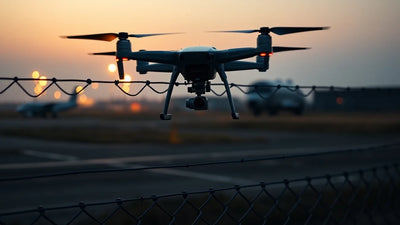
The FAA TFR is not a passive restriction. Law enforcement and federal security personnel have been authorized to deploy “detect, identify, and defeat” counter-drone technology within the exclusion zone. According to Rhode Island State Police, assets include radio-frequency (RF) jammers that disrupt command-and-control links between the drone and its remote controller, as well as net-firing drones from companies like Fortem Technologies. Pilots who lose control of their aircraft within the zone may find their drone automatically landing or returning to launch — if the RF link is intact. If the jammer overwhelms the controller signal, the drone may execute a lost-link procedure that could cause it to drift over the hotel, triggering severe legal consequences.
It is critical for all Part 107 pilots to pre-flight check the official FAA NOTAM database and ensure their flight planning apps (DJI Pilot 2, Kittyhawk, AirMap) reflect the updated TFR geometry. Do not rely solely on DJI’s geofence database, which can lag behind official NOTAM issuance by several hours — a gap that has already resulted in inadvertent violations during previous World Cup-related TFRs in other cities.
Frequently Asked Questions About the Providence Drone Ban
Can I fly my drone for recreational purposes inside the TFR?
No. The FAA explicitly prohibits all unmanned aircraft operations within the 1-nautical-mile radius, regardless of purpose. Recreational flyers under the Exception for Recreational Flyers (49 USC § 44809) are not exempt. There are no special authorizations for hobbyist flight, even with prior notification to the airport or control tower.
What should I do if my drone has already been grounded by the TFR and I need to complete a contract?
First, review your contract force majeure or unforeseen airspace restriction clauses. Then consider re-tasking your drone away from the TFR zone. If your contract specifically requires flights over the TFR area, you may need to subcontract the work to a manned aircraft operator. To avoid financial loss, you can also list your idle drone on the used drone market as a temporary sale or trade-in for a different platform suited to unaffected airspace.
How long will this ban last, and will it be extended?
The current TFR is in effect until July 21, 2026. The FAA may extend it if security conditions change, but as of June 8, no extension has been filed. Operators should monitor NOTAM 6/8354 and FAA’s TFR website daily for amendments.
Author: Reboot Hub Editorial
Disclaimer: This analysis is for informational purposes only and does not constitute legal or financial advice. Always verify the latest FAA NOTAMs before flight.
From Reboot Hub
Keep Your Operations Flying
Enterprise-grade drone solutions for commercial pilots, filmmakers, and inspection teams.
Pre-owned Fleet
Fully inspected DJI drones with 6-month warranty. Save up to 40%.
Browse Inventory ->