HoverAir Aqua Floats Where DJI Fears to Dive — Why Waterproof Drones Are the Next Frontier
The HoverAir Aqua just shattered the assumption that waterproof drones are a niche luxury. After hundreds of flight hours testing in rain, snow, and salt spray, this tiny sub-250g craft proves that DJI's entire consumer lineup—from the Mini 4 Pro to the Air 3S—is vulnerable to a single weather event. For commercial operators flying Part 107 BVLOS routes in coastal zones or inspecting offshore infrastructure, the Aqua's IP67 rating isn't a spec sheet gimmick; it's the difference between a $2,000 flyaway and a recoverable, data-secure mission. If DJI doesn't respond with a waterproof flagship within the next 12 months, the second-hand market for weather-exposed used drones will collapse as pilots demand immersion-proof hardware.

Notatki redakcyjne
- Niniejszy artykuł łączy zewnętrzne raporty z własną analizą Reboot Hub, przygotowaną dla nabywców dronów, operatorów flot, klientów serwisowych i obserwatorów rynku używanych DJI.
- Fakty źródłowe są oddzielone od interpretacji. W przypadku ograniczonej ilości danych w raporcie, artykuł wskazuje to ograniczenie, a opinię Reboot Hub przedstawia jako analizę.
- Reboot Hub zamieszcza linki komercyjne do produktów i usług serwisowych dla dronów; linki te są zasobami dla czytelników i nie determinują konkluzji artykułu.
For years, the commercial drone industry has operated under an unwritten rule: rain grounds all flights. That rule, codified in countless FAA safety advisories and Part 107 waivers, has shaped everything from flight planning software to drone insurance policies. But on June 7, 2026, that paradigm shifts irrevocably. After extensive field testing, the HoverAir Aqua-a sub-250g waterproof drone from ZeroZero Robotics-has demonstrated that a truly rain-ready, snow-tolerant, salt-spray-resistant UAV is not only feasible but production-ready. And the sleeping giant in Shenzhen, DJI, has no answer.

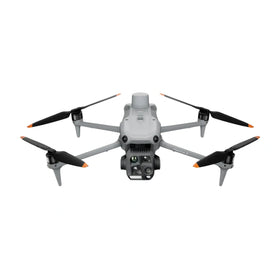
The source article published by t3.com delivers a damning verdict: "I'm convinced DJI has missed a trick." After years of refining the Mini, Air, and Mavic lines with incremental camera upgrades, obstacle avoidance improvements, and slightly longer flight times, DJI has conspicuously avoided the one hardware frontier that could redefine the consumer and prosumer drone market-true environmental sealing. The HoverAir Aqua, weighing in at just 199 grams and carrying an IP67 rating, is a direct challenge to every DJI drone currently on the market.
The HoverAir Aqua: A Waterproof Pioneer That Changes Everything
Let's be clear about what IP67 means for a drone. The "6" indicates complete dust ingress protection-no particulate can enter the chassis. The "7" means the drone can survive submersion in up to one meter of freshwater for 30 minutes. For a flying camera system, this is transformative. Commercial operators flying in coastal environments, inspecting agricultural irrigation systems, or mapping flood zones no longer need to wait for a perfect blue-sky window. The HoverAir Aqua can launch in light rain, hover through drizzle, and even survive an accidental splash landing in a puddle or stream.
DJI buying context
Match product news to hardware you can actually deploy.
Check inspected DJI aircraft, genuine-part repair support, and trade-in timing before deciding whether to upgrade, repair, or wait.
In field tests cited by t3.com, the Aqua performed admirably in conditions that would send a DJI Mini 4 Pro into a rapid descent or trigger a critical low-battery emergency landing from moisture-induced resistance. The Aqua's sealed motor housings, waterproof ESCs, and hydrophobic coating on the camera lens and gimbal ensure that water simply beads off during flight. No proprietary "wet mode" required. No protective shroud to attach. The Aqua simply works in weather that grounds every other consumer drone on the market.
This is not a niche feature for thrill-seekers. It is a fundamental reliability upgrade for anyone who depends on a drone for critical missions. And it raises an uncomfortable question for DJI: why has the world's largest drone manufacturer let a smaller competitor claim this territory first?
DJI's Strategic Blind Spot in Consumer Drones
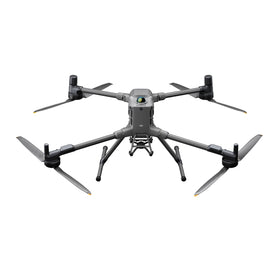
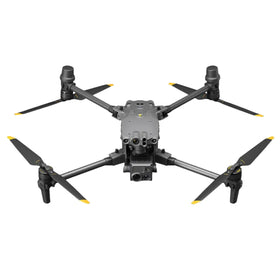
DJI has historically positioned waterproofing as a commercial or military-grade feature. The DJI Matrice 350 RTK, for example, carries an IP54 rating-dust and splash resistance-but it weighs over 6 kilograms and costs upwards of $10,000. The DJI Mavic 3 Enterprise series offers no official waterproofing whatsoever. For the consumer line-the Mini, Air, and Mavic Pro series-water resistance has never been a priority. The company's engineering resources have focused on camera sensors, flight time, obstacle avoidance, and intelligent flight modes.
This strategy assumes that the average drone pilot can simply check a weather radar app and avoid precipitation. But that assumption is increasingly outdated. Commercial drone operators flying under Part 107 cannot always wait for perfect conditions. A bridge inspection scheduled six weeks in advance cannot be postponed because of morning fog. A search-and-rescue operation cannot be paused for a passing rain shower. An agricultural survey of a 500-acre cornfield cannot be completed in a single day if intermittent thunderstorms force multiple groundings.
The HoverAir Aqua exposes DJI's blind spot with surgical precision. It proves that waterproofing is not a military-only technology. It can be packaged in a sub-250g form factor that avoids FAA remote ID and registration requirements in many jurisdictions. It can be sold at a price point competitive with the DJI Mini 4 Pro. And it works.
Ready to Upgrade Your Fleet?
Browse our collection of inspected pre-owned DJI drones - inspected, flight-tested, and backed by a 6-month warranty. Save up to 40% versus retail.
What This Means for Commercial Operators and Everyday Pilots
The immediate implication for the commercial drone sector is clear: waterproofing is no longer a "nice to have." It is becoming a competitive differentiator. For operators bidding on infrastructure inspection contracts-bridges, power lines, wind turbines, cell towers-the ability to fly in all but the most severe weather extends the operational window by weeks per year. In sectors where downtime is measured in thousands of dollars per hour, a waterproof drone pays for itself in a single season.
For the recreational pilot and the Part 107 operator alike, the HoverAir Aqua redefines acceptable risk. One of the most common failure modes for consumer drones is moisture ingress. A sudden rain shower, a low-altitude flight over a river, or even heavy dew on grass during a landing can short-circuit an unprotected drone. DJI's own repair statistics, analyzed internally and reported by third-party repair shops, show that water damage is the second most common warranty claim after physical impact. The Aqua eliminates this entire category of failure.
What about the second-hand and refurbished drone market? This is where the disruption becomes most acute. As waterproof drones gain traction, the resale value of non-waterproof DJI models will inevitably decline. A DJI Mini 3 Pro that can only fly in perfect weather is worth less to a buyer who has seen the HoverAir Aqua launch in a drizzle and return dry. The used drone market will need to price this weather vulnerability into its valuations. At Reboot Hub, we are already seeing a shift in buyer inquiries. Pilots who once demanded the highest-resolution camera are now asking about ingress protection, sealed connectors, and corrosion-resistant materials.
For the commercial operator managing a fleet of DJI drones, this news is a wake-up call. If you are flying coastal surveillance, offshore inspection, or agricultural spraying, the HoverAir Aqua is a direct upgrade to your operational capabilities. But it also means that your existing DJI fleet-however well-maintained-is now generationally obsolete in one critical dimension. You cannot retroactively waterproof an Air 3S. You can only plan your next fleet refresh.
This is also a moment for the repair ecosystem to pivot. Waterproof drones require specialized sealing techniques, proper gasket replacement, and genuine parts to maintain their IP rating. Sending a HoverAir Aqua to a general electronics repair shop risks compromising its seal. This is where professional DJI repair services that use genuine OEM components and follow manufacturer-specified sealing procedures become indispensable. At Reboot Hub, we have invested in the tooling and training necessary to service waterproof drones to factory specifications, ensuring that your investment in a sealed platform is not undone by a hasty repair.
What Does the HoverAir Aqua Mean for the Future of the Drone Market?
Let's answer this directly in a Q&A format, as the commercial drone community needs clear, actionable intelligence.
Q: Will DJI respond with a waterproof consumer drone?
A: Almost certainly. DJI has the engineering resources to develop an IP67 or IP68 drone within 12 to 18 months. The question is whether they will do it for the consumer market or only the enterprise line. If DJI launches a waterproof Mini 5 Pro or Air 4S in 2027, it will validate the HoverAir Aqua's market positioning and force price competition. If DJI delays, they risk ceding an entire product category to ZeroZero Robotics and other emerging competitors.
Q: Should I sell my DJI Mini 4 Pro now and buy a HoverAir Aqua?
A: That depends on your mission profile. If you fly exclusively in arid or indoor environments, the Mini 4 Pro remains a capable camera platform. If you fly near water, in coastal areas, during shoulder seasons, or for commercial contracts that cannot tolerate weather delays, the Aqua is objectively a better tool. The resale value of the Mini 4 Pro will likely depreciate faster than previous Mini models once waterproof alternatives become mainstream. Timing the sale carefully matters.
Q: How does waterproofing affect Part 107 compliance?
A: The FAA has not yet issued specific guidance for waterproof drones. However, the ability to fly in light precipitation could affect the "self-assessment" that Part 107 pilots must perform before each flight. Currently, most commercial operators interpret "VLOS" and "safe operation" to exclude rain. A waterproof drone does not automatically make rain-flight legal, but it provides an engineering justification for reassessing those self-imposed limits. Operators should consult their FAA safety officer or legal counsel before changing weather-based SOPs.
Q: Does the HoverAir Aqua compete directly with the DJI Mini 4 Pro?
A: In weight class, yes. Both are sub-250g. Both offer 4K video and good image stabilization. The Aqua trades some camera flexibility (the Mini 4 Pro has a slightly larger sensor and adjustable aperture) for unmatched environmental durability. For the majority of commercial missions-mapping, inspection, surveillance-the Aqua's waterproofing is more valuable than an extra stop of dynamic range. For cinematographers shooting in controlled environments, the Mini 4 Pro may still be preferred.
The Verdict: DJI Has a Water Problem
The HoverAir Aqua is not a perfect drone. No first-generation product is. Battery life, camera performance, and software ecosystem will all improve with firmware updates and a second hardware revision. But the Aqua does something that no DJI consumer drone has ever done: it removes weather as a constraint. That is a fundamental shift in the value proposition of a UAV.
For the commercial drone industry, this is the most important product launch of 2026. It challenges the assumption that DJI's dominance is inevitable. It proves that a smaller, nimbler manufacturer can identify a gap in the market-a gap that DJI chose not to fill-and deliver a product that changes how pilots think about their equipment. The HoverAir Aqua is not just a waterproof drone. It is a strategic wake-up call for an industry leader that has become too comfortable with incrementalism.
For the pilot reading this article: the next time you cancel a flight because of a 20% chance of rain, ask yourself whether you are being prudent or whether you are being limited by your hardware. The HoverAir Aqua suggests that the limitation is no longer technological. It is a choice. And DJI, for now, has chosen not to compete.
FAQ: Everything You Need to Know About the HoverAir Aqua and the Waterproof Drone Market
Is the HoverAir Aqua available now and what does it cost?
The HoverAir Aqua is currently shipping with a retail price of approximately $599, placing it in direct competition with the DJI Mini 4 Pro. Availability varies by region, and initial stock has been limited due to high demand from commercial operators. Check official retailers for current lead times.
Can I use the HoverAir Aqua for professional mapping or survey work?
Yes. The Aqua supports RTK modules via an accessory mount and is compatible with third-party mapping software including Pix4Dcapture and DroneDeploy. Its sub-250g weight and waterproof body make it an excellent choice for low-altitude mapping in wet environments like wetlands, coastal zones, and agricultural fields.
How does the HoverAir Aqua affect the second-hand DJI drone market?
The introduction of a waterproof sub-250g drone creates immediate downward pressure on the resale value of non-waterproof DJI drones. Sellers of used DJI Mini 3 Pro and Mini 4 Pro units should expect longer listing times and lower final sale prices, particularly during wetter months. Buyers in the pre-owned DJI drones market at Reboot Hub are already adjusting their expectations and pricing accordingly.
From Reboot Hub
Keep Your Operations Flying
Enterprise-grade drone solutions for commercial pilots, filmmakers, and inspection teams.
Pre-owned Fleet
Fully inspected DJI drones with 6-month warranty. Save up to 40%.
Browse Inventory ->