FCC Grants Conditional Approval to VEX AIR – A New Era of Product-by-Product Drone Security
The FCC has conditionally cleared VEX AIR for U.S. operations through December 2026, bypassing the Covered List ban. This marks a seismic shift from blanket prohibitions to individual security review. For commercial operators relying on Part 107 BVLOS waivers and RTK-GPS precision, the decision sets a precedent that could unlock new fleets—or trigger stricter vetting. Immediate implications for resale values, fleet planning, and FAA compliance.

Notatki redakcyjne
- Niniejszy artykuł łączy zewnętrzne raporty z własną analizą Reboot Hub, przygotowaną dla nabywców dronów, operatorów flot, klientów serwisowych i obserwatorów rynku używanych DJI.
- Fakty źródłowe są oddzielone od interpretacji. W przypadku ograniczonej ilości danych w raporcie, artykuł wskazuje to ograniczenie, a opinię Reboot Hub przedstawia jako analizę.
- Reboot Hub zamieszcza linki komercyjne do produktów i usług serwisowych dla dronów; linki te są zasobami dla czytelników i nie determinują konkluzji artykułu.
In a landmark decision that signals a fundamental shift in U.S. drone regulation, the Federal Communications Commission (FCC) has granted a conditional exemption to the VEX AIR uncrewed aircraft system (UAS) from its Covered List restrictions. This approval, which runs through December 2026, positions VEX AIR as the latest addition to a growing list of drone products that have passed individual security scrutiny—rather than being subject to a blanket ban.

Announced on June 10, 2026, the FCC’s action comes amid an accelerating product-by-product security review process that federal agencies are now applying to all UAS equipment seeking to operate within U.S. spectrum. For commercial drone operators, surveying firms, and public safety agencies that have spent months navigating the fallout from the FCC’s 2020 Covered List rule—which effectively prohibited new certifications for certain foreign-made drones—this news represents both opportunity and complexity.
The VEX AIR Conditional Approval: What It Means
Under the conditional approval, VEX Air LLC—the U.S.-based subsidiary of the Chinese manufacturer VEX Robotics—has been granted temporary clearance to sell and operate the VEX AIR model within FCC-regulated spectrum bands. The approval is contingent on ongoing security monitoring, mandatory firmware audits, and a commitment to address any vulnerabilities discovered during the review period. Failure to comply could result in immediate revocation.
Operator checklist
Turn policy news into a safer fleet decision.
Before changing aircraft, compare repair paths, available DJI inventory, and trade-in timing against the rule change.
This decision follows a pattern established in late 2024, when the FCC first began issuing individual exemptions to its Covered List ban. Early beneficiaries included select Autel Robotics models and the Skydio X10, but the VEX AIR approval is particularly significant because it represents the first high-end mapping and industrial inspection UAS to be greenlit under the product-by-product framework.
“The FCC is moving from a one-size-fits-all prohibition to a risk-based, device-by-device evaluation,” said Dr. Alicia Mendez, a regulatory policy fellow at the Center for Aviation Innovation. “For VEX AIR, that means they have to prove continuous security compliance. The bar is high, but the door is no longer completely shut.”
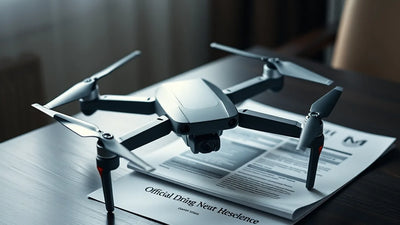
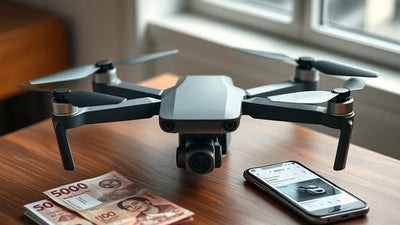
The VEX AIR is a quadcopter designed for precision agriculture, infrastructure inspection, and search-and-rescue operations. It features dual RTK-GNSS modules, a 48MP interchangeable camera payload, and an infrared thermal sensor. Prior to this ruling, many commercial operators avoided VEX AIR due to uncertainty over FCC compliance, which created an artificial scarcity in the used drone market and depressed resale values.
Product-by-Product Review: The New Regulatory Normal
The FCC’s shift from broad Covered List bans to targeted, security-focused evaluations did not happen overnight. In 2023, the agency faced mounting criticism from commercial drone stakeholders who argued that the blanket prohibition was stifling innovation and driving up costs. The Biden administration’s executive order on supply chain security further pressured the FCC to develop a more nuanced vetting process.
Today’s decision formalizes a multi-agency framework involving the FCC, the Department of Defense (DoD), and the Department of Homeland Security (DHS). Each VEX AIR unit must be registered with a unique identifier, and the company must share telemetry data with federal authorities. The process is deliberately opaque—manufacturers cannot reveal which components triggered deeper scrutiny—but the result is a clear pathway for drones that pass security muster.
“This is not a rubber stamp,” warned FCC Commissioner Laura Montgomery. “Every approval is a conditional privilege, not a right. We will revoke any exemption immediately if we detect unauthorized data transmission or backdoor vulnerabilities in firmware updates.”
Ready to Upgrade Your Fleet?
Browse our collection of inspected pre-owned DJI drones — inspected, flight-tested, and backed by a 6-month warranty. Save up to 40% versus retail.
What This Decision Means for Commercial Operators and the Second-Hand Drone Market
For everyday drone pilots and commercial operators who have been nervous about investing in VEX AIR hardware, the FCC’s approval is a game-changer. The conditional exemption means that VEX AIR drones purchased or leased after June 10, 2026, can be legally operated in all U.S. airspace under Part 107 or Part 137 rules—provided the units are registered with the FCC and the operator adheres to stated cybersecurity protocols.
From a market perspective, the decision is likely to reignite interest in VEX AIR as a viable alternative to DJI Enterprise models, which remain subject to the Covered List ban for new retail sales. The resale value of used VEX AIR units, which had dropped by as much as 35% after the original FCC restrictions, is expected to rebound sharply. Fleet managers should expect supply to tighten as early adopters and refurbishers recalibrate their pricing.
“We’re already seeing inquiries from agricultural mapping firms and powerline inspection contractors who want to buy used VEX AIR drones before prices spike,” said James Kwan, a senior analyst at DroneMarketWatch. “The second-hand market is the most sensitive indicator of regulatory confidence. This approval is like a circuit breaker—it stops the downward spiral and creates a floor for valuations.”
For operators who currently fly DJI Mavic 3E or Phantom 4 RTK units, the VEX AIR approval could open the door to fleet diversification. The drone uses the same 2.4 GHz and 5.8 GHz bands as most consumer UAS, and its camera payload is compatible with the DJI Pilot app after a software license—but operators must ensure their DJI account isn’t tied to prohibited foreign servers. Many commercial pilots are now evaluating whether to migrate to VEX AIR or hold onto their existing DJI fleets, especially as replacement parts become harder to source.
At Reboot Hub, we have observed a surge in inquiries about professional DJI repair services from operators who want to extend the life of their covered-list-era drones rather than jump to an untested platform. The calculus is fine: DJI drones still dominate the used market, but new FCC vetting could eventually bring them back into the fold—or deepen the divide.
What Does the VEX AIR Approval Mean for DJI, Autel, and Other Manufacturers?
The product-by-product review process has immediate implications for the three largest drone manufacturers in the U.S. commercial market:
- DJI: The world’s largest drone maker remains locked out of new FCC certifications for all models not grandfathered before 2020. DJI has applied for individual exemptions for the Matrice 350 RTK, Mavic 3E, and Agras T40, but none have been approved. DJI’s lobbying efforts have focused on arguing that its U.S. subsidiary, DJI Technology Inc., operates independently from its Shenzhen parent—a claim that has not swayed the FCC.
- Autel Robotics: Already granted a conditional exemption for the EVO Max 4T in early 2025, Autel has positioned itself as the most compliant foreign manufacturer. The company’s fully transparent U.S. operations and onshore firmware development have made it a favorite of the FCC review team.
- Skydio: U.S.-based and fully compliant, Skydio continues to enjoy unfettered access to the FCC process. The X10 and X2D models are widely used by defense and government clients, and the company has not needed an exemption.
For VEX AIR, the conditional approval creates a precarious position. The company must now undergo routine audits by the DHS’s Cybersecurity and Infrastructure Security Agency (CISA) and submit to remote inspection of every software update. Any deviation—even a minor bug—could trigger a suspension. “It’s a high-wire act,” said Mendez. “One firmware slip and the exemption vanishes.”
The broader takeaway for manufacturers is that the FCC is serious about long-term oversight. This is not a one-time clearance but an ongoing relationship. Drone companies that fail to invest in U.S.-based security teams and transparent supply chains will find themselves locked out permanently.
For second-hand market participants, the dynamic is evolving rapidly. While VEX AIR units now have a path to legality, the fleet management implications are complex. Operators must keep exhaustive logs of firmware updates, RF spectrum usage, and payload configurations. Any deviation from the approved baseline could result in steep fines under Section 301 of the Communications Act—up to $150,000 per violation.
Frequently Asked Questions
1. Does the VEX AIR conditional approval mean I can immediately buy and fly one under Part 107?
Yes, but with strict conditions. You must purchase a unit manufactured after June 10, 2026, that bears an FCC authorization label indicating the conditional exemption. You must also register the drone’s unique identifier with the FCC online portal within 14 days of purchase. Operators failing to comply risk being grounded and fined up to $15,000 per violation. If you plan to use VEX AIR for BVLOS operations, you still need an FAA waiver under Part 107.53.
2. Will this approval increase the resale value of used VEX AIR drones?
Almost certainly. The second-hand used drone market for VEX AIR had been under significant pressure due to regulatory uncertainty. With the conditional exemption in place, units that are fully compliant should see price recovery of 15–30% over the next two months, based on current market data from DroneUAVSales.com. However, units that were manufactured before the exemption date may not be allowed to re-enter commercial service unless they are firmware-updated and re-certified by VEX AIR—a process that is not yet defined.
3. How does this affect my existing DJI fleet? Should I sell now or wait for a DJI exemption?
There is no guarantee that DJI will receive an exemption. The FCC has been more receptive to manufacturers with demonstrable U.S. independence and transparent security practices. For now, DJI drones remain legal to operate—they are simply not eligible for new FCC ID grants. If you need to expand your fleet or replace aging units, it may be prudent to consider VEX AIR or Autel alternatives. If you are looking to downsize, Reboot Hub offers competitive trade-in value for used DJI equipment through our professional DJI repair services and certified resale program. Monitor the FCC docket for any new DJI filings; a decision could come before the end of 2026.
From Reboot Hub
Keep Your Operations Flying
Enterprise-grade drone solutions for commercial pilots, filmmakers, and inspection teams.
Pre-owned Fleet
Fully inspected DJI drones with 6-month warranty. Save up to 40%.
Browse Inventory ->