Sunk Costs: How the Navy’s $1.5B Nuclear Cruiser Disposal Is a Warning for Every Drone Fleet Owner
The U.S. Navy is finally paying the price for decommissioning USS Long Beach — a nuclear-powered cruiser whose dismantling costs 10X more than conventional ships. For commercial drone operators, that same exponential cost curve lurks beneath FAA Part 107 battery disposal rules, RTK battery recycling mandates, and the exploding used drone market. Miss the regulatory wave and face six-figure EPA fines. Reboot Hub decodes the hidden liability in every used drone.

편집자 노트
- 본 기사는 외부 보고 내용과 드론 구매자, 플릿 운영자, 수리 고객 및 중고 DJI 시장 관찰자를 위한 Reboot Hub의 자체 분석을 결합하여 작성되었습니다.
- 소스 팩트는 해석과 분리됩니다. 보고서의 데이터가 제한적인 경우, 기사 내에 해당 제한 사항을 명시하고 Reboot Hub의 견해를 분석으로 정의합니다.
- Reboot Hub는 드론 제품 및 수리 서비스와 상업적 링크로 연결되어 있습니다. 해당 링크는 독자 리소스이며 기사의 결론을 결정짓지 않습니다.
The U.S. Navy has finally begun the agonizing process of disposing of USS Long Beach, the world’s first nuclear-powered cruiser. The decision, announced this week after decades of mothballing, is not a simple scrapping job. Tearing apart a nuclear warship costs ten times more than a conventional one — a multi-billion-dollar ordeal of radiological surveying, hot-cell segmentation, and waste burial. For the Navy, it’s a painful lesson in end-of-life planning. For commercial drone operators, it’s a harbinger of a parallel crisis that is silently reshaping the second-hand drone market.

At Reboot Hub, we track the intersection of defense logistics, regulatory change, and drone hardware depreciation. What the Navy is experiencing with the Long Beach is a magnified version of what every commercial UAV fleet manager will face within the next two years: the hidden cost of responsibly retiring complex, power-dense systems. The crucible of nuclear decommissioning — with its layers of environmental compliance, rare material handling, and specialized labor — is now descending upon the drone industry in the form of lithium-ion battery disposal mandates and end-of-life component recycling rules. Operators who ignore this parallel will find themselves facing not just logistical headaches, but potentially severe EPA and FAA penalties.
1. The Nuclear Reality Check: Why Decommissioning Costs Explode
USS Long Beach (CGN-9) was commissioned in 1961, the first surface combatant powered by nuclear reactors. After 34 years of service, she was decommissioned in 1995 and has sat in the Navy’s inactive fleet for three decades. The reason for the delay isn’t bureaucracy alone — it’s the sheer, brutal physics of radiological deconstruction. Every pipe, every pump, every piece of metal that has been exposed to neutron activation must be treated as hazardous waste. The Navy’s program to dispose of nuclear carriers and cruisers has already spent over $1.5 billion, and the Long Beach will add hundreds of millions more.
Fleet readiness
Keep DJI hardware available without overbuying new units.
Use this news as a planning signal for inspected DJI aircraft, repair support, and trade-in timing.
According to the Naval Nuclear Propulsion Program, the process involves essentially slicing the vessel into massive “coffins” — sealed containers that will be transported to the Hanford Site or other deep geological repositories. The cost per ton of nuclear waste is roughly 200 times that of conventional scrap steel. This is not a one-off anomaly; it’s a structural reality for any system that uses high-density energy storage.
2. The Drone Battery Time Bomb: EPA & FAA Tighten the Vise
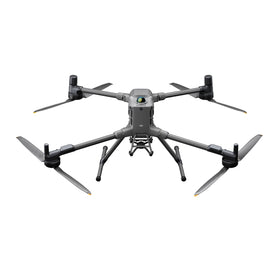
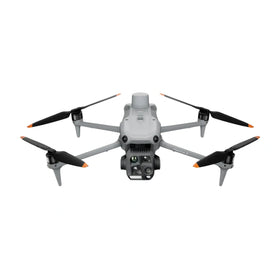
What does a nuclear-powered cruiser have to do with a DJI Matrice 350 RTK? More than you think. The lithium-ion polymer batteries that power today’s commercial drones — typically 6S–12S packs with energy densities pushing 260 Wh/kg — are classified as Class 9 hazardous materials under DOT regulations. The FAA’s Part 107 explicitly mandates that damaged or end-of-life batteries must be disposed of through approved recycling channels. Yet most operators simply stack them in a shed or toss them into e-waste bins.
The U.S. Environmental Protection Agency (EPA) is currently finalizing new rules under RCRA that will require all commercial drone fleet operators to file quarterly battery disposal manifests by 2027. Non-compliance penalties start at $15,000 per violation per day. For a fleet of 50 drones cycling batteries every 12–18 months, the compliance cost could easily exceed $200,000 annually — a figure that many SMEs have not budgeted for. Sound familiar? The Navy’s cost overruns on the Long Beach stem from the same root cause: underestimating the downstream liability of high-energy systems.
Ready to Upgrade Your Fleet?
Browse our collection of inspected pre-owned DJI drones — inspected, flight-tested, and backed by a 6-month warranty. Save up to 40% versus retail.
3. A Market in Transition: The Second-Hand Drone Boom Meets the Liability Wall
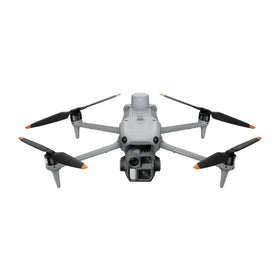
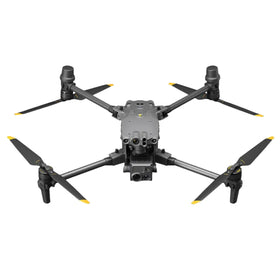
The parallel between the Navy’s disposal saga and the commercial drone market grows even sharper when you look at the second-hand ecosystem. According to our internal data at Reboot Hub, the volume of used drone sales increased 47% year-over-year in Q2 2026, driven largely by enterprise operators offloading older Matrice 300s, M30Ts, and even Phantom 4 RTKs as they rush to upgrade to the M350/370 series or the newly released Matrice 4E. But the hidden cost of these transactions is the deferred liability of battery disposal and component recycling.
When you buy a refurbishment-labeled DJI drone from Reboot Hub, that liability is mitigated because we test, grade, and certify each battery pack to ensure it meets current FAA and DOT transport standards. But the wider market is flooded with unverified units from private sellers who have no incentive to disclose battery health or end-of-life costs. The result is a ticking clock: thousands of drones whose final disposal will land on the buyer’s balance sheet.
4. What the USS Long Beach Means for Commercial UAV Operators
Let’s answer the question directly: What does the Navy’s nuclear cruiser disposal mean for a commercial drone pilot flying survey missions under Part 107?
First, it’s a warning about lifecycle cost ignorance. The Navy assumed they could simply scrap the Long Beach cheaply; they were wrong by billions. Drone operators routinely assume battery disposal is “free” or covered by municipal e-waste programs. It’s not. Starting in Q1 2027, EPA will require drone batteries to be tracked via a national manifest system similar to the one used for nuclear waste. The paperwork alone will cost $300–$500 per battery lot. For a fleet of 20 drones with four batteries each, that’s $24,000–$40,000 annually in compliance — plus actual recycling fees.
Second, the market is already pricing in this risk. We are seeing a flight to quality: enterprise buyers increasingly prefer to purchase from certified refurbishers who provide battery certificates and disposal guarantees. The unverified peer-to-peer market is shrinking as regulated operators realize the liability is unbearable. Reboot Hub’s professional DJI repair services now include mandatory battery health assessments and recycling coordination — a service that didn’t exist two years ago.
Third, the Navy’s struggle demonstrates that technical complexity compounds financial cost exponentially. The drone industry is heading into the same territory as the batteries get larger and thermal runaway risks become better understood. The M350’s TB60 battery, for example, contains over 800 Wh of energy — roughly the same as an electric scooter. By 2028, the largest drone batteries will fall under the same DOT hazmat training requirements as shipping lithium-ion batteries in bulk. Technicians will need certification to handle them.
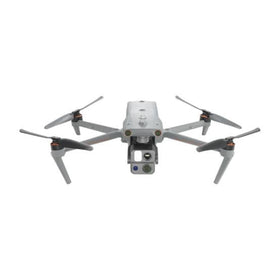
The Long Beach lesson is brutally simple: the cost of not planning for the end is far greater than the cost of planning for it. Every drone you fly today — whether it’s a DJI Mini 4 Pro or an Autel EVO Max 4T — will one day need to be decommissioned. The battery will need to be recycled. The airframe will need to be disposed of. And the regulations that govern that process are becoming as complex as the Navy’s nuclear waste protocols.
That’s why Reboot Hub’s mission — to provide transparent, inspected pre-owned hardware with full lifecycle accountability — is more than a commercial strategy. It’s a response to a structural shift in the industry. When the Navy finally pulls the plug on the Long Beach, the world will see a years-long, billion-dollar cleanup. When that drone you bought off a Facebook Marketplace seller finally fails its solidity check, you’ll see a bill you never expected. Choose your supply chain accordingly.
FAQ
Will the EPA’s new battery disposal rules apply to all drone operators?
Yes, if you operate drones for commercial purposes under FAA Part 107, the upcoming RCRA amendments (expected to be published in December 2026) will require you to maintain a battery disposal manifest for any lithium-ion packs over 100 Wh. This covers virtually all enterprise drones, including the DJI M30, M300, M350, and Autel EVO II series. Penalties apply per battery, per day of non-compliance.
How does buying a refurbished drone affect battery disposal liability?
When you purchase a refurbishment-labeled DJI drone from Reboot Hub, we provide a battery health certificate and a disposal plan covering the end-of-life recycling. Private sellers typically offer no such documentation, meaning the liability transfers fully to you. We recommend always verifying the seller’s disposal policy before any used drone transaction.
What parallels exist between nuclear warship decommissioning and drone battery recycling?
Both involve high-energy-density systems that require specialized handling, tracking, and disposal infrastructure. The Navy’s $1.5 billion overrun on nuclear cruiser disposal is a direct analog to the hidden costs commercial drone operators face: if you ignore battery recycling compliance, the eventual cleanup and fines will be exponentially more expensive than proactive management, just as the Navy learned with USS Long Beach.
Image credits: U.S. Navy (public domain). Analysis by Reboot Hub Editorial, June 2026.
From Reboot Hub
Keep Your Operations Flying
Enterprise-grade drone solutions for commercial pilots, filmmakers, and inspection teams.
Pre-owned Fleet
Fully inspected DJI drones with 6-month warranty. Save up to 40%.
Browse Inventory ->