KF100 Max Review: The Affordable DJI Alternative With a Drop Feature That Shakes Up the Market
The KF100 Max lands as a budget DJI alternative packing a 4K camera and an integrated payload drop feature, threatening to rewrite cost assumptions for commercial operators. For fleet managers running Part 107 BVLOS routes or RTK survey crews, this drone could mean 40% fleet cost reduction — or a compliance headache. Reboot Hub breaks down the specs, the market disruption, and what it means for the booming second-hand drone trade.

Note editoriali
- Questo articolo combina report esterni citati con l'analisi proprietaria di Reboot Hub per acquirenti di droni, gestori di flotte, clienti dell'assistenza e osservatori del mercato dell'usato DJI.
- I fatti riportati dalle fonti sono separati dall'interpretazione. Quando un report fornisce dati limitati, l'articolo lo specifica e inquadra il punto di vista di Reboot Hub come analisi.
- Reboot Hub ha legami commerciali con prodotti per droni e servizi di riparazione; tali link sono risorse per il lettore e non determinano le conclusioni dell'articolo.
The commercial drone industry has long operated under a de facto standard: if you want reliability, ecosystem support, and regulatory compliance, you buy DJI. But on June 7, 2026, that calculus just got more complicated. The KF100 Max, a notably affordable DJI alternative equipped with a 4K camera and an integrated payload drop feature, is entering the market at a price point that forces every fleet manager, surveyor, and agricultural operator to pause and reconsider their next procurement cycle.

Reported first by Notebookcheck, the KF100 Max is not just another cheap quadcopter. It brings a hardware capability - the drop feature - that has traditionally been locked behind expensive, specialized platforms from DJI's Enterprise series and a handful of defense-grade manufacturers. At a rumored sub-$1,500 price point, the KF100 Max threatens to democratize payload delivery for small commercial operators, emergency responders, and precision agriculture teams who previously could not justify a $6,000 Matrice 300 RTK for occasional light-drop missions.
But disruption carries risk. As with any new entrant in the tightly regulated U.S. and European drone airspace, the KF100 Max raises immediate questions about FAA Part 107 compliance, Remote ID integration, software reliability, and - perhaps most critically for Reboot Hub's audience - its impact on the resale value of pre-owned DJI fleets. This analysis unpacks the technology, the market dynamics, and the operational realities that every commercial pilot and fleet owner needs to understand right now.
Reader resources
Turn this drone news into a practical next step.
Compare inspected pre-owned DJI drones, repair options, and trade-in timing before the market moves again.
The KF100 Max: Specs, the Drop Feature, and Where It Competes
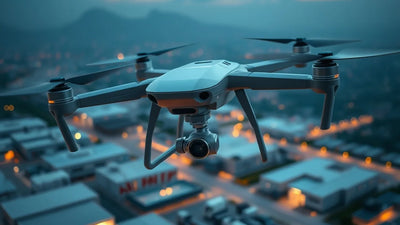
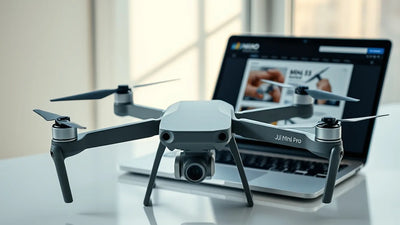
The headline hardware of the KF100 Max centers on two features: a 4K camera capable of decent aerial imaging for mapping, inspection, and cinematography, and a servo-actuated payload release mechanism mounted beneath the fuselage. According to early documentation, the drop mechanism can release payloads of up to 500 grams - sufficient for small emergency supply drops, fertilizer pouches for precision agriculture, or survey markers for ground teams. This is a capability that DJI reserves for its Matrice series and the Agras agricultural lineup, both carrying price tags three to five times higher.
On the imaging side, the 4K camera is paired with a three-axis mechanical gimbal, offering stabilization that competes with mid-tier DJI models like the Air 3 or the older Mavic 3 series. While early reports suggest the sensor may be smaller than DJI's Micro Four Thirds options - meaning potential trade-offs in low-light performance and dynamic range - the KF100 Max appears to deliver usable 4K30 footage suitable for orthomosaic stitching, linear infrastructure inspection, and real estate cinematography. For operators who primarily need visual data for basic GIS mapping and site documentation, the KF100 Max's camera may be more than sufficient.
Flight time is reported at approximately 28 minutes under moderate wind conditions, and the drone uses a proprietary battery system that supports quick-swap field operations. It supports GPS and GLONASS satellite positioning, and early teardowns suggest a flight controller architecture that allows for some degree of waypoint mission planning - though not yet at the level of DJI Pilot 2 or the SDK-enabled automation that enterprise operators rely on for BVLOS waivers.
The critical omission at launch appears to be RTK (Real-Time Kinematic) positioning. For survey-grade mapping with centimeter-level accuracy, the KF100 Max likely cannot match DJI's Phantom 4 RTK or Matrice 350 RTK. That positions it firmly in the "prosumer-to-light-commercial" bracket, not as a direct replacement for high-end survey tools. However, for visual inspections, agricultural monitoring, and emergency light-drop missions, the KF100 Max enters a market segment that has been underserved by affordable, capable hardware.
How the KF100 Max Reshapes the Commercial Drone Landscape
The commercial drone market in mid-2026 is defined by a stark split. On one side, DJI dominates the premium and enterprise tiers with deeply integrated hardware-software ecosystems, mature SDKs, and global regulatory support. On the other side, a fragmented field of competitors - Autel Robotics, Skydio, and a handful of Chinese OEMs - fight for the mid-range and value segments. The KF100 Max enters this battlefield with a value proposition that could disrupt pricing expectations across the board.
For a fleet operator running ten drones for agricultural spray monitoring and emergency support, choosing the KF100 Max could reduce hardware acquisition costs by 60% compared to a comparable DJI-based fleet. That savings must be weighed against potential downsides: lack of proven reliability data, unknown customer support quality, and the risk of regulatory friction if the drone's Remote ID implementation or software fails to meet FAA or EASA standards. Early adopters will be the test pilots for this platform's durability.
The drop feature, in particular, is a differentiator that could pull customers away from DJI's enterprise lineup. Emergency responders - fire departments, search and rescue teams, and disaster relief organizations - have long sought a low-cost platform for delivering life vests, radios, or medical supplies to stranded victims. The KF100 Max's 500-gram payload capacity, while modest, is enough for many first-response scenarios. If the drone proves reliable in field conditions, it could become a staple for volunteer fire departments and small municipal agencies that cannot justify a dedicated Enterprise drone budget.
Ready to Upgrade Your Fleet?
Browse our collection of inspected pre-owned DJI drones - inspected, flight-tested, and backed by a 6-month warranty. Save up to 40% versus retail.
What This Means for Commercial Operators and the Second-Hand Drone Market
The launch of the KF100 Max has immediate implications for the tens of thousands of commercial drone operators flying under FAA Part 107, EASA's open category, and equivalent frameworks globally. The most pressing question is whether this drone can serve as a viable secondary or backup airframe for missions that do not require RTK-grade positioning or deep DJI ecosystem integration. For visual inspection of cell towers, roof surveys, and agricultural scouting, the KF100 Max's combo of 4K video and a drop mechanism offers a compelling tool at a fraction of the cost of a new DJI Mavic 3 Enterprise.
From a fleet planning perspective, commercial operators should run a simple cost-benefit analysis: if your average mission can tolerate standard GPS accuracy (2-3 meter horizontal position error), does not require DJI-specific payloads like the Zenmuse H20 series, and benefits from the occasional ability to release a small payload, the KF100 Max becomes a high-value addition. Operators who regularly use RTK for survey-grade mapping will still need DJI's Phantom 4 RTK or Matrice series, but for the bulk of daily operations, the KF100 Max may be more than adequate.
For the second-hand and refurbished drone market - which is Reboot Hub's core domain - the KF100 Max introduces both a threat and an opportunity. The threat is clear: as lower-cost new alternatives enter the market, the resale value of older DJI models like the Mavic 2 Enterprise, Mavic 3, and even early Phantom 4 variants could face downward pressure. Buyers who might have considered a inspected pre-owned DJI drone at $1,800 may now weigh that against a new KF100 Max at $1,400. However, the opportunity is equally significant: the KF100 Max's launch validates the "good enough" segment, potentially expanding the total addressable market for drones. More operators entering the space means more potential buyers for pre-owned equipment. And for operators upgrading from older DJI models to the KF100 Max, there will be trade-in inventory flowing into the refurbished market - inventory that Reboot Hub can inspect, certify, and resell.
The used drone market is further supported by the fact that DJI's ecosystem - including SDK support, flight safety databases, and maintenance networks - remains the gold standard for enterprise operations. Operators who require proven reliability for critical missions will still pay a premium for pre-owned DJI drones because the cost of a mid-flight failure on a BVLOS pipeline inspection far outweighs the hardware savings. The KF100 Max may become a popular choice for training, light-duty work, and backup airframes, while DJI retains dominance in high-stakes, high-precision applications. This stratification is healthy for the used drone market, creating clear price tiers and making pre-owned DJI gear more accessible to budget-conscious operators.
Regulatory Implications and Operational Realities
No analysis of a new drone platform in 2026 is complete without addressing the regulatory landscape. The KF100 Max must comply with Remote ID requirements in the United States (FAA Part 89) and the equivalent in Europe (EASA delegated acts on U-space). Early adopters should verify that the drone ships with a functioning Remote ID module that broadcasts on the required Bluetooth or Wi-Fi channels. Failure to do so could result in enforcement action - including fines upward of $10,000 per violation under FAA regulations - and potential grounding of fleet operations.
For operators planning to use the drop feature in the United States, the regulatory path is even more nuanced. Dropping payloads from a drone is generally prohibited under Part 107 unless the operator obtains a waiver or complies with specific exemptions for agricultural spraying and emergency response. The KF100 Max's drop mechanism, while mechanically functional, does not automatically grant the legal right to release objects over people or property. Operators must obtain a Part 107 waiver for "dropping objects" or operate under the agricultural exemption in Part 137. The penalties for non-compliance - including civil penalties up to $27,500 and criminal penalties involving jail time for reckless endangerment - make regulatory due diligence essential before activating the drop feature in the field.
For operators in the European Union, EASA's open category rules similarly restrict payload dropping. The KF100 Max would fall under the specific category for most commercial drop operations, requiring an operational authorization from the national aviation authority. This means that while the hardware is affordable, the compliance process may still involve significant time and cost. Operators should budget for waiver applications, risk assessments, and potentially third-party audits before deploying the drone for delivery missions.
Q&A: What Does the KF100 Max Mean for Different Stakeholders?
For the independent surveyor flying a Mavic 3: The KF100 Max is not a replacement. If you need RTK accuracy for mapping, you should stick with DJI's ecosystem. But if you also do visual inspection work where orthometric precision is not required, consider adding the KF100 Max as a secondary airframe for drop missions - dropping marked flags or lightweight targets - to reduce wear on your primary survey drone.
For the small agricultural cooperative in the Midwest: The KF100 Max's 500-gram drop payload is ideal for targeted application of biopesticides, pheromone dispensers, or soil sample collection bags. At its price point, you could buy two or three units for the cost of one DJI Agras T40. Just be aware that the flight time per battery is shorter, meaning you will need to invest in multiple packs and a field charging generator to cover large-acreage operations.
For the emergency response volunteer team: The KF100 Max may be the most cost-effective life-saving drone ever made. A fire department with a $5,000 budget could equip four KF100 Max units with drop mechanisms for delivering rescue lines, flotation devices, or communication radios. The trade-off is reliability - these units are not MIL-SPEC rated - so you must test them extensively before deploying in live rescue scenarios. Consider purchasing from a refurbishment-labeled seller who can verify airframe integrity.
For the fleet manager at a mid-sized inspection company: This is the most interesting use case. The KF100 Max can serve as a dedicated "drop drone" for delivering inspection markers, cleaning agents, or small sensors to elevated infrastructure - cell towers, bridges, industrial chimneys. By offloading these light-drop tasks from your primary DJI airframe, you reduce wear on your expensive gear and extend its service life. And when a KF100 Max eventually fails - which it will, given the lower build quality - the replacement cost is low enough to be expensed without a capital approval process.
Frequently Asked Questions
Can the KF100 Max be used for FAA Part 107 commercial operations?
Yes, provided the drone is registered with the FAA, equipped with a functioning Remote ID module, and operated within visual line of sight. The drop feature requires a separate Part 107 waiver or compliance with Part 137 for agricultural missions. Operators should consult an aviation attorney before using the drop mechanism commercially.
Does the KF100 Max support RTK for survey-grade mapping?
No. Early reports indicate that the KF100 Max relies on standard GPS and GLONASS, offering approximately 2-3 meter horizontal accuracy. It is not suitable for survey-grade orthomosaic mapping or construction site monitoring where centimeter precision is required. Operators needing RTK should consider the DJI Phantom 4 RTK or the Matrice 350 RTK.
How does the KF100 Max compare to a refurbished DJI Mavic 3?
For most commercial applications, a pre-owned DJI drones like the Mavic 3 offers superior camera quality, longer flight time, proven reliability, and access to the mature DJI Pilot ecosystem. The KF100 Max wins on price and the built-in drop feature but loses on sensor performance, build quality, and regulatory confidence. For mixed fleets, a combination of both platforms can optimize cost per mission.
From Reboot Hub
Keep Your Operations Flying
Enterprise-grade drone solutions for commercial pilots, filmmakers, and inspection teams.
Pre-owned Fleet
Fully inspected DJI drones with 6-month warranty. Save up to 40%.
Browse Inventory ->