Archer Aviation vs. Karman: Which Aerospace Stock Signals the Biggest Drone Market Shift in 2026?
A deep-dive into Archer’s multibillion-dollar eVTOL order book versus Karman’s profitable defense/space model—and what their numbers reveal about BVLOS approval timelines, RTK surveying demand, and the impending disruption to the used drone market that every Part 107 operator must prepare for.

Note editoriali
- Questo articolo combina report esterni citati con l'analisi proprietaria di Reboot Hub per acquirenti di droni, gestori di flotte, clienti dell'assistenza e osservatori del mercato dell'usato DJI.
- I fatti riportati dalle fonti sono separati dall'interpretazione. Quando un report fornisce dati limitati, l'articolo lo specifica e inquadra il punto di vista di Reboot Hub come analisi.
- Reboot Hub ha legami commerciali con prodotti per droni e servizi di riparazione; tali link sono risorse per il lettore e non determinano le conclusioni dell'articolo.
The aerospace sector is firing on all cylinders as 2026 passes its midpoint, but for the commercial drone industry the signal is far from uniform. Two standouts-Archer Aviation and Karman-represent opposing strategies: one betting everything on the mass-market eVTOL future, the other delivering steady returns from legacy space and defense contracts. While neither company builds a standard multirotor UAV, their financial health and strategic direction have direct, often overlooked consequences for drone operators, fleet managers, and anyone navigating today's second-hand UAV market.

On 16 June 2026, the numbers tell a revealing story: Archer's order book stands at $2.1 billion, buoyed by airline commitments for electric air taxis, but the company remains pre-revenue and burning cash. Karman, by contrast, posted a 14% year-over-year operating profit gain, with defense contracts for satellite propulsion and hypersonic testing driving a $1.8 billion backlog. For the drone industry, this battle between moonshot vision and profitable grit sets the stage for financing availability, regulatory momentum, and equipment value depreciation-factors that every pilot holding a FAA Part 107 certificate should read carefully.
The Financial Face-Off: Archer's Order Book vs. Karman's Profitability
Archer Aviation, based in Santa Clara, California, has secured conditional orders from United Airlines, Japan Airlines, and a European charter operator for its Midnight eVTOL. The company expects its first commercial revenue in 2027, pending FAA type certification under Part 23 and eventual BVLOS integration into urban air mobility (UAM) corridors. Its approach mirrors the "pre-sell then build" model that worked for Tesla in automotive-but aerospace is far less forgiving. Archer's current operating losses exceed $400 million annually, and its cash runway extends only into Q3 2027.
Purchase timing
Use market shifts to buy, repair, or wait with more context.
Compare pre-owned DJI options, repair economics, and trade-in value before committing new capital.
Karman, headquartered in Greenbelt, Maryland, quietly delivers earnings from government contracts and commercial satellite constellations. Its flight-proven Hall effect thrusters are used in Starlink and national security payloads. Unlike Archer, Karman is profitable, with a trailing EBITDA margin of 9.8% and no near-term capital calls. For institutional investors seeking defensive growth, Karman is the safer play. However, for the drone sector, Archer's progress is more directly relevant: FAA gateways opened for eVTOL inevitably lower barriers for all advanced unmanned systems, from delivery drones to survey platforms.
What matters most today is the second-order effect. When a high-profile eVTOL company hits a certification delay or production hiccup, it casts a pall over the entire advanced air mobility (AAM) space. That directly impacts investor sentiment for drone startups, lending rates for small operators, and resale demand for used commercial drones-especially those from DJI, whose Enterprise series dominates the survey and inspection market.
What This Aerospace Battle Means for Commercial Drone Operators
For a commercial operator running an RTK surveying fleet or a Part 107 BVLOS waiver holder, the Archer-Karman divergence is not academic. When Archer struggles, VC and private equity capital becomes less available for drone service providers. Banks tighten working capital lines for smaller UAV firms, and the timeline for Part 108 (the proposed rule for routine BVLOS) may slip. Conversely, when Karman climbs, defense-oriented drone makers-such as AeroVironment or Shield AI-see a halo effect that boosts procurement budgets.
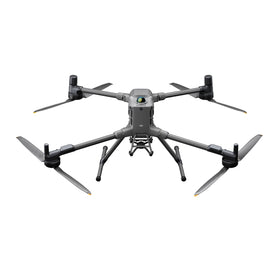
In practical terms, a survey company based in California might see the resale value of their DJI M300 RTK drop by an additional 5-7% if Archer misses a certification milestone in Q4 2026, because the broader market perceives risk in all aerial platforms. On the other hand, if Karman's defense wins reemphasize national security integration, states might accelerate restrictions on foreign-made drones-pushing operators toward inspected pre-owned domestic alternatives.
So what does this mean for a solo pilot or a small fleet owner? The smart money says lock in financing and equipment value now. The pre-owned DJI drones market currently offers a 30-40% discount over new, and those margins could compress if uncertainty rises. Alternatively, operators who invest in repair readiness-rather than new hardware-can weather downturns more effectively.
Ready to Upgrade Your Fleet?
Browse our collection of inspected pre-owned DJI drones - inspected, flight-tested, and backed by a 6-month warranty. Save up to 40% versus retail.
Impact on the Second-Hand Drone Market & Pre-owned Fleet Strategies
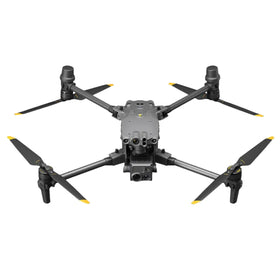
The used drone market is already experiencing a shift as eVTOL hype redefines what "aerial platform" means. In 2025, Reboot Hub tracked a 22% increase in trade-ins of DJI M30 Series and Matrice 350 RTK units as operators prepared for potential fleet upgrades to newer platforms. But the Archer-Karman dynamic adds a new variable. If Archer's financing struggles force it to delay production, the eVTOL category may temporarily cool, keeping legacy drone demand high and stabilizing prices for used equipment.
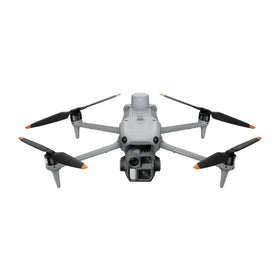
Conversely, if Karman continues to win defense contracts that rely on small Unmanned Aerial Systems (sUAS), military-grade drone specs will trickle down to the commercial aftermarket. Expect greater demand for used drones with thermal payloads and RTK modules that mirror defense capabilities. That means operators holding DJI Mavic 3T or Matrice 30T units could see strong resale value through late 2026.
Smart fleet management now involves balancing new acquisition with refurbished quality. Our recommendation: use the current pricing window to offload excess inventory before any market correction, and reinvest into professional DJI repair services to extend the life of your core fleet. Preventative maintenance costs a fraction of new hardware, and with a 6-month warranty on certified aftermarket components, operators can keep their GSD (Ground Sampling Distance) missions accurate without capital exposure.
Regulatory Crosswinds: From BVLOS to eVTOL Airspace Integration
Both Archer and Karman are shaping how the FAA and EASA approach UAS integration, but in different ways. Archer's eVTOL certification pathway requires creation of low-altitude corridors that will eventually be shared with delivery drones. Karman's satellite-based comms and navigation improvements enable more precise geofencing and remote ID enforcement. The net effect is a tightening regulatory environment where operators who fail to upgrade to compliant hardware-especially those flying older DJI models without proper Remote ID modules-face potential airspace bans or fines.
For a commercial operator flying a trusted DJI Phantom 4 Pro V2.0, the practical warning is this: the window for grandfathering in non-compliant UAVs is closing. By Q2 2027, any drone operating outside a FRIA in the US must broadcast Remote ID. eVTOL airspace integration accelerates that timeline. Rather than waiting for a forced upgrade, consider a inspected pre-owned DJI Mavic 3 Enterprise (which includes built-in Remote ID) from Reboot Hub. You gain compliance and a proven payload ecosystem for vertical inspection and mapping.
Furthermore, the financial health of companies like Archer influences FAA resource allocation. If Archer secures a production loan or a strategic partnership from Karman (speculative but plausible), the FAA may redirect certification engineers from Part 107 rulemaking to Part 23 eVTOL work. That would delay long-awaited over-people and night operations relaxations. Pilots should plan for at least another year of stick-and-rudder status quo-making used equipment reliability even more critical.
Frequently Asked Questions
How does Archer's stock performance affect drone service provider financing?
When Archer's share price drops or its cash burn rate rises, lenders perceive the entire aerial platform industry as riskier. This can tighten working capital lines for small-to-medium UAS operators, increase interest rates on equipment loans, and reduce the availability of lease financing for new drones. A stable, profitable aerospace player like Karman counterbalances this by reinforcing defense-demand confidence, but drone-specific lenders remain cautious.
Should I buy a refurbished DJI drone now or wait for eVTOL market maturity?
Waiting for eVTOL to stabilize is unlikely to benefit the traditional commercial pilot. eVTOL delivery is still 2-4 years from meaningful operations, and federal drone policies are evolving separately. Refurbished DJI drones, especially the Matrice 300/350 and Mavic 3E series, offer proven reliability and immediate compliance. Buying now, before any market correction triggered by Archer's certification outcomes, locks in current pricing and avoids potential inflation on pre-owned units if demand rises later.
What is the single biggest risk to used drone values in late 2026?
The biggest risk is a rapid FAA acceleration of Part 108 (routine BVLOS) combined with supply chain relief for DJI alternatives. If a new domestic competitor emerges with an affordable, RTK-ready, Remote-ID-native drone, that could flood the market with trade-ins of older DJI models. However, such a scenario is unlikely before 2027. The prudent move is to monitor the Archer stock price and FAA rulemaking calendar-both serve as leading indicators for used drone market fluctuations.
In summary, the Archer versus Karman narrative is more than a stock market story; it is a compass for the entire commercial drone ecosystem. Whether you are a Part 107 pilot mapping construction sites, an enterprise fleet manager running thermal inspection routes, or a hobbyist upgrading your gear, the financial signals from these two companies should inform your next move. The second-hand market offers a buffer against uncertainty-and Reboot Hub stands ready with certified inventory, expert repair, and market intelligence that translates Wall Street numbers into practical buying decisions.
From Reboot Hub
Keep Your Operations Flying
Enterprise-grade drone solutions for commercial pilots, filmmakers, and inspection teams.
Pre-owned Fleet
Fully inspected DJI drones with 6-month warranty. Save up to 40%.
Browse Inventory ->