Why Disabling Drones Is Now Worth More Than Making Them
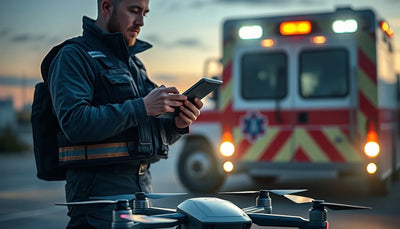
AeroVironment stock jumped after securing a fixed-price contract for anti-drone tech. This signals a growing divide between drone production and defense. Fleet operators and pre-owned buyers should watch how countermeasures reshape drone demand and repair needs.

AeroVironment (NASDAQ: AVAV) saw its stock jump on Thursday after the company announced it had secured a new fixed-price contract for anti-drone technology. The news, reported by Yahoo Finance, underscores a theme that has been gaining momentum in defense circles: sometimes disabling a drone is worth more than building one. For commercial drone operators, fleet managers, and buyers in the pre-owned DJI market, this shift carries real implications beyond Wall Street.
The contract itself is a fixed-price agreement, a structure that indicates the buyer – likely a government or military agency – is committing to a known cost for counter-unmanned aircraft systems (C-UAS). This reduces risk for the contractor and signals long-term demand for equipment that can detect, track, and disable drones. While the specific technology and contract value were not disclosed, the market reaction was unambiguous: investors see anti-drone capabilities as a growth sector that may outpace drone manufacturing in strategic value.
Why anti-drone contracts are reshaping the industry
AeroVironment is best known for its small tactical drones like the Raven and Switchblade. Yet its stock jump came not from a drone sale but from a disabling contract. This highlights a broader market trend: the counter-UAS segment is expanding faster than the drone production segment in certain verticals. According to the source, the market now values the ability to disrupt or neutralize a drone at a premium. For operators flying commercial DJI platforms, this means the airspace is becoming more contested. Anti-drone systems are being deployed at airports, critical infrastructure sites, and public events. Even if your flight is legal, you may encounter jamming, spoofing, or kinetic intercepts in areas where C-UAS is active.
Fleet readiness
Keep DJI hardware available without overbuying new units.
Use defense and fleet news as a planning signal for repair support, inspected pre-owned aircraft, and replacement timing.

Fixed-price contracts also suggest that the buyer expects to field these systems at scale, not just in small trials. That points to a lasting infrastructure build-out. Commercial drone pilots should take note: the risk of interference or forced landing is no longer theoretical. It is increasingly a reality built into the operational environment.
What this means for drone buyers
For anyone considering a drone purchase – whether new or pre-owned – the rise of anti-drone technology introduces a new variable. If disabling drones becomes a high-value activity, the assets you fly become potential targets. This does not mean you should avoid buying, but it does mean you should factor in cost-of-loss more carefully.
Flying a flagship DJI Matrice or Inspire into a sensitive zone might be a larger financial risk than using a lower-cost pre-owned model. Buyers should weigh the mission’s risk profile against the drone’s replacement value. This is where the pre-owned DJI drones market offers practical advantages. Older-generation Mavics or Phantoms can perform many tasks at a fraction of the price, making them more expendable if a countermeasure interferes with flight. Operators can also use the drone trade-in guide to upgrade their fleet while keeping a secondary pre-owned unit for higher-risk operations.
Additionally, buyers should inquire about a drone’s geofencing and remote ID compliance. Some anti-drone systems target non-compliant or unidentified drones first. Keeping your firmware current and knowing the local C-UAS deployment zones will be part of smart pre-flight planning.
Implications for fleet operators and repair services
As counter-UAS installations grow, fleet operators may face an increase in damaged or disabled drones. A drone that is jammed mid-flight may crash or suffer electronic damage. This creates demand for professional repair services that can restore units to airworthy condition using genuine parts. The market for professional DJI repair services is likely to expand as operators seek to salvage valuable airframes rather than write them off.
Fleet managers should consider including anti-drone risk assessments in their safety protocols. If you routinely fly near power plants, stadiums, or government facilities, you may need to coordinate with site security or obtain waivers. Also, review your insurance coverage: many policies differentiate between mechanical failure and external interference. Some may exclude damage caused by government-operated C-UAS. Knowing the terms can save you from an unexpected gap.
From a procurement perspective, the AeroVironment contract reinforces the idea that supply chains for components used in both drones and counter-drones may become more competitive. If you rely on OEM spare parts for your fleet, consider building a buffer stock. Disruption in one part of the drone ecosystem can ripple into delays across the board.
Finally, the same technology that disables a threat drone can accidentally affect friendly drones. Operators should equip themselves with awareness tools – such as real-time frequency monitoring apps – to detect when they are being jammed. Having a pre-planned response (like an immediate return-to-home or forced landing) can save the asset.
How this affects the second-hand drone market
The news from AeroVironment also has a subtler effect on pre-owned drone values. In a market where disabling is valued at a premium, inexpensive older drones may become more attractive for certain missions. Operators who want to avoid risking a $10,000 new platform may turn to the used market for capable but affordable alternatives. This could drive up demand for inspected pre-owned DJI units, particularly models with strong camera capabilities but lower market prices, such as the Phantom 4 series or older Mavic 2 models.
Conversely, new high-end drones may face slower sales growth if operators hesitate due to rising countermeasure risks. That could create a surplus of like-new units on the secondary market, potentially lowering prices for buyers willing to accept a generation behind the latest release. For sellers, now may be a good time to trade in drones you seldom use, while the pre-owned market is active and before any potential price softening.
Overall, the second-hand market is becoming an essential part of a fleet strategy that balances capability against risk. The drone trade-in guide at Reboot Hub offers a practical starting point for converting idle inventory into cash or credit toward a more strategic mix of pre-owned assets.
What should a drone operator do differently after reading this?
Review your flight zones for known anti-drone systems. For high-risk missions, consider using a pre-owned drone with lower replacement cost. Ensure your repair service uses genuine parts to maintain airworthiness after any interference event.
Does this mean I should stop buying new drones?
Not at all. New drones still offer the latest sensors, flight time, and safety features. But the calculus changes: if you fly near sensitive sites, a pre-owned backup may save money. The rise of anti-drone tech is a risk factor to be managed, not a reason to halt purchases.
Will anti-drone contracts affect the price of pre-owned DJI drones?
Potentially, yes. Increased demand from operators looking for lower-cost alternatives could lift prices on well-maintained pre-owned units. Meanwhile, new drone sales may slow slightly, creating more supply on the used market. The net effect will depend on how quickly countermeasures roll out and how operators adjust their fleet composition.
Sources consultées
- Yahoo Finance / AeroVironment contract report - primary report
- AeroVironment unmanned systems solutions - official company source
Reboot Hub Editorial propose des analyses d'achat, de réparation, de revente et d'exploitation pour les propriétaires de drones. Si vous constatez une erreur, contactez-nous pour une demande de correction conformément à notre politique éditoriale.