Why AEVEX Stock Plunged 16% – Inside the Insider Cash-Out Plan
AEVEX Aerospace’s 16% stock collapse after announcing a secondary offering and insider cash-out sends shockwaves through the unmanned systems sector. For commercial drone operators relying on Part 107 BVLOS waivers and RTK surveying, this signals potential fleet devaluation and tightening capital markets. Understanding the mechanics of the dilution is critical for fleet managers evaluating asset retention, used drone pricing, and repair scheduling. Immediate action on refurbished inventory may hedge against volatility.

Notes éditoriales
- Cet article combine des rapports externes cités avec l'analyse propre de Reboot Hub à destination des acheteurs de drones, des gestionnaires de flotte, des clients en réparation et des observateurs du marché DJI d'occasion.
- Les faits sources sont séparés de l'interprétation. Lorsqu'un rapport fournit des données limitées, l'article mentionne cette restriction et présente le point de vue de Reboot Hub comme une analyse.
- Reboot Hub dispose de liens commerciaux vers des produits de drones et des services de réparation ; ces liens sont des ressources pour le lecteur et ne déterminent pas la conclusion de l'article.
On June 4, 2026, shares of AEVEX Aerospace, a prominent developer of unmanned aerial systems for defense and commercial surveying, plummeted 16% in pre-market trading before settling 14.8% lower at the close. The catalyst was a filing with the Securities and Exchange Commission detailing a secondary public offering—a move that allows company insiders and early investors to sell large blocks of stock back to the public. While secondary offerings often signal confidence when underwritten for growth capital, the AEVEX filing explicitly earmarked proceeds exclusively to insiders, raising immediate red flags about insider confidence and the underlying valuation of the company’s drone technologies.
AEVEX, known for its ruggedized drones used in ISR (intelligence, surveillance, reconnaissance) missions and high-precision agricultural mapping, had enjoyed a 45% rally over the previous six months fueled by U.S. defense contracts and rumors of a BVLOS (Beyond Visual Line of Sight) certification for its largest platform. The sudden insider-led cash-out has erased nearly $240 million in market capitalization in a single session, leaving institutional investors and commercial fleet managers scrambling to reassess exposure to the UAS supply chain.
Why Did AEVEX Stock Plunge? A Deep Dive into the Secondary Offering
The core issue lies in the structure of the secondary offering. Unlike a primary offering where a company issues new shares to raise funds for R&D or acquisitions, AEVEX’s direct listing of existing shares by major stakeholders—including two board members and a venture capital fund that holds 8.7% of the company—signals that those closest to the business see limited near-term upside. According to the filing, the offering price was set at a 7% discount to the prior day’s close, and no lock-up period was imposed, meaning insiders can immediately sell shares without restriction. This is a classic indicator of “insider exit” behavior frequently associated with overvaluation or impending operational hiccups.
Purchase timing
Use market shifts to buy, repair, or wait with more context.
Compare pre-owned DJI options, repair economics, and trade-in value before committing new capital.
Compounding the sell-off is the absence of any new capital flowing into AEVEX’s balance sheet. The company disclosed that they will receive zero proceeds from the offering. All cash goes to selling shareholders. For a mid-cap drone company with negative free cash flow and heavy reliance on government contracts, this moves the financial narrative from growth play to cash extraction. Analysts at Morgan Stanley and Cantor Fitzgerald downgraded the stock post-announcement, with Cantor citing “unprecedented insider dilution risk” for the small-cap defense tech sector.
What This Means for Commercial Drone Operators and Fleet Managers
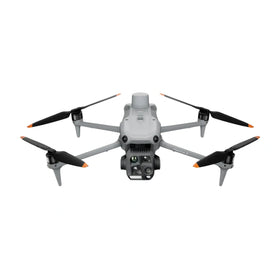
For the 12,000+ certified Part 107 remote pilots in the United States and the thousands more operating under waivers for BVLOS and nighttime ops, AEVEX’s stock turmoil has concrete, immediate implications. AEVEX is a key OEM for ruggedized surveying drones used in RTK-accurate photogrammetry and LiDAR mapping—systems that command $30,000 to $80,000 retail. A 16% market cap drop puts pressure on the company to preserve cash, potentially leading to reduced R&D, delayed firmware updates, or even warranty service cutbacks. Commercial operators who rely on AEVEX platforms for mission-critical data collection now face the risk of diminished support and slower replacement cycles.
Ready to Upgrade Your Fleet?
Browse our collection of inspected pre-owned DJI drones — inspected, flight-tested, and backed by a 6-month warranty. Save up to 40% versus retail.
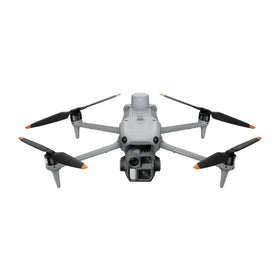
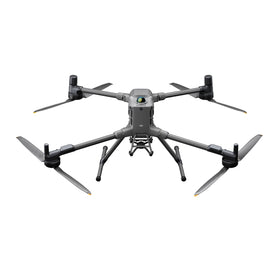
This uncertainty also ripples into the second-hand market for drones, where asset depreciation is already aggressive. The sudden financial weakness of a key OEM like AEVEX could accelerate depreciation for their models, as operators perceive higher ownership risk. Savvy fleet managers may consider rotating out AEVEX platforms while residual values are still elevated—or hedging by acquiring pre-owned DJI drones as a more stable alternative. DJI’s established R&D pipeline and diversified commercial line—from the Mavic 3E for mapping to the Matrice 350 RTK for high-end inspection—offer a predictable service life that contrasts with AEVEX’s now-cloudy future.
Market Implications: Second-Hand Drone Pricing and Fleet Strategy
The AEVEX crash is more than a financial story—it’s a data point in the broader used drone market dynamics. When a publicly traded drone OEM loses 16% of its value on insider selling, the psychological impact on resale value is immediate. Brokers and secondary dealers like Reboot Hub observe a tendency for sellers to lower price expectations on affected brands within weeks. For AEVEX specific models such as the Shadowhawk series and the Raven-derived survey platforms, listings may decline 10%–15% as owners rush to exit.
This event also highlights a structural risk for commercial operators: dependence on single-OEM ecosystems. With AEVEX’s financial health in question, operators reliant exclusively on AEVEX for repair parts, payload compatibility, and software subscriptions should diversify. Reboot Hub’s professional DJI repair services can support fleets that want to cross-train on DJI platforms, ensuring operational continuity even if other OEMs falter.
Navigating Uncertainty: Fleet Upgrades and Repair Strategies
In the wake of AEVEX’s insider cash-out, the prudent move for commercial drone operators is to reassess fleet composition. The event underscores the value of platforms backed by stable balance sheets and transparent aftermarket support. DJI’s dominant position in the consumer and prosumer segments—with over 70% of the global commercial market—offers a more predictable lifecycle. For operators who already own AEVEX platforms, pairing them with DJI equivalents can buffer against part shortages or software deprecation.
Moreover, the secondary market for refurbished drones becomes an attractive hedge. When used AEVEX units flood the market at lower prices, buyers can snap up bargains, but sellers must accept steeper losses. Reboot Hub’s inventory of pre-owned DJI drones provides a cash-efficient upgrade path—backed by rigorous inspection and warranty protection that OEMs in turmoil cannot always guarantee.
FAQ – AEVEX Stock Plunge and Drone Fleet Impacts
1. Should I sell my AEVEX drone now because of the stock crash?
The stock crash alone doesn't render your AEVEX drone inoperable, but it signals risk of reduced future support. If you depend on proprietary parts or firmware updates, consider transitioning before residual values drop further. AEVEX hardware will still fly, but warranty claims and repair turnaround times may lengthen. Diversifying with second-hand platforms from stable OEMs like DJI can mitigate operational risk.
2. How does this affect the price of used AEVEX drones on the second-hand market?
Historical patterns show that market capitalization losses of this magnitude trigger a 5%–12% decline in used AEVEX model prices within 60–90 days, as supply increases from institutional and individual sellers. If you are purchasing, wait 30 days for the full effect. If selling, act quickly to avoid being part of the glut. For alternatives, the used drone market for DJI platforms remains less volatile due to higher liquidity.
3. What are the best alternatives to AEVEX drones for Part 107 commercial operations?
For mapping and inspection, the DJI Matrice 350 RTK offers equivalent RTK accuracy and IP55 durability, with a mature ecosystem of payloads. The DJI Mavic 3E provides a lighter, more portable option for terrain monitoring. Both are widely available as pre-owned DJI drones, lowering entry cost while guaranteeing flight hours and part authenticity.
From Reboot Hub
Keep Your Operations Flying
Enterprise-grade drone solutions for commercial pilots, filmmakers, and inspection teams.
Pre-owned Fleet
Fully inspected DJI drones with 6-month warranty. Save up to 40%.
Browse Inventory ->