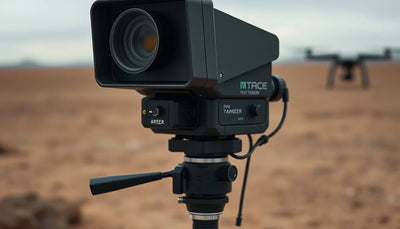
UAF Ice Tower Creates Controlled Drone Icing Research Testbed
The University of Alaska Fairbanks has opened a purpose-built ice tower that creates calibrated icing conditions for drone testing. The Supercooled Water Experimental Arctic Tower lets researchers and students study how ice buildup affects lift, control, and performance, with direct implications for cold-weather commercial operations.

Quick answer
The University of Alaska Fairbanks ACUASI program is using a purpose-built Supercooled Water Experimental Arctic Tower to create calibrated icing conditions for controlled drone icing research.
- The tower produces calibrated supercooled water conditions to simulate natural icing events
- Researchers and students study how ice buildup affects drone lift, control, and performance
- The facility gives ACUASI a repeatable testbed instead of relying on unpredictable Arctic weather
- Findings could inform cold-weather operating guidance for commercial drone fleets
Evidence: DRONELIFE
Operator checklist
Turn policy news into a safer fleet decision.
Before changing aircraft, compare repair paths, available DJI inventory, and trade-in timing against the rule change.

DRONELIFE reports that the Alaska Center for Unmanned Aircraft Systems Integration, known as ACUASI, at the University of Alaska Fairbanks Geophysical Institute is now conducting drone icing research inside a purpose-built facility called the Supercooled Water Experimental Arctic Tower. The tower creates calibrated icing conditions so researchers and students can study how ice buildup affects drone lift, control, and overall performance in a controlled environment rather than waiting for unpredictable Arctic weather events.
The development matters because icing remains one of the least understood operational risks for commercial drone fleets operating in cold climates. When ice accumulates on propellers, airframes, or sensor housings, it changes aerodynamics quickly and can degrade performance without obvious warning. A repeatable testbed gives researchers a way to isolate those effects and build an evidence base that could eventually shape operating guidance, maintenance practices, and equipment choices for cold-weather missions.
What the UAF ice tower actually is
According to the DRONELIFE report, the Supercooled Water Experimental Arctic Tower is a dedicated research structure at the University of Alaska Fairbanks designed to produce calibrated icing conditions on demand. The facility is operated by ACUASI, the university's unmanned aircraft systems integration center, which is housed within the Geophysical Institute. The tower's core function is to expose drones to supercooled water droplets that freeze on contact, replicating the conditions that cause in-flight icing in real Arctic and sub-Arctic operations.
The practical value of the tower is repeatability. Natural icing events are inconsistent, difficult to forecast, and often unsafe for deliberate flight testing. A controlled testbed lets researchers run the same test multiple times, vary droplet size or temperature, and measure performance changes with instruments that would be hard to deploy in open air. For drone operators, this kind of research infrastructure signals that cold-weather performance is being treated as an engineering problem rather than an unavoidable operational mystery.
Why icing research matters for commercial operations
Ice buildup on a drone is not a cosmetic issue. Even thin ice layers on propeller leading edges can reduce lift, increase power draw, and alter control response. On fixed-wing drones, ice on wings or control surfaces can shift stall characteristics. On multirotors, asymmetric ice accumulation can force flight controllers to compensate constantly, draining battery capacity faster and potentially triggering uncommanded behavior in severe cases.
ACUASI's focus on lift, control, and performance aligns directly with the concerns of commercial operators who fly in northern regions, at altitude, or during shoulder-season weather when temperatures hover near freezing. The research could eventually inform manufacturer guidance on cold-weather operating limits, pre-flight inspection procedures for ice-prone conditions, and de-icing or anti-icing technologies for small unmanned aircraft. Until that guidance exists, operators should treat visible moisture near freezing temperatures as a serious flight-planning constraint.
What this means for drone owners and the market
For individual drone owners and small fleet managers, the UAF ice tower research is a reminder that environmental risk is not fully priced into most consumer and prosumer drone platforms. A drone that performs reliably in mild weather may behave very differently when supercooled water is present. Buyers evaluating a drone for cold-weather work should look beyond camera specs and battery ratings to ask whether the manufacturer publishes any icing or low-temperature operational guidance, and whether the airframe design leaves critical surfaces exposed to ice accumulation. For owners evaluating service and lifecycle risk, Drone Wiki explains the relevant repair, parts, resale, or operational path.
The pre-owned DJI market could also feel the effects over time. If icing research leads to clearer cold-weather limitations or accelerated wear patterns on motors, propellers, and battery contacts, buyers of inspected pre-owned DJI drones may start asking more pointed questions about where and how a unit was flown. A drone that spent two winters flying coastal Alaska missions may carry different hidden wear than one flown in dry, warm conditions. For buyers and sellers, documented flight history and professional inspection become more valuable when environmental exposure is understood as a performance variable. Readers tracking these operational risk factors can find reference material in the Drone Wiki.
Repair providers should also pay attention. Ice-related incidents can produce subtle damage that is not immediately visible: stressed motor bearings, micro-cracks in propeller hubs, corrosion on exposed connectors, or degraded battery cell performance after cold-soak cycles. As icing research clarifies failure modes, repair workflows may need to include more thorough cold-weather damage checks, particularly for drones that have been flown in visible moisture near freezing temperatures.
The regulatory and research signal
The UAF ice tower sits within a broader pattern of academic and regulatory interest in making drone operations safer and more predictable in challenging environments. ACUASI has long been involved in Arctic unmanned aircraft research, and the Geophysical Institute brings atmospheric science expertise that strengthens the credibility of the icing work. While the DRONELIFE report does not describe specific regulatory outcomes, controlled icing data often feeds into standards discussions around airworthiness, operational limits, and pilot training for commercial beyond-visual-line-of-sight operations.
For fleet operators, the takeaway is that cold-weather capability is becoming a measurable, research-backed topic rather than anecdotal folklore. Companies that fly in northern latitudes, at high altitude, or in maritime fog should watch for published findings from ACUASI and similar programs. Early adopters who build internal operating procedures around icing risk could gain a compliance and safety advantage before formal rules arrive.
FAQ
Frequently asked questions
What is the UAF Supercooled Water Experimental Arctic Tower?
It is a purpose-built research tower at the University of Alaska Fairbanks that creates calibrated supercooled water conditions so ACUASI researchers and students can study how ice buildup affects drone lift, control, and performance.
Why does drone icing matter for commercial operators?
Ice on propellers, wings, or control surfaces can reduce lift, increase power consumption, and change how a drone responds to pilot inputs, creating safety risks in cold or high-altitude operations.
Should drone buyers change their evaluation process because of this research?
Buyers considering cold-weather missions should ask about manufacturer low-temperature guidance, inspect propeller and motor condition carefully on pre-owned units, and treat visible moisture near freezing as a serious flight-planning risk.
Which sources support this update?
The visible evidence links identify DRONELIFE; each source is used only for the claim it directly supports.
What remains subject to change?
Retail pricing, availability, product bundles and regulatory timelines can change. Readers should verify the latest terms with the named retailer, manufacturer or regulator before acting.
How should buyers or operators use this analysis?
Use the verified facts as a starting point, then compare mission fit, lifecycle support, maintenance needs and current procurement terms before making a purchase or fleet decision.
Sources consultées
- DRONELIFE - primary source
Aucune documentation officielle supplémentaire n'était disponible au moment de la publication.
Reboot Hub Editorial propose des analyses d'achat, de réparation, de revente et d'exploitation pour les propriétaires de drones. Si vous constatez une erreur, contactez-nous pour une demande de correction conformément à notre politique éditoriale.