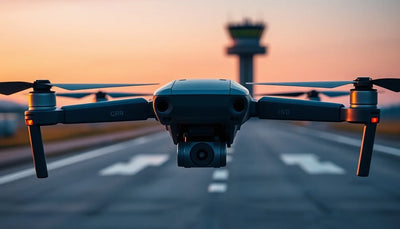
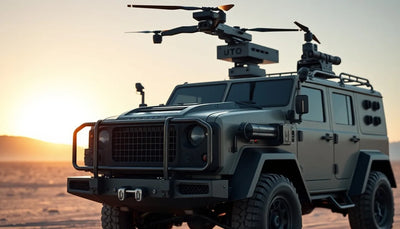
RAF Deploys to Jersey Airport After Rogue Drone Incursions
SUAS News reports the RAF has deployed specialist counter-drone assets to Jersey under a MACA tasking after repeated rogue drone incursions shut down the airport. The response highlights how unauthorized flights can trigger military-level intervention and disrupt regional airspace.

Quick answer
SUAS News confirmed that the RAF deployed specialist counter-drone assets to Jersey under a MACA request after consecutive nights of rogue drone incursions shut down Jersey Airport, with the Department for Transport leading operations.
- The MoD confirmed the deployment to SUAS News
- The Department for Transport is leading counter-drone operations
- The RAF deployed under a Military Aid to the Civil Authorities tasking
- Jersey Airport was shut down on consecutive nights
Evidence: SUAS News · AeroVironment unmanned systems solutions · FAA UAS official guidance
Fleet readiness
Keep DJI hardware available without overbuying new units.
Use defense and fleet news as a planning signal for repair support, inspected pre-owned aircraft, and replacement timing.

SUAS News has confirmed that the Royal Air Force deployed specialist counter-drone assets to Jersey under a Military Aid to the Civil Authorities request after consecutive nights of rogue drone incursions forced the closure of Jersey Airport. According to the report, the Ministry of Defence confirmed the deployment, with the Department for Transport leading counter-drone operations on the island.
The development marks a significant escalation in how authorities respond to persistent unauthorized drone activity near critical aviation infrastructure. For commercial operators, fleet managers, and anyone involved in the drone supply chain, the Jersey incident is a reminder that rogue flights can trigger responses far beyond local police enforcement.
The reported RAF deployment and what it signals
SUAS News reported that the Ministry of Defence confirmed the RAF deployment after the airport was shut down on consecutive nights. The operation is being conducted under a MACA tasking, a formal mechanism through which military assets support civil authorities during emergencies or situations that exceed local capacity. The Department for Transport is leading the counter-drone response, according to the report.
The use of a MACA request in this context is notable. It suggests that the scale or persistence of the incursions was judged to require capabilities beyond standard civilian or local police resources. While the specific equipment or personnel involved has not been detailed in the source material, the deployment itself indicates that authorities view repeated airport incursions as a national-level disruption rather than a routine nuisance.
For commercial operators, the Jersey case illustrates how quickly unauthorized drone activity can move from a local enforcement matter to a coordinated multi-agency response. The threshold for military assistance is not commonly reached, but airports remain among the most sensitive environments for drone operations. Any flight that compromises approach paths, runways, or terminal airspace carries outsized consequences.
Why airport incursions escalate so quickly
Airports operate under strict airspace controls, and even brief closures create cascading delays for airlines, passengers, and cargo. When an airport shuts down on consecutive nights, the economic and operational cost rises sharply. SUAS News reported that Jersey Airport was closed on multiple nights due to the rogue drone activity, underscoring the disruption caused by repeated incursions.
Civil aviation authorities and airport operators treat any confirmed or suspected drone near active runways as a potential safety hazard. The response typically begins with airspace restrictions and local police coordination. If the activity persists or the operator cannot be located, the situation can escalate to specialized counter-drone measures. The Jersey deployment shows that military support can be requested when local capabilities are insufficient.
Reboot Hub analysis suggests that the commercial drone sector should expect continued scrutiny of flight behavior near airports, particularly in smaller jurisdictions where dedicated counter-drone resources may be limited. The MACA mechanism exists precisely because not every region maintains the equipment or personnel needed to detect, track, and neutralize persistent threats.
What this means for drone owners and the market
The Jersey incident does not directly involve DJI hardware, but it carries implications for the broader pre-owned DJI market and commercial drone ownership. When high-profile rogue drone events occur, regulators and the public often respond with renewed calls for stricter identification, tracking, and enforcement measures. Those measures can shape how drone owners operate, register, and resell equipment.
For buyers considering a pre-owned DJI drone, the key takeaway is that compliance infrastructure continues to tighten. Drones that lack remote identification capability or cannot be tied to a registered operator may face growing restrictions in sensitive airspace. While the source material does not specify the drone models involved in Jersey, the incident reinforces the importance of purchasing equipment that can meet current and anticipated compliance requirements. The Drone Wiki provides reference material that can help operators understand how regulatory shifts affect ownership and maintenance decisions.
Fleet managers should review their geofencing, operator training, and incident response procedures. A single unauthorized flight by an employee, contractor, or even a stolen drone can trigger airport closures and military-level responses. The reputational and operational damage from being linked to such an event can be severe, even if the flight was unintentional.
Repair and parts providers may also see indirect effects. If authorities tighten enforcement or expand counter-drone deployments, demand for compliant hardware, firmware updates, and professional inspection services could rise. Operators who maintain older equipment may need to evaluate whether their current fleet can support evolving identification and tracking expectations. For owners evaluating service and lifecycle risk, Drone Wiki explains the relevant repair, parts, resale, or operational path.
The wider counter-drone landscape
The Jersey deployment fits into a broader pattern of governments investing in counter-drone capabilities. Airports, prisons, critical infrastructure sites, and major public events have all seen increased attention from security agencies concerned about unauthorized drone activity. SUAS News has covered counter-drone developments extensively, and the Jersey case adds another data point to that ongoing story.
For commercial operators, the practical implication is that airspace awareness and compliance are no longer optional. The tools available to authorities are becoming more sophisticated, and the willingness to deploy them is increasing. A drone that cannot be identified or traced creates more risk for its operator than one that is properly registered and compliant.
The pre-owned market is not immune to these pressures. Buyers who acquire used drones without verifying registration history, firmware status, or remote identification compatibility may find themselves holding equipment that is difficult to operate legally in controlled airspace. Professional inspection and documentation become more valuable as enforcement tightens.
Reboot Hub analysis suggests that the Jersey deployment will likely be referenced in future policy discussions about counter-drone funding and airport protection. Operators who stay ahead of compliance requirements will face fewer disruptions as those policies evolve.
FAQ
Frequently asked questions
What exactly did SUAS News confirm about the Jersey drone incident?
SUAS News confirmed that the Ministry of Defence reported the RAF deployed specialist counter-drone assets to Jersey under a MACA request after consecutive nights of rogue drone incursions shut down Jersey Airport. The Department for Transport is leading the counter-drone operation.
Does this incident affect commercial drone operators outside Jersey?
While the immediate operation is localized, the incident demonstrates how quickly unauthorized drone activity near airports can escalate to military-assisted responses. Commercial operators everywhere should expect continued scrutiny of flights near sensitive airspace and review their compliance procedures accordingly.
Should drone buyers be concerned about the Jersey deployment?
Buyers should focus on compliance readiness. Incidents like this often lead to stronger identification and tracking requirements. Purchasing equipment that meets current standards and maintaining proper registration documentation reduces the risk of operational disruption as enforcement evolves.
Which sources support this update?
The visible evidence links identify SUAS News and AeroVironment unmanned systems solutions and FAA UAS official guidance; each source is used only for the claim it directly supports.
What remains subject to change?
Retail pricing, availability, product bundles and regulatory timelines can change. Readers should verify the latest terms with the named retailer, manufacturer or regulator before acting.
How should buyers or operators use this analysis?
Use the verified facts as a starting point, then compare mission fit, lifecycle support, maintenance needs and current procurement terms before making a purchase or fleet decision.
Sources consultées
- SUAS News - primary source
- AeroVironment unmanned systems solutions - official company source
- FAA UAS official guidance - official regulator source
Reboot Hub Editorial propose des analyses d'achat, de réparation, de revente et d'exploitation pour les propriétaires de drones. Si vous constatez une erreur, contactez-nous pour une demande de correction conformément à notre politique éditoriale.