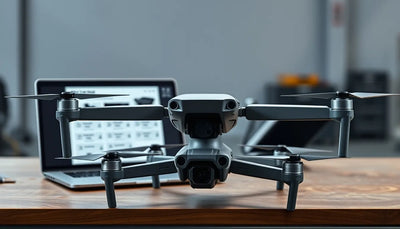
Police Drone Crashes From 380 Feet After Arm Folds in Flight
A police drone fell onto a residential street from roughly 380 feet after an arm folded mid-flight, according to UKNIP. The incident raises practical questions for fleet operators about airframe inspection, arm joint wear, and repair demand in the commercial drone market.

Quick answer
UKNIP reported that a police drone crashed onto a residential street from about 380 feet after an arm folded during flight.
- The incident involved a police-operated drone, not a civilian recreational flight
- The reported altitude at the time of the failure was approximately 380 feet
- The failure mode described was an arm folding during flight
- The crash occurred on a residential street
- No additional operational or regulatory details were provided in the source data
A police-operated drone crashed onto a residential street after one of its arms folded during flight at roughly 380 feet, according to a report published by UKNIP and surfaced through Google News. The incident, described as a mid-air structural failure rather than a pilot error or signal loss event, is the kind of failure that commercial operators and public safety fleets watch closely because it points to airframe integrity rather than software or navigation problems.
Fleet readiness
Keep DJI hardware available without overbuying new units.
Use defense and fleet news as a planning signal for repair support, inspected pre-owned aircraft, and replacement timing.

For drone buyers, repair customers, and fleet managers, the reported failure mode matters more than the crash itself. A folding arm suggests stress at a hinge, latch, or locking mechanism, or possible prior damage that went undetected before takeoff. Reboot Hub analysis of the limited source material indicates that the report does not identify the specific drone model, the police force involved, or the exact cause of the arm fold. Those details remain unconfirmed in the available reporting.
What the source actually reports
The central claim comes from UKNIP, which reported that a police drone crashed onto a residential street from 380 feet after an arm folded during flight. The source summary is brief and does not include a named agency, a model designation, a date of the incident, or a statement from the operator. It also does not specify whether the aircraft was a multirotor platform with folding arms, though the description of an arm folding strongly suggests a foldable airframe design common in commercial and public safety drone fleets.
Because the source is limited, Reboot Hub is treating the report as a single-source industry account rather than a fully verified incident record. The practical takeaway for operators is not to assume a specific model is defective, but to recognize that folding-arm drones carry mechanical risk at the hinge and locking points. Any aircraft that has been transported repeatedly, deployed from a vehicle, or flown in rough conditions should have its arm mechanisms inspected before high-altitude or over-people operations.
Why arm folding is a serious failure mode
An arm folding in flight is different from a motor failure or a battery issue. When a motor fails, the aircraft may still descend in a controlled or semi-controlled manner depending on the platform. When an arm folds, the thrust geometry changes instantly. The aircraft can lose lift on one side, enter an unrecoverable attitude, and fall with little opportunity for the pilot to correct the descent. At 380 feet, there is enough altitude for a fall to build significant speed before impact.
For public safety agencies, the stakes are higher because police drones often operate in populated areas, near traffic, or above residential streets. A structural failure in that context creates property damage risk and potential injury risk to people on the ground. The reported incident is a reminder that airframe inspection is not a pre-flight formality. Hinge wear, latch fatigue, hairline cracks around arm mounts, and loose locking tabs can all contribute to an in-flight fold, especially on aircraft that have logged many deployment cycles.
What this means for drone owners and the market
The reported crash reinforces a commercial reality that repair-focused businesses already understand: airframe components are consumable in high-use fleets. Arms, hinges, locking mechanisms, and mounting hardware wear out over time, and the resale market reflects that. Buyers evaluating a pre-owned DJI drone should pay close attention to arm rigidity, hinge play, and any signs of stress around the folding joints. A drone that looks clean externally may still have hidden fatigue at the points where the arms attach to the body. For operators who want to reduce that risk, working with a repair provider that understands OEM-pulled parts and genuine DJI component sourcing is a practical step, and the Drone Wiki offers a useful reference for understanding common airframe and component issues before making a purchase or repair decision. For owners evaluating service and lifecycle risk, Drone Wiki explains the relevant repair, parts, resale, or operational path.
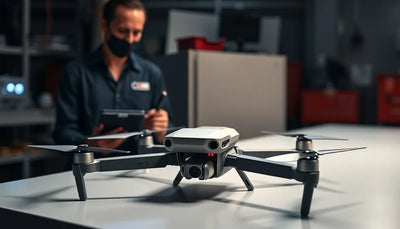
For fleet managers, the incident supports a policy of scheduled airframe teardown and inspection rather than reactive repair. Police and enterprise fleets often track battery cycles and motor hours, but hinge and latch wear is harder to quantify. A simple pre-flight check that includes physically loading each arm, listening for clicks, and looking for micro-cracks around the hinge area can catch problems before they become in-flight failures. The source report does not confirm whether the crashed aircraft had prior damage or a maintenance history, so operators should avoid drawing conclusions about a specific model or batch.
The pre-owned market impact is indirect but real. When a public safety crash involving a folding-arm failure circulates, buyers become more cautious about used aircraft with unknown maintenance histories. Sellers who can document inspection, replacement of worn components, and use of genuine OEM spare parts will have an advantage. Buyers who cannot verify that history should factor potential arm or hinge replacement into their cost calculations.
What operators should do differently now
The most immediate operational change is to treat folding-arm mechanisms as a wear item, not a permanent structure. Before any flight above populated areas or at significant altitude, operators should inspect each arm joint for play, cracks, or incomplete locking. If an arm does not lock firmly into place, the aircraft should be grounded until the mechanism is replaced or repaired. This is especially important for drones that are folded and unfolded frequently, transported in vehicles, or used in field deployments where dust and debris can accumulate in hinge areas.
For buyers in the pre-owned market, the practical step is to ask about airframe history, not just flight hours. A drone with low flight time but rough handling may carry more structural risk than a higher-hour aircraft that was maintained carefully. Requesting documentation of arm replacement, hinge inspection, or OEM-pulled parts installation is reasonable due diligence. If that documentation is not available, a professional inspection before first flight is a sensible precaution. The reported incident does not provide enough detail to identify a systemic defect, but it is enough to justify stricter airframe scrutiny across commercial and public safety operations.
FAQ
Frequently asked questions
Was the crashed drone model identified?
No. The UKNIP report surfaced through Google News does not identify the specific drone model involved in the incident. The description of an arm folding during flight suggests a foldable airframe design, but the exact platform remains unconfirmed in the available source data.
Does this incident indicate a widespread defect in folding-arm drones?
The source data does not support a conclusion about a widespread defect. A single reported incident involving an arm folding at 380 feet points to a possible mechanical failure, but without model identification, maintenance history, or inspection findings, operators should treat it as a reminder to inspect hinge and locking mechanisms rather than evidence of a systemic problem.
What should a fleet manager do after reading this report?
A fleet manager should add folding-arm hinge and latch inspection to the pre-flight checklist for any aircraft with foldable arms. Checking for play, cracks, incomplete locking, and debris around the hinge area before high-altitude or over-people operations is a practical risk reduction step that does not require waiting for further investigation of this specific incident.
Which sources support this update?
The article distinguishes reported information from analysis and does not present an unverified source as official confirmation.
What remains subject to change?
Retail pricing, availability, product bundles and regulatory timelines can change. Readers should verify the latest terms with the named retailer, manufacturer or regulator before acting.
How should buyers or operators use this analysis?
Use the verified facts as a starting point, then compare mission fit, lifecycle support, maintenance needs and current procurement terms before making a purchase or fleet decision.
Sources consultées
- UKNIP via Google News - primary source
Aucune documentation officielle supplémentaire n'était disponible au moment de la publication.
Reboot Hub Editorial propose des analyses d'achat, de réparation, de revente et d'exploitation pour les propriétaires de drones. Si vous constatez une erreur, contactez-nous pour une demande de correction conformément à notre politique éditoriale.